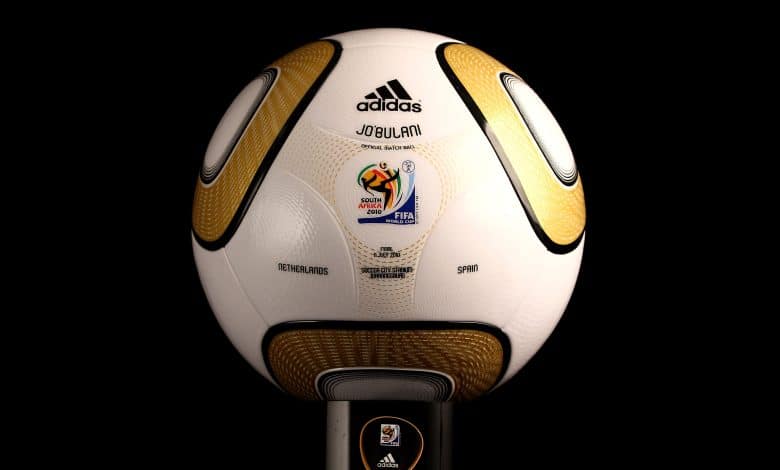
Everybody touches it, every camera follows it, every fan recognises it, but it rarely receives the individualised attention compared to the screen time it deserves. The World Cup ball is the tournament’s underrated star, evolving with the sport itself. Beginning with laced leather, we have evolved to today’s synthetics and sensors, which help modern officiating. Like World Cup mascots, the ball is a product and storyteller of its era: the materials at its disposal, how weather affects play, and how television forced the design to change. This is the story of how football became a precision sport through the transformation of the ball itself.
Table of Contents
Before the Official Match Ball
In the early World Cups, standardisation was loose. The most famous example is the 1930 World Cup final, where Uruguay and Argentina disagreed over which ball to use, so they agreed to use Argentina’s ball in the first half and Uruguay’s in the second. This highlighted the early reality of the provider having a large impact on the feel, size and weight. Add in rain, thick leather and stitched seams, and you get a tournament environment where “the ball” wasn’t yet a consistent global standard.
The inconsistency of the era produced real innovation and creation of new technology. The Brazil Superball Duplo T used in the 1950 World Cup solved the issue of the leather-ball era, with variation in inflation and shape. This was a large step forward because it introduced a valve system that helped regularise air pressure for all balls used in the tournament. It also removed external laces, eliminating a notorious pain point for players and reducing unpredictability.
Later came Chile’s Crack ball in 1962, where it was marked as the official match ball for the tournament, but player and referee accounts disliked the ball in the opening match, leading to a European alternative arriving later being used in different matches. By 1962, the World Cup was still wrestling with the challenge of every match ball having an identical feel, solved in a couple of editions’ time.
1930 FIFA world cup final match ball. pic.twitter.com/q8GMMG3Brk
— Arya kulkarni 90000-0 (@Amitkulkarni008) April 7, 2024
The Adidas Era
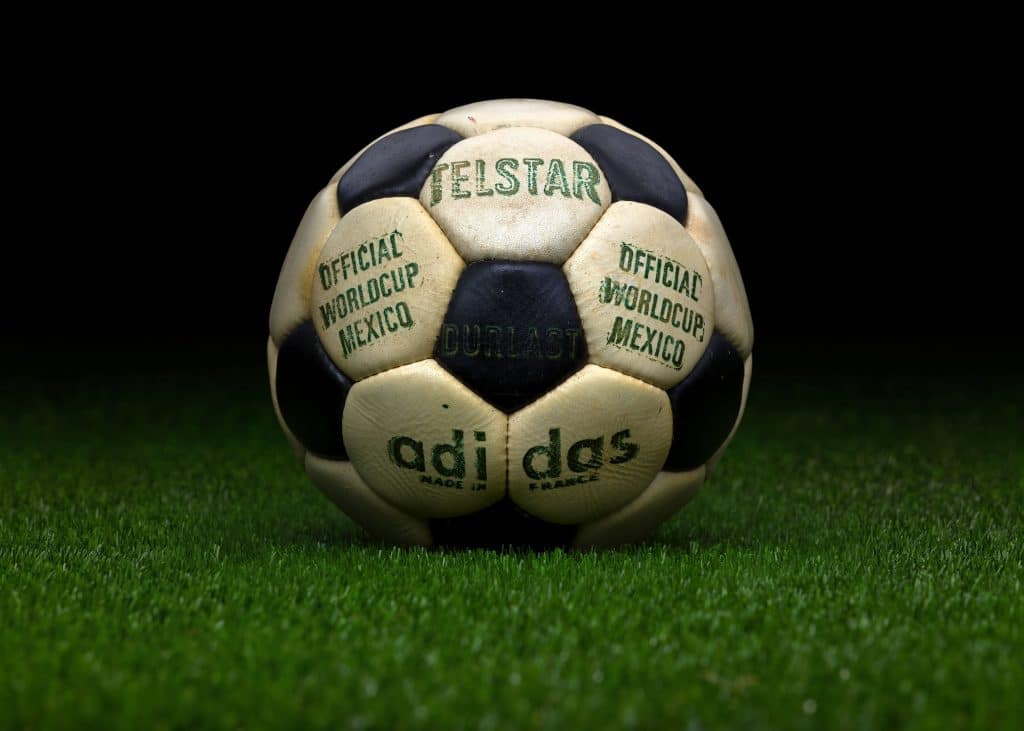
1970 was the turning point in World Cup history, as Adidas began supplying match balls for the tournaments. Mexico introduced the Telstar, white hexagonal panels with black pentagons, a design so influential that it is still the default ‘soccer ball’ symbol today, even over 50 years later. The ball starts pairing with football legends, inseparable from Pele’s iconic victory in 1970. In 1974, the Telstar Durlast was introduced, a minor variation for the tournament held in West Germany led to the hosts hoisting the trophy, amidst challenge from the Netherlands’ total football.
Tango and the End of Leather
Telstar created the standard black and white television look; Tango took the design and ensured it passed on to future tournaments. The Tango Durlast was introduced in 1978, creating an optical illusion of circular shapes, a persistent look through the next few tournaments. By 1982, the Tango España continued the pattern and improved water resistance – a large issue from earlier versions of the World Cup ball. This ball was the end of the traditional leather era, before the material changed the game forever.
The Synthetic Revolution
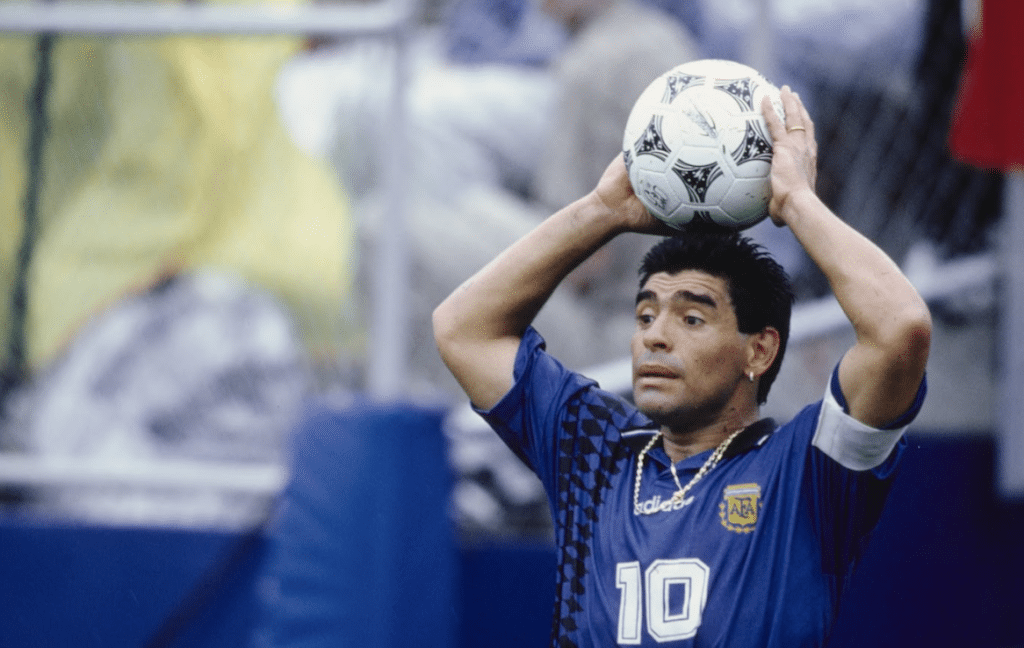
In 1986, the first synthetic World Cup ball was introduced, a major jump in technology for the Adidas Azteca Mexico. This would reduce water absorption and increase consistency across weather conditions, an important advancement for history. The engineering was impressive, but the performance of the players is why we remember this ball. Diego Maradona’s performance in the quarter-final against England was historic, including his ‘Goal of the Century’ and ‘Hand of God’ in the same match. This ball was kept constant for the next two editions of the tournament, in 1990 and 1994.
First Color Ball
As we reach the late 1990s, the match ball became a centrepiece of the tournament’s identity, not just a piece of equipment. France’s 1998 Adidas Tricolore is the first multi-colored World Cup ball, copying the design of the Tango-style triads. This signalled a shift, with the ball needing to look great on color television and marketing. Zinedine Zidane will forever be connected to this ball, scoring twice over Brazil in the final to hoist the trophy as the host country.
The 2002 Adidas Fevernova for Korea/Japan began the shift away from the 32-panel ball towards a faster and more modern feel. It was also the first ball without the Tango triad, using a more bold and colorful graphic inspired by Asian aesthetics. Ronaldo Nazario became a part of the World Cup ball’s identity as the top scorer and Golden Ball winner of the tournament.
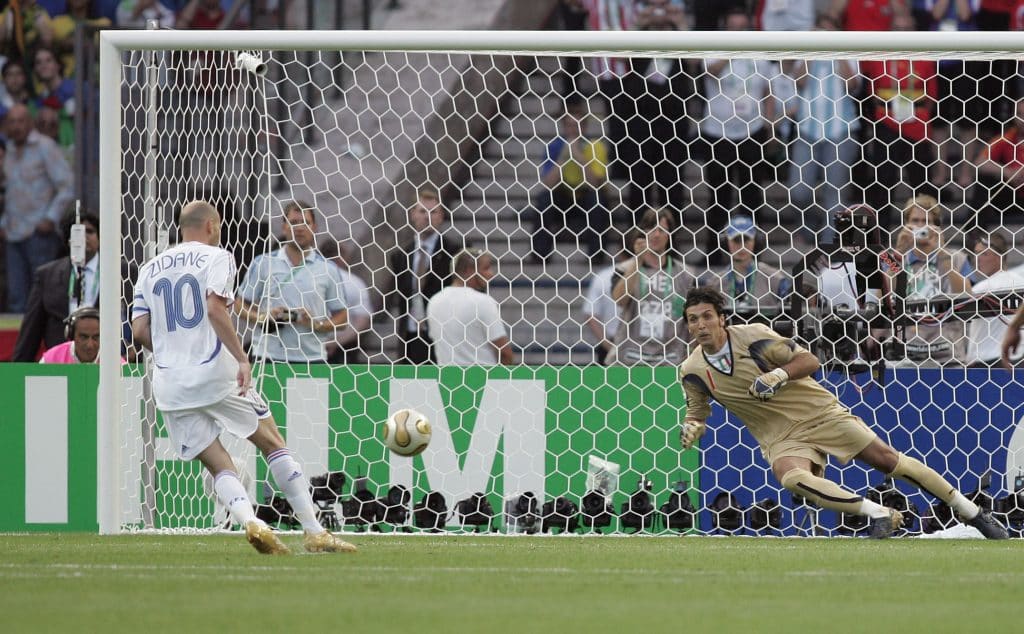
Germany in 2006 created a large leap in construction, with the Adidas +Teamgeist famously moving towards a 14-panel design, aiming for a more spherical shape and different flight trajectories and geometry. The most memorable moment from this tournament was Zidane headbutting Marco Materazzi in the final, receiving a red card, as Italy led by Fabio Cannavaro were eventually triumphant.
The Jabulani
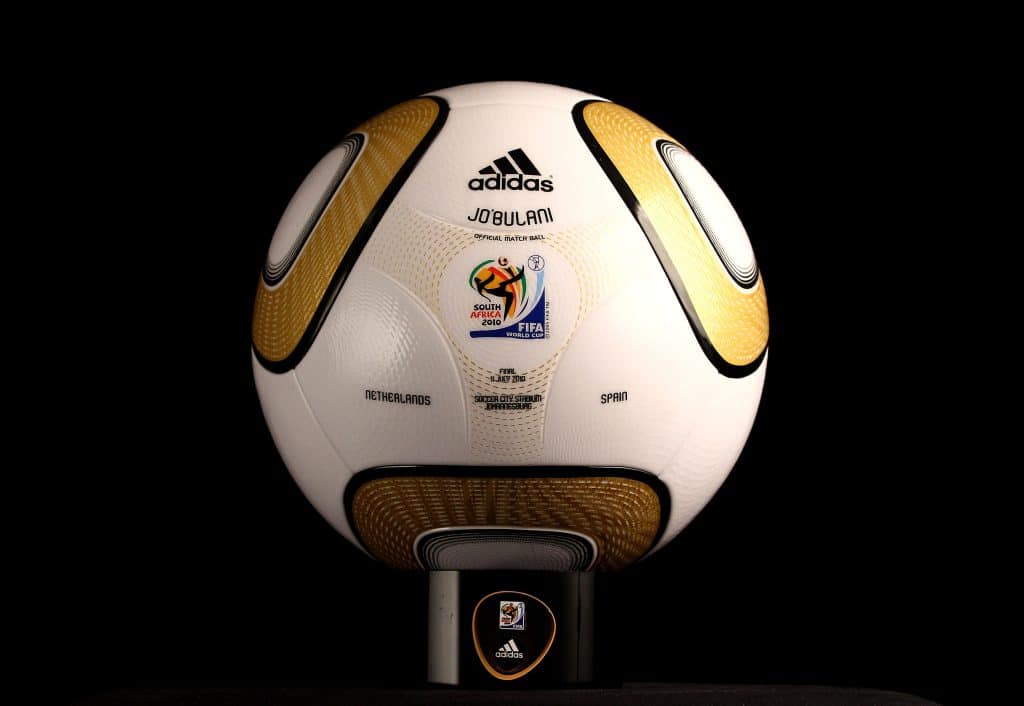
The most controversial World Cup ball in history. South Africa’s 2010 Jabulani is famous for its eight panels and textured surface, sparking mainstream conversation about flight motion and aerodynamics. Even through this controversy, some players such as Diego Forlan made the ball’s unpredictability work in his favour. He produced some spectacular long-range strikes and earned serious recognition for his tournament impact, receiving FIFA’s Golden Ball award in the process.
The Ball Named by the Fans
By Brazil 2014, reliability was the key narrative of the World Cup ball, where the Brazuca became notable for both its modern construction and naming methods. The fans chose the name for the ball, emphasising that the ball had become a part of the community. The tournament is also inseparable from standout players such as James Rodríguez, whose tournament goals and highlights turned him into one of the edition’s defining stars. Russia 2018 revived the name with the Telstar 18, paying homage to the 1970 classic while updating the design for the modern game.
Sensors Infiltrate the Ball
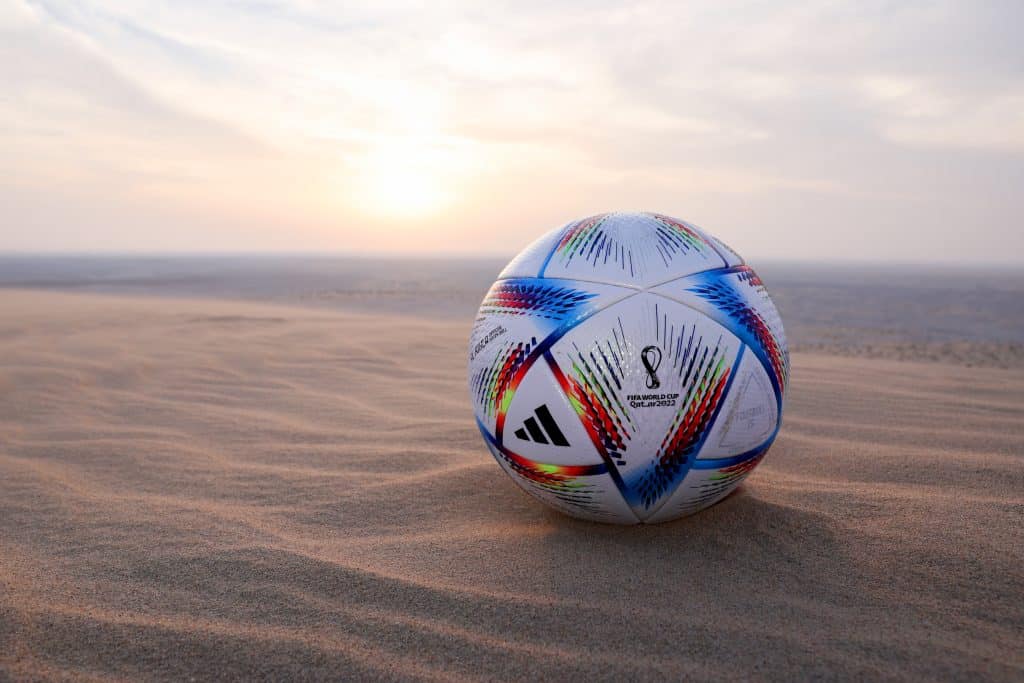
A sensor was placed inside Al Rihla, the Qatar 2022 World Cup ball, a generational shift in technology. It could measure the position of the ball with pinpoint precision 500 times per second, helping the referees make correct calls on the goalline and for offside. The footballing story matched the tech leap, with potentially the greatest football match of all time featuring Lionel Messi and Kylian Mbappé.
Adidas Trionda
In 2026, the tournament is being hosted by Canada, Mexico and the United States, where they announced the Adidas TRIONDA as the official match ball. It represents the modern direction of World Cup ball design, not only a visual icon but a performance tool integrating into the technology platform introduced in the 2022 edition. Teams such as Spain, Argentina and France headline the favourites for the tournament, but only time will tell who the kings of the TRIONDA will be.
introducing: TRIONDA
— adidas Football (@adidasfootball) October 2, 2025
the Official Match Ball of the 2026 @fifaworldcup. 🇨🇦🇺🇸🇲🇽#FIFAWORLDCUP pic.twitter.com/vOEpXs5Epu
Bottom Line
From the stitched leather and inconsistent match balls to today’s sensor-assisted designs, the World Cup ball has evolved alongside the sport itself. Each edition’s ball becomes a timestamp in history, highlighting the materials and technology of its era, along with the players that defined the tournament.