The World Cup is not just a football spectacle – it is a cultural festival bringing entertainment directly to the fans. The mascot is plastered on the posters and merchandise, is designed to be instantly recognisable. Over time, these icons have evolved from simple national symbols into characters with names, personalities and digital lives.
Table of Contents
The Birth of Sports Branding
The first World Cup edition to have a mascot was England in 1966, with a lion in a Union Jack kit named World Cup Willie beginning a tradition of a tournament emblem. He is often credited as the first major tournament mascot in global sports. Willie defined how a sporting event could present a marketable identity to the world, decorating programs. From the start, the formula was clear – pick a symbol from the host country, make it lovable and visually tie it to football.
Juanito, the representative for Mexico in 1970, was a boy in national colours and a sombrero. West Germany in 1974 used two young boys in national team kits to symbolise brotherhood. Argentina in 1978 embodied the skilled horsemen from the grasslands of South America to create Gauchito, continuing the trend of human-like mascots at the World Cup.
World Cup mascots!
— 90s Football (@90sfootball) February 1, 2025
Your favourite? pic.twitter.com/SB3fywToP2
The Cartoon Charm of a Mascot
As we move into the 1980s, mascots moved from humanesque designs to a cute national icon, using bright colours to remain memorable. Spain 1982 introduced Naranjito, an anthropomorphic orange in a football kit was simple, bold and most importantly, unmistakably ‘Spain’. Mexico 1986 launched Piqué, a cheerful green pepper in a sombrero, a clearly new icon for their second host in the mascot era. Italy 1990 went abstract with Ciao, a geometric stick figure with Italian colours and topped with a football head. Striker, the emblem for USA 1994, was a major marketing moment, where a dog in red, white and blue fit the ensuing big broadcast ambitions.
Becoming Characters not Symbols
After the USA hosted the tournament in 1994, the mascot was used more as a cast member in the entertainment show of the competition rather than a logo with legs. This was first shown in France in 1998, where Footix, a symbol of French symbolism highlighted as a cartoon cockerel. Spheriks, the animated TV series providing inspiration for the mascot for the 2002 Korea and Japan-hosted World Cup, was the first edition in a while to avoid using a national animal. Ato, Kaz and Nik unfortunately clashed with FIFA regarding the content, leaving it as a somewhat forgotten piece of World Cup history with its struggles in the behind-the-scenes production.
Germany 2006 continued this shift away from a national symbol towards a performance character, using a combo of a lion named Goleo VI and his sidekick, a talking football named Pille. The South Africa 2010 icon named Zakumi was a leopard with green hair, using friendly styling and intentional design to act as an energetic host for the tournament. The name is derived from ‘Za’, South Africa’s international abbreviation, and ‘kumi’, meaning 10 in several African languages, combining the name and mane to act as the most memorable mascot in World Cup history.
Zakumi, Mascot for the World Cup held in South Africa back in 2010#SouthAfrica #WorldCup #Mascots pic.twitter.com/mL0w4pmN8M
— Football Memories (@footballmemorys) November 21, 2024
Brazil 2014 used a three-banded armadillo named Fuleco, an endangered species home in Brazil. These animals can curl into a ball when threatened, linking football to the ecology as the country would wrap its wildlife and identity into one character. This period reflects the expansion of FIFA’s commercial ecosystem, where mascots were animated and easily integrated into campaigns rather than printed onto souvenirs.
The Modern Look of a Mascot
Mascots in recent years have been designed for fans who may discover the tournament from clips or social feeds rather than TV broadcasts, being more recognisable to newer followers of the competition. Russia 2018 used Zabivaka to feel like an influencer rather than a static emblem with a wolf in a jersey. Interestingly, the mascot was chosen by public vote over a tiger and a cat, an unusual method. La’eeb, the representative for Qatar 2022, is a floating character inspired by traditional Arab men’s headwear, rather than the ‘animal in a kit’ structure used in years past. These were contentious symbols, but they undoubtedly succeeded at being instantly identifiable in a global environment.
Three Official Mascots for Three Host Countries
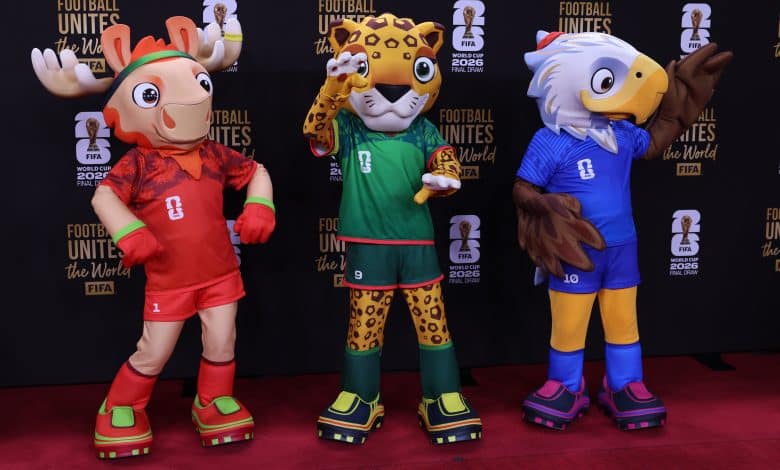
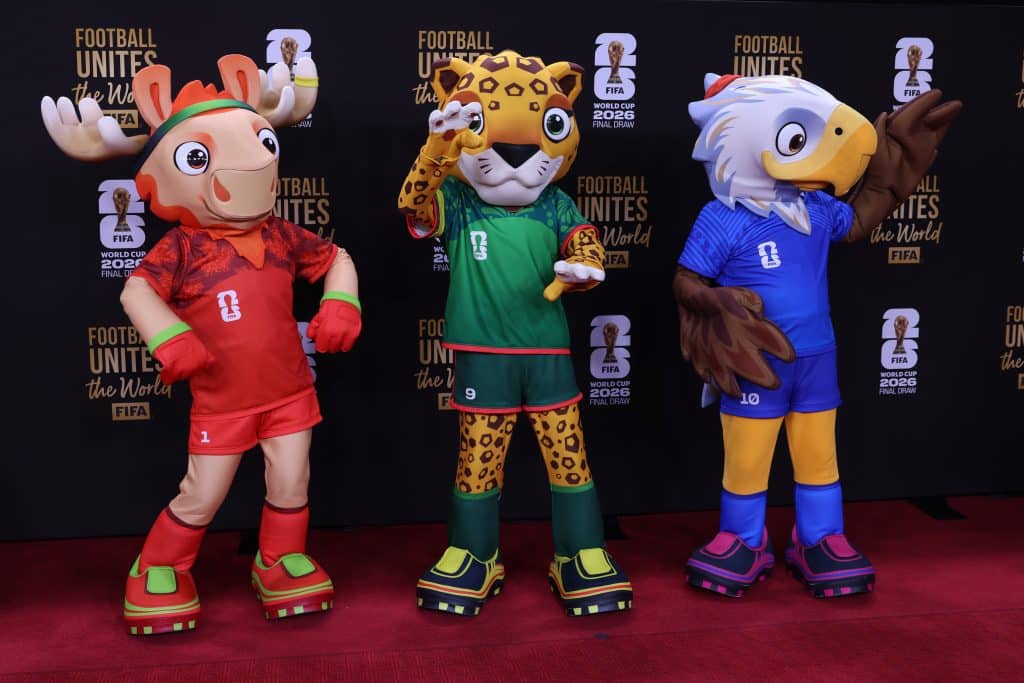
The 2026 FIFA World Cup edition is hosted in Canada, Mexico and the United States. Each country has a mascot, with Maple the Moose for Canada, Zayu the Jaguar for Mexico and Clutch the Bald Eagle for the USA. A trio of characters has only been done once prior, in 2002, but this approach is unique. Each mascot highlights an aspect of their own country, but being a part of the World Cup family.
What Do Mascots Do?
It is easy to dismiss these tournament crests as useless until you notice how they pervade the memory of the past editions of the World Cup. Many fans would picture these logos if prompted regarding ‘South Africa 2010’ or ‘France 1998’. It also allows hosts to bypass language barriers to promote the competition to fans from all walks of life.
The merchandising and licensing need a scapegoat, a character designed to live through products and souvenirs, along with creating a kid-friendly entry point so these fans can emotionally connect with an event of this magnitude. Today, they act as a digital icon built for motion and the fast-paced media world we live in.
Sixty Years of Icons
World Cup mascots show how the tournament presents itself to the world. Previous designs were straightforward, throwing the World Cup kit onto our national symbol or animal. As time passed, these became individuals with attitude, reflecting our digital personalities, travelling on social media. In 2026, the concept adapts again to emphasise a multi-country host identity. Regardless of how the football changes between now and the next World Cup, they will continue doing the same timeless job – making a global tournament feel friendly, accessible and recognisable, one character (or three) at a time.