The excitement is building as football fans worldwide turn their attention to one of the sport’s most anticipated moments: The 2026 FIFA World Cup Draw. With a historic format, three host nations, and a qualification campaign filled with drama, this year’s draw promises to shape an unforgettable tournament. Before the groups take shape, here is everything you need to know.
Table of Contents
The Details
The World Cup draw will take place on December 5th at 5:00 p.m. GMT, at the John F. Kennedy Center for the Performing Arts in Washington. This will set the stage for football’s biggest tournament, the first 48-team version of the World Cup. It will be hosted across three nations, including the United States, Canada, and Mexico, running from the 11th of June to the 19th of July.
The Ceremony
FIFA isn’t treating this as just a draw – it’s staging a full-scale show at the Kennedy Centre. The ceremony will be fronted by comedian Kevin Hart, model and TV host Heidi Klum, and actor Danny Ramirez, blending football with Hollywood-style entertainment.
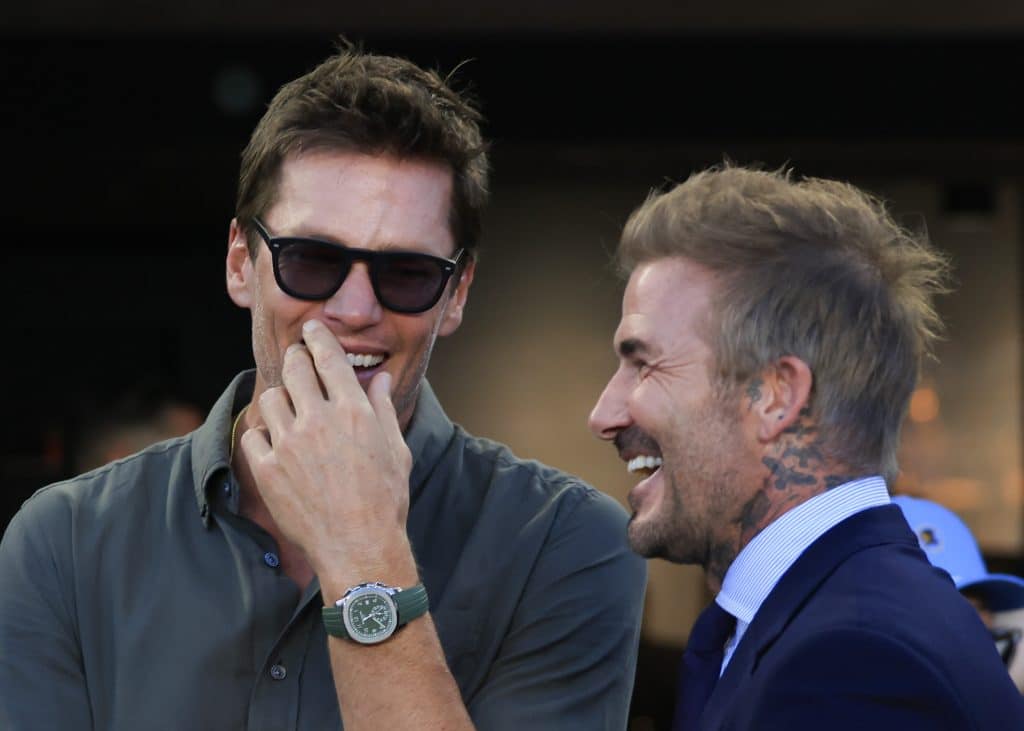
On stage, the actual draw will be conducted by former England captain Rio Ferdinand alongside broadcaster Samantha Johnson, who also helped host the 2022 World Cup draw. Supporting them will be a cast of cross-sport icons: Tom Brady (NFL), Shaquille O’Neal (NBA), Wayne Gretzky (NHL), and Aaron Judge (MLB), each acting as a draw assistant and handling one of the four team pots as the 48 nations are allocated from Pots 1–4 into Groups A–L.
Away from the main stage, New York Giants legend Eli Manning will serve as red-carpet host, guiding viewers through the arrivals of players, coaches, and VIP guests before the ceremony begins.
The show is also being pitched as a major entertainment event in its own right. FIFA has lined up performances from Andrea Bocelli, Robbie Williams, and Nicole Scherzinger, with the Village People scheduled to close the night by performing “Y.M.C.A.” once all 12 groups are revealed.
World Leaders in the Building
Adding to the sense of occasion, the leaders of all three host nations are expected to be in attendance in Washington:
- United States: President Donald Trump is confirmed to attend and “play a key part” in the ceremony, after previously announcing the Kennedy Center as the draw venue alongside FIFA President Gianni Infantino.
- Canada: Prime Minister Mark Carney is set to represent Canada at the draw, appearing alongside his fellow host-nation counterparts.
- Mexico: President Claudia Sheinbaum has publicly confirmed she will travel to Washington for the event, saying she spoke with Infantino before committing to attend.
It’s a lineup designed to underline the World Cup’s global reach and to signal that this expanded 48-team edition is as much a cultural moment as it is a sporting one.
The Pots
The 48 qualified nations are divided into 4 ‘pots’ of 12 teams each, which will help to determine who will end up in each group for the World Cup. Here are the teams in each pot:
- Pot 1: Canada, Mexico, USA, Spain, Argentina, France, England, Brazil, Portugal, Netherlands, Belgium, Germany
- Pot 2: Croatia, Morocco, Colombia, Uruguay, Switzerland, Japan, Senegal, IR Iran, Korea Republic, Ecuador, Austria, Australia
- Pot 3: Norway, Panama, Egypt, Algeria, Scotland, Paraguay, Tunisia, Cote Divoire, Uzbekistan, Qatar, Saudi Arabia, South Africa
- Pot 4: Jordan, Cabo Verde, Ghana, Curaçao, Haiti, New Zealand, European Play-Off A, B, C and D, Fifa Play-Off Tournament 1 and 2
The World Cup Draw pots are in! With the draw taking place next Friday, comment below which group you'd like to see. pic.twitter.com/JJTF0FYKx1
— 365Scores (@365Scores) November 25, 2025
How the Draw Works
In the draw, one team from each pot will be placed into each of the 12 groups from A to L. The host countries have predetermined placements, with Mexico in A1, Canada in B1, and the USA in D1. There are two major reasons for doing this: the hosts cannot face each other in the group stages because there is a longstanding FIFA tradition of the hosts playing the first match in their pool at home, which is logistically impossible if countries share a pool. Further, to protect home advantage and to encourage hosting, they avoid a group of death being placed with a top 9 side in world football.
The remainder of pot 1 is filled by the next 9 highest-ranked teams, with the remaining pots being filled out in order of world rankings. This is done until the 6 placeholder spaces, which are given letters, so it is clear which team, after qualification, moves into each pool. Also, no group may include more than one team from the same confederation. Europe is the exception, since it has many representatives, which are capped at 2 teams per pool instead of 1. A new change for this edition of the World Cup is that the 4 highest-ranked teams are kept apart until the semifinals, aiming to preserve the more exciting matches for the latter stages.
Nations that have already Qualified
42 nations have already qualified, which includes 12 from Europe, 9 from Africa, 9 from Asia, 6 from South America, 6 from North America, including the three hosts, and 1 from Oceania. To read about who these teams are and a recap of the World Cup Qualifiers, click here.
Nations yet to Qualify
Below are the two play-off draws – European and Intercontinental, which include the nations that are in contention but haven’t clinched their spot in the 2026 World Cup.
Why the Draw Matters
This World Cup is the first edition with 48 teams, which was aimed at encouraging more nations, diversity, and drama in qualification and in the tournament. The pot and seeding system is aimed at balancing the group’s strength, providing smaller and/or lower-ranked nations a more realistic chance at making a push, while top teams don’t knock each other out too early. Moreover, the top seed separation rule protects blockbuster matchups until deeper in the tournament, building excitement for the knockout stages. The draw doesn’t just reveal the groups, it offers real insight into the possibilities of your nation taking home the coveted trophy.