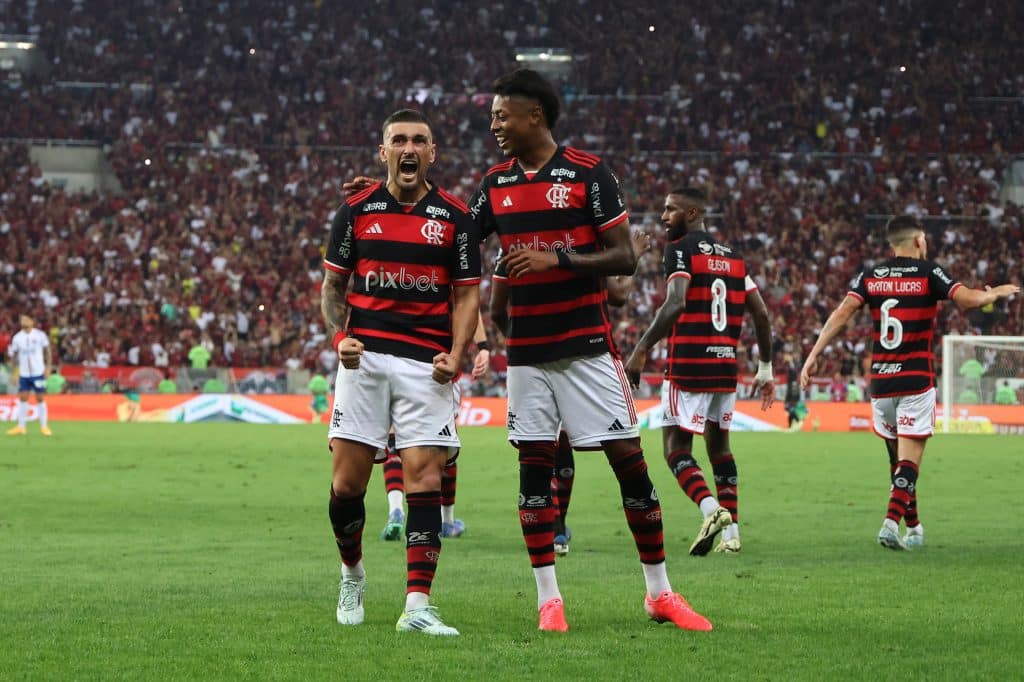
In a decisive clash at the Maracanã tonight, the Rubro-Negros secured the 2025 Brasileirão Série A title with a tense 1-0 victory over Ceará. A first-half strike from Samuel Lino proved to be the difference, sending the home crowd into raptures and mathematically sealing the trophy with a round to spare.
This victory cements a historic “Double” for the club, coming just days after lifting the CONMEBOL Libertadores trophy. But as the celebrations continue in Rio de Janeiro, the reality of the upcoming calendar is already looming. At Flamengo, success is mandatory, but the rewards for this historic season have set up perhaps the most grueling fixture list in the history of club football.
The Price of Glory: 2026 Will Be a Test of Endurance
The upcoming 12 months could be among the most demanding stretches any football club has ever faced. Due to the 2026 World Cup compressing an already tight football calendar, the Brazilian state championships are scheduled earlier, and the offseason for Flamengo’s players will shrink to a minimum.
The combination of fixture congestion, extensive continental travel, and high-stakes knockout football means that if Flamengo advances deep in every competition, 2026 will become the ultimate physical and mental test.
CONMEBOL Libertadores Success
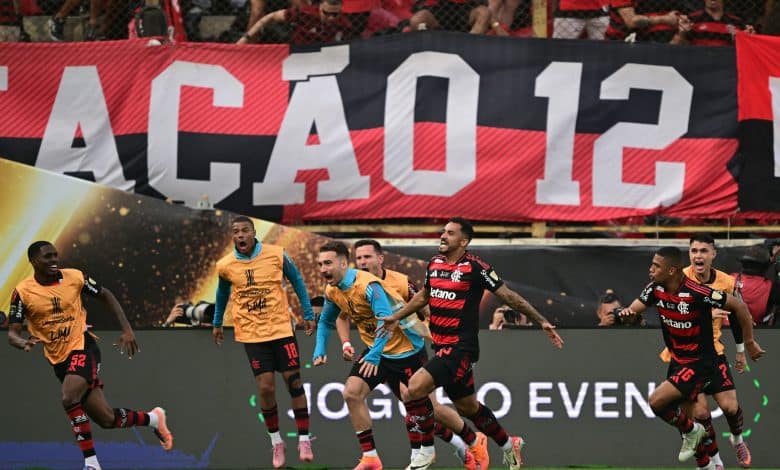
Facing Palmeiras in the CONMEBOL Libertadores final provided the perfect high-stakes narrative: two consistent powerhouses competing at the summit of South American football. Danilo’s commanding header from a corner kick secured a 1-0 victory, crowning Flamengo as kings of the continent.
This result not only qualified them for the FIFA Intercontinental Cup but—when combined with their Campeonato Carioca and Brasileirão triumphs—added significant commitments to an already crowded 2026 schedule.
The 2026 Match Load
64 — 83
Total Matches in 12 Months
Defining a “Difficult” Schedule
Three major metrics define schedule difficulty: Match Volume (total games), Density (frequency of matches), and Travel Load.
While the volume is high (up to 83 matches), the true separator between 2026 and historical seasons is the density. The most matches ever played by a Brazilian club in a calendar year was Flamengo in 2019 (78 matches). Most top European clubs play three major tournaments; Flamengo will compete in—or has qualified for—the equivalent of all of these, plus state leagues and international super cups.
Density: The World Cup Effect
With the 2026 World Cup taking place in June and July—the traditional epicenter of the Brazilian season—the domestic calendar has been drastically reshaped.
- Early Start: The Campeonato Carioca and other state leagues begin earlier, around January 21st.
- No Offseason: Bouncing off their deep runs in 2025, there will be almost no recovery time for the squad.
- Compressed Fixtures: The Brasileirão and Copa do Brasil will be squeezed into a shorter window.
A “busy” month for a standard club involves 5–6 matches. In 2026, Flamengo could regularly face 7–9 matches a month. This compression removes the most critical asset for modern athletes: recovery time.
The South American Travel Tax
Impact on the Squad
Sustaining performance under these conditions will have tangible effects:
- Injury Risk: Congestion is the primary driver of muscle injuries.
- Tactical Dilution: With no time to train between games, the manager must rely on simplified game plans. High-pressing systems may become unsustainable.
- Youth Reliance: “Less important” matches will force the staff to field U20 players, testing the club’s academy depth like never before.
Historic Context
At a minimum (64 games), Flamengo will equal the workload of Barcelona‘s legendary 2009 sextuple-winning season. At a maximum (83 games), they will shatter world records.
Unlike the 2023 Manchester City treble winners (61 games), Flamengo must navigate this marathon during a World Cup year. The disruption of sending key stars to the national team, only to have them return exhausted to a compressed league calendar, is a hurdle no European “Invincible” squad has had to clear in the same way.
Bottom Line
Players may need to sleep in their kits because once 2026 kicks off, there will be no rest for the Rubro-Negros. Competing in six tournaments is exhausting enough; doing so while defending the Brasileirão and Libertadores titles during a World Cup year is a challenge without precedent.
Flamengo fans have every reason to celebrate tonight’s title, but they will need their squad to stay impossibly healthy to survive the storm that is coming.