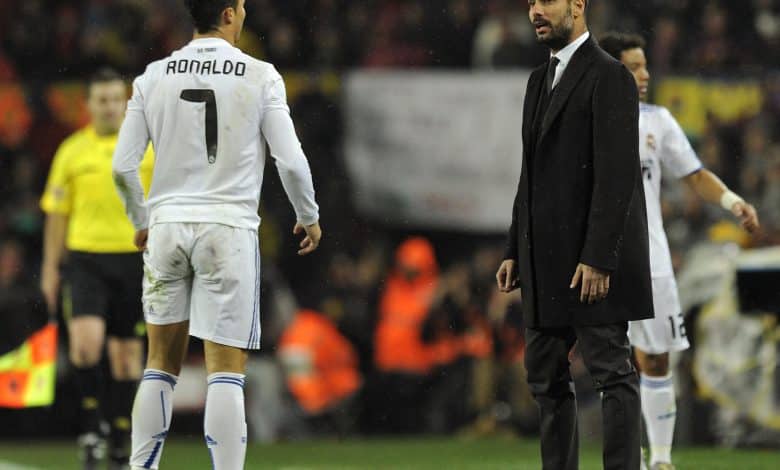
Camp Nou has always been a kind of football laboratory. Great coaches walk in, scribble on the whiteboard, and the sport walks out slightly changed. From Johan Cruyff turning Barça into a school of positional play to Hansi Flick arriving with German intensity and a high line that has TV pundits clutching their pearls, the DNA is recognisable, but the accents have shifted over three decades.
This is the story of how Barcelona went from Cruyff’s 3-4-3 and total control of space to Flick’s hyper-aggressive pressing and vertical surges, and what has changed along the way.
Barcelona have always been legendary, here’s how they’ve evolved
Cruyff rewires Barcelona
When Johan Cruyff took over in 1988, Barcelona were big, famous and a bit confused. Rinus Michels had already planted the seeds of Total Football, but Cruyff turned that blueprint into a club-wide doctrine. His Dream Team in the early 1990s used a 3-4-3 diamond that looked wildly aggressive for the time: three at the back, a packed midfield, wingers stretching the touchlines and a centre forward linking everything together.
The idea was not simply to keep the ball. It was to organise the pitch into zones, make sure every zone had an option, and use passing to move opponents around like chess pieces. What we now casually call positional play was radical then. Defenders had to be comfortable stepping into midfield, midfielders needed the vision of playmakers, and forwards were expected to press as soon as they lost the ball.
Cruyff’s side won four straight La Liga titles and the club’s first European Cup in 1992, but the silverware almost felt secondary to the ideology. Training sessions, academy coaching and recruitment were all bent towards one question: can this player interpret space? From that moment on, Barça were not just a club with a style. They were a club with a syllabus.
#TotalFootball: That special playing style that defined The Netherlands and #Barcelona. That legacy was brought to #Barca by Rinus #Michels and was adapted by Johan #Cruyff.
— 365Scores (@365Scores) August 19, 2020
After #VanGaal and #Rijkaard, now it’s #Koeman’s turn to continue this legacy.#FCB #LosCules #365Scores pic.twitter.com/7qN3GND4Gf
Rijkaard and Guardiola polish the Cruyffian template
Frank Rijkaard’s arrival in 2003 felt like a soft reboot of the Cruyff project. He kept the 4-3-3 shape that had become standard, with a single pivot at the base of midfield, and added a kind of easy swagger through players like Ronaldinho and Deco.
The principles were still there: building from the back, wide wingers, a high defensive line and an emphasis on possession. But Rijkaard’s Barça were looser. They could suffocate teams with the ball, yet they were also happy to lean on individual flair. The 2006 Champions League win showed that the Cruyffian idea could be updated without becoming dogma.
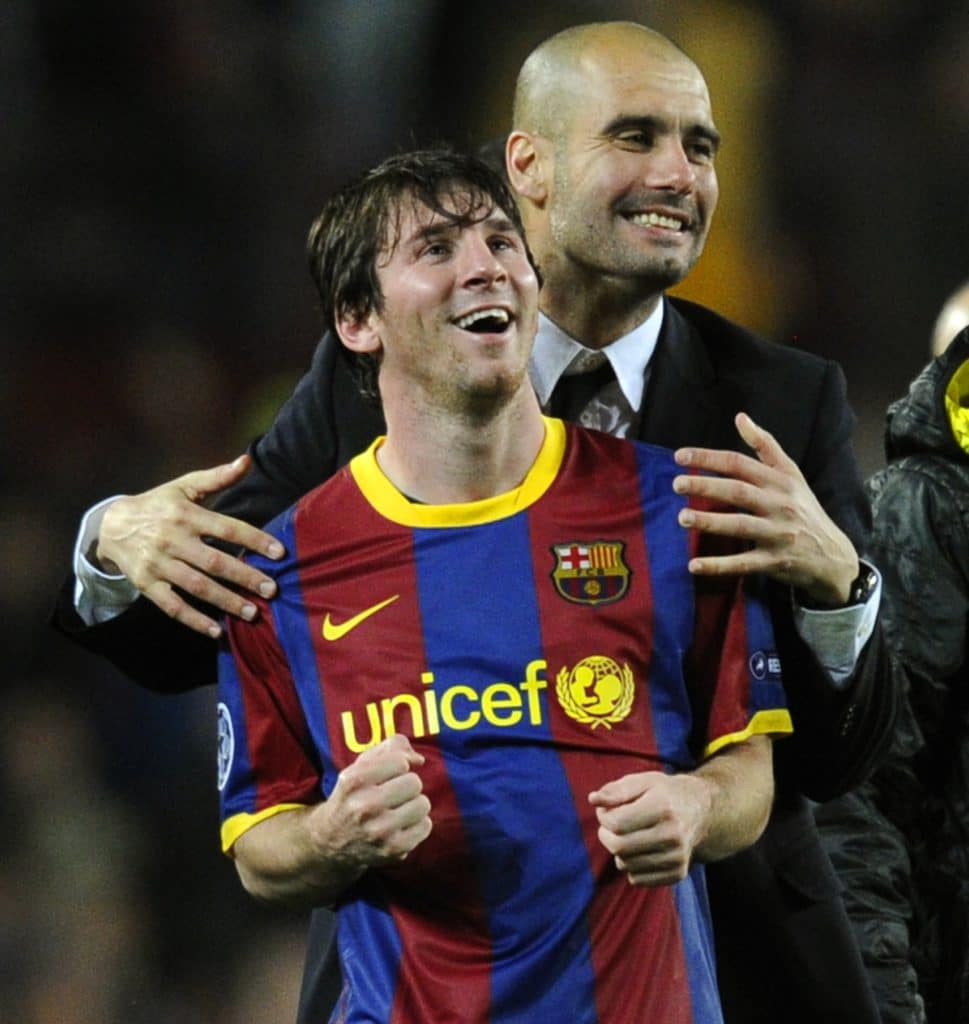
Then Pep Guardiola walked in and decided updated was not enough. From 2008 to 2012, he took Cruyff’s positional play and pushed it to its logical extreme. Training pitches were covered in grid lines to drill spacing. No more than two players could occupy the same vertical lane, no more than three the same horizontal lane. Possession became a weapon rather than a comfort blanket, aided by a ferocious counter press the moment the ball was lost.
Pep oscillated between a 4-3-3 and shapes that, in possession, often resembled a 2-3-2-3. Full backs tucked inside, Sergio Busquets anchored the middle, and Lionel Messi moved into the famous false nine role. The ball speed, the constant offering of short angles, the suffocating press: this was Cruyff’s geometry played at fast-forward.
Luis Enrique and the turbo era
By the time Luis Enrique took over in 2014, opponents had spent years trying to decode tiki-taka. His solution was not to abandon the Cruyff-Guardiola school, but to strap a rocket to it.
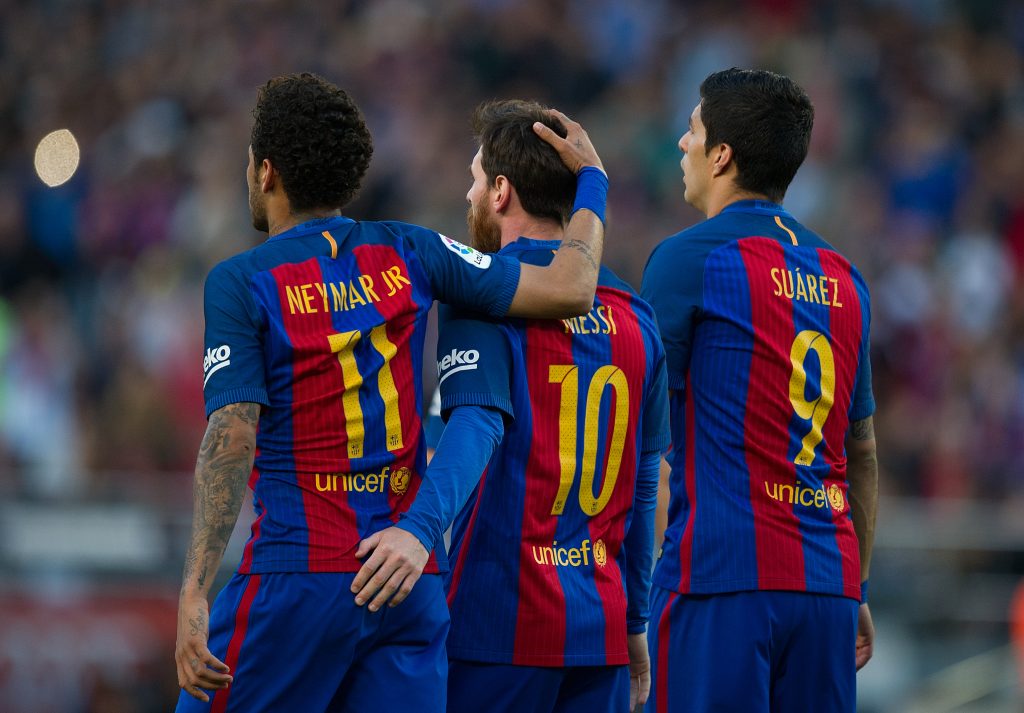
The 4-3-3 shape remained, yet the front three of Messi, Luis Suárez and Neymar tilted the style towards brutal verticality. Barça could still string together long passing sequences, but they were happier to use those sequences as a launchpad for devastating runs in behind, quick diagonal switches and fast transitions.
If Guardiola’s Barça were about strangling opponents with structure, Luis Enrique’s treble-winning side of 2014-15 were about turning small moments of chaos into goals. The press was still there. The positional principles still guided spacing. But decision-making tilted towards risk, trusting the front three to win duels in the final third.
It was an evolution rather than a revolution: same school, new star pupils, more counter punches.
Identity drift in the post-Neymar years
Then came the wobble. Neymar’s departure in 2017 did not just remove a superstar; it knocked the balance out of the system. Ernesto Valverde, Quique Setién and Ronald Koeman all took turns trying to keep the Cruyffian flame alive while managing ageing legends and a squad that had lost some of its technical security.
Valverde shifted towards a more cautious version of Barça: a slightly deeper defensive line, greater emphasis on defensive organisation, and less all-out pressing to protect a back line that no longer had peak Dani Alves and Gerard Piqué sweeping up counters. Results were often good in La Liga, but the football felt more pragmatic and the team repeatedly imploded in Europe.
Setién tried to drag the club back towards purist possession, yet the pressing mechanisms and physical level were not there. Koeman introduced more direct elements, using a back three at times and leaning on individual sparks from Messi, but the side oscillated between identities, never fully committing to one school of thought.
The famous 8-2 defeat to Bayern Munich in 2020 became shorthand for the problem. Barça still looked like a Cruyffian team on paper, but without the coordinated press and collective responsibility, the high line simply looked exposed.
Xavi tries to restore the script
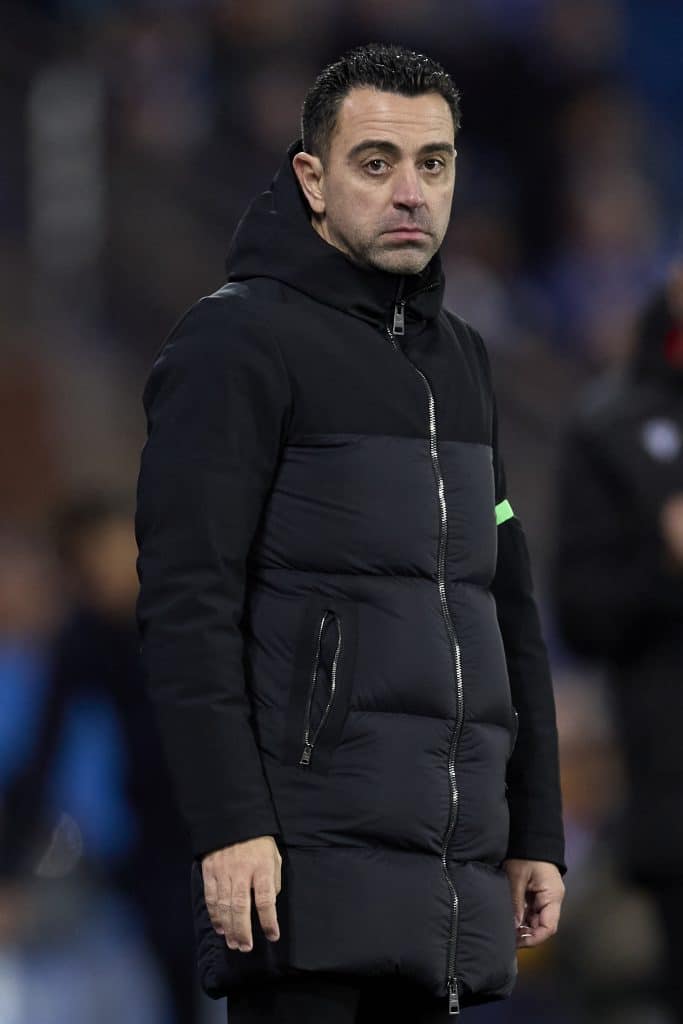
Xavi’s appointment in November 2021 was an attempt to return to source material. The club icon arrived talking about method, rules and standards, and he reintroduced demanding training routines and clear positional principles.
On the pitch, his Barça leaned heavily into the 4-3-3, with a single pivot and two interiors tasked with arriving between the lines, supported by aggressive full backs. In possession, they often created a box in midfield by tucking a full back inside, generating superiority through the middle in classic Cruyff style. The press returned as a central tool, with the front line pushed to jump as soon as the ball was lost.
Xavi delivered the 2022-23 La Liga title and the Spanish Super Cup, largely built on defensive solidity and control rather than wild scorelines. It felt like the philosophy was back on the rails. But attacking fluency was often intermittent, and European nights remained a problem. A flat 2023-24 season, with a messy Champions League exit and no trophies, led to his departure in summer 2024.
Enter Hansi Flick: Cruyffism with a German accent
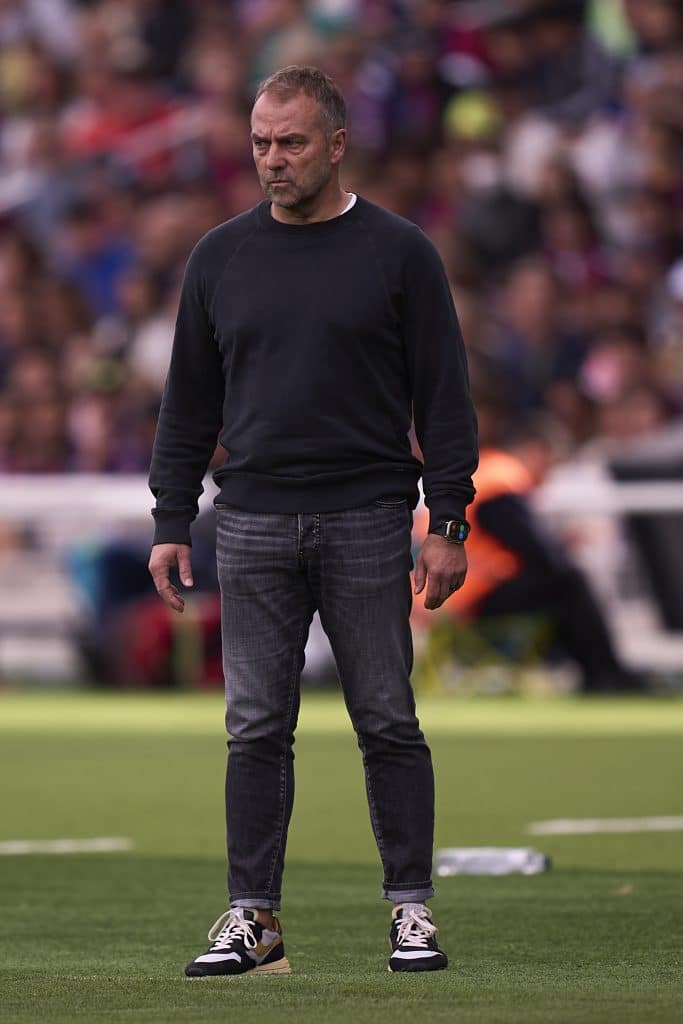
Hansi Flick’s appointment in May 2024 felt like Barcelona looking outside their own family tree while still trying to stay within the same tactical forest. Fresh from a Bayern spell that married high pressing, direct running and ruthless efficiency, Flick arrived with a style that blended German aggression with Barça’s structural heritage.
Flick is strongly associated with a 4-2-3-1 that can morph into a 4-3-3 in possession. At Barcelona, that has often meant a double pivot to stabilise transitions, a central attacking midfielder linking play, and wingers holding width before slashing inside.
The key features of Flick’s style at Barcelona so far:
- A very high defensive line
- Aggressive pressing triggers from the front four
- Fast, vertical combinations rather than long slow possession
- Full backs sprinting to overlap or underlap depending on the phase
If Guardiola’s Barça used the ball to rest, Flick’s Barça uses the ball to reload. They still care about possession, but they are more relaxed about shifting quickly through the thirds, especially with younger, more athletic attackers.
The early returns have been impressive. A Supercopa win over Real Madrid, strong early league form and a more energised squad have created optimism that Flick’s intensity can coexist with Barcelona’s positional tradition. Critics have pointed out that his high line can look reckless in Champions League games, but that is part of the tactical gamble. Flick wants the pitch compressed, the duels front-footed and the transitions sharp.
From Cruyff to Flick: what has really changed?
Across all the twists and turns, certain threads run straight through Barça’s tactical evolution:
- Positional structure. From Cruyff’s 3-4-3 diamond to Guardiola’s 2-3-2-3 and Xavi’s midfield boxes, spacing and occupation of zones have defined how Barcelona play. Flick still values structure but uses it more dynamically.
- High line and pressing. Cruyff introduced the concept, Guardiola perfected the counter press, Xavi re-emphasised it and Flick has pushed aggression to new heights.
- Ball as identity. Even during the more pragmatic stretches, Barcelona still measured themselves by what they did with the ball. Luis Enrique and Flick injected more verticality, but neither abandoned the proactive nature of Barça football.
What has changed most is the rhythm. Cruyff and Guardiola favoured suffocating, slow-burn control. Luis Enrique and Flick accelerate everything. The Cruyff school has not closed. It has simply invited new lecturers with new energy.
FAQs
How did Johan Cruyff change Barcelona’s playing style?
He introduced a possession-based positional system using a 3-4-3, a high defensive line and coordinated pressing, embedding these principles into every level of the club.
What is the main difference between Guardiola’s Barça and Flick’s Barça?
Guardiola stressed extreme control and short-passing structure. Flick adds more verticality, faster transitions and an even more aggressive high line.
Did Barcelona abandon their philosophy after Guardiola left?
Not entirely. The core remained, but pragmatism crept in under some managers, leading to a less coherent pressing structure and more reliance on individuals.
What did Xavi change tactically at Barcelona?
He restored strict positional rules, reintroduced intense pressing and leaned on midfielders to dominate central areas, leading to a league title.
Why is Hansi Flick’s high line controversial?
It can look vulnerable when the press is beaten, especially in Europe, but it is vital to his idea of compressing space and forcing proactive football.
By Nicky Helfgott – NickyHelfgott1 on X (Twitter)
Keep up with all the latest football news and Premier League news on 365Scores!


