LeBron at 41: The Career Rewind, The Lakers Reality, And The Retirement Question

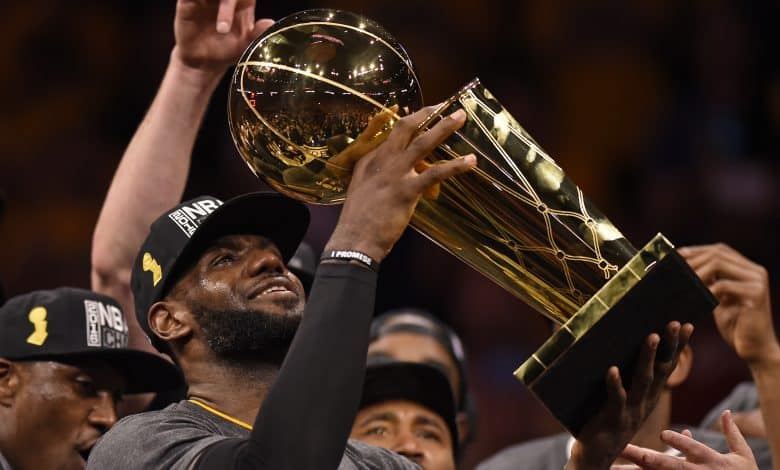
Today, LeBron James isn’t just celebrating his birthday; he is celebrating the defiance of a deadline. Turning 41 years old, the “King” is still reigning in an era where most legends are already statues in front of their former arenas. His 23rd season in the NBA isn’t a victory lap or a sentimental farewell tour; it is a continued masterclass in relevance. From the high-school phenomenon who graced the cover of Sports Illustrated as the “Chosen One” to the veteran strategist currently anchoring a title-hungry Lakers squad, LeBron’s career has become the gold standard for greatness in motion, proving that while Father Time may be undefeated, he’s still striving for greatness and looking to bring home title number 5.
Table of Contents
LeBron Career Rewind
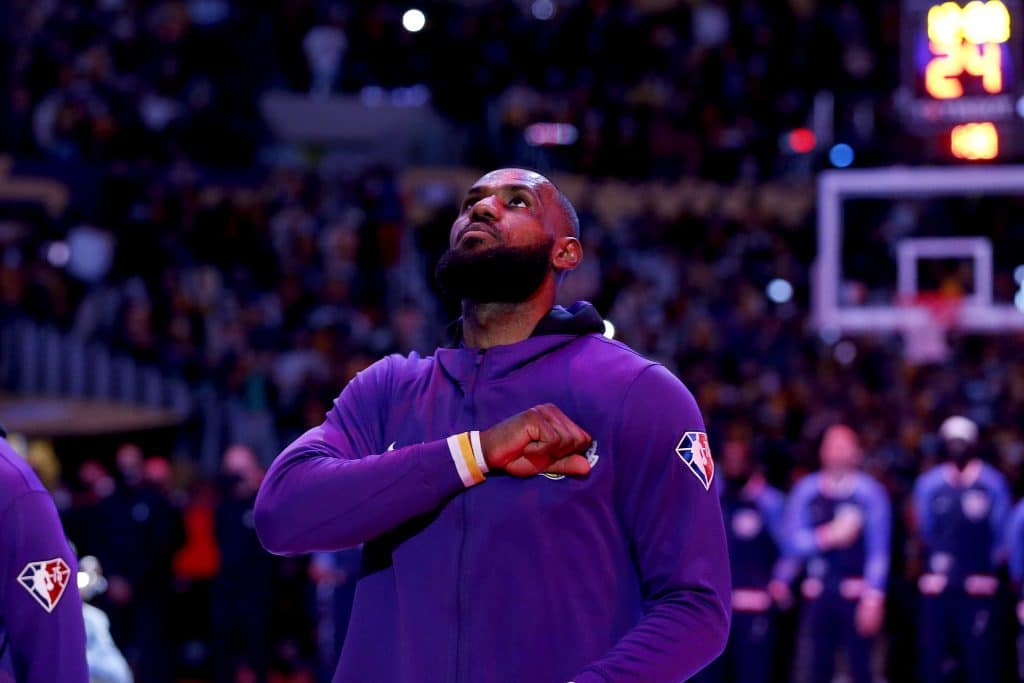
To look back at LeBron James’ career is to witness a twenty-three-year masterclass in evolution. His journey is more than just a list of games; it is an epic that redefined the ceiling of professional sports.
The Hype and the Rise in Cleveland (2003–2010)
Drafted #1 overall straight out of St. Vincent-St. Mary High School, LeBron entered the NBA as the most hyped prospect in history. He immediately delivered, winning 2004 Rookie of the Year and leading the Cavaliers to their first Finals appearance in 2007 at just 22 years old. This era was defined by individual brilliance, as he claimed back-to-back MVPs in 2009 and 2010, but the Lack of a supporting cast eventually led to “The Decision,” a move that shocked the sports world and sent him to South Beach.
The Big Three and the Homecoming Miracle (2010–2018)
In Miami, LeBron embraced the role of the “villain” to finally secure the ultimate prize. Alongside Dwyane Wade and Chris Bosh, he reached four straight Finals, winning back-to-back championships in 2012 and 2013. However, his greatest legacy was written upon his return to Cleveland in 2014. In 2016, he orchestrated the greatest comeback in NBA history, leading the Cavaliers back from a 3-1 deficit to defeat a 73-win Warriors team. That championship ended Cleveland’s 52-year title drought and remains the singular most impactful moment of his career.
Hollywood Longevity and the Scoring Record (2018–Present)
LeBron’s final act in Los Angeles has been a study in sustained greatness. In 2020, he led the Lakers to a title in the “Bubble,” becoming the first player to win Finals MVP with three different franchises. Since then, he has focused on rewriting the record books. In 2023, he surpassed Kareem Abdul-Jabbar as the NBA’s All-Time Leading Scorer, and in 2024, he became the first player to reach 40,000 career points. Most recently, in 2025, he surpassed the 50,000 total point mark (regular season and playoffs combined), a milestone that underscores a level of production that may never be matched.
The Legend’s Resume
| Category | Achievement |
| NBA Championships | 4 (2012, 2013, 2016, 2020) |
| Finals MVPs | 4 (Only player to win with 3 teams) |
| League MVPs | 4 (2009, 2010, 2012, 2013) |
| All-Star Selections | 21 (NBA Record) |
| Scoring Milestones | 1st All-Time (42,000+ Regular Season Points) |
| Olympic Medals | 3 Gold (2008, 2012, 2024), 1 Bronze (2004) |
Lakers Season So Far
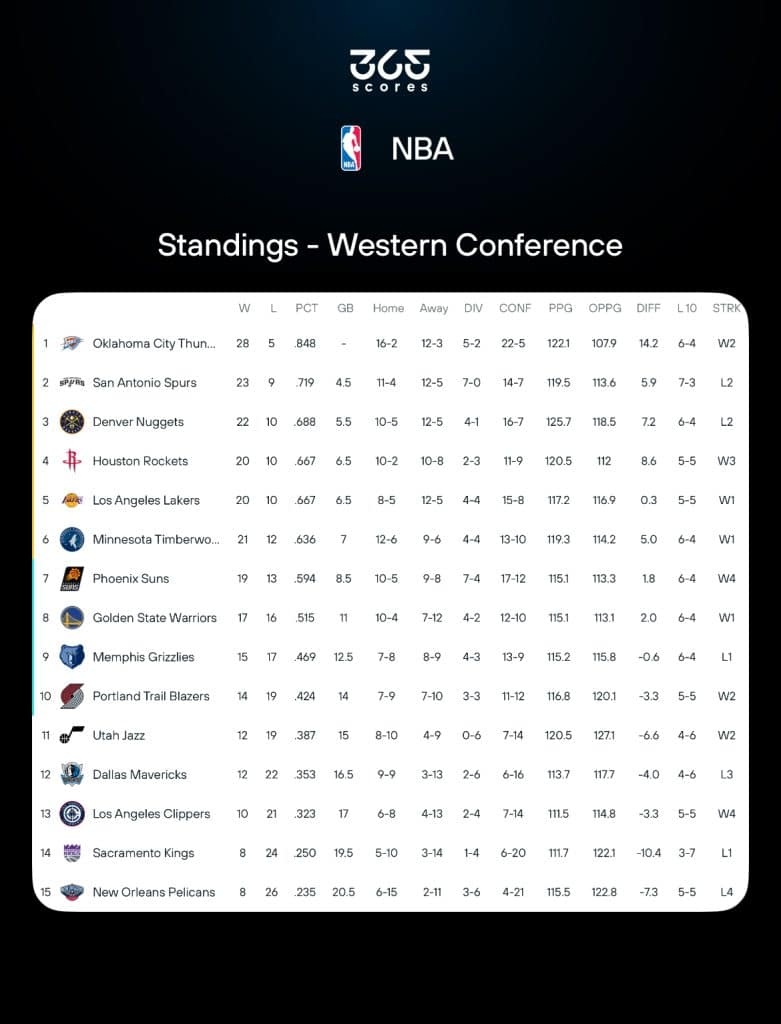
The Los Angeles Lakers have entered the final days of 2025 as one of the most formidable forces in the Western Conference, currently boasting a 20-10 record that places them at the top of the Pacific Division. Under the tactical guidance of head coach JJ Redick, the team has successfully integrated a transformed roster, most notably featuring the league’s leading scorer, Luka Dončić, alongside a supporting cast that includes Austin Reaves. This new era of Lakers basketball has seen the team pivot toward a high-octane offence that ranks among the top ten in the league, enabling them to secure the 5th seed in a highly competitive Western Conference. While the team recently had a three-game slate pf getting demolished, their dominant 125-101 victory over the Kings on December 28 served as a loud reminder that they remain tier-one championship contenders as the calendar flips to 2026.
At the center of this success is LeBron James, who continues to defy every known law of athletic longevity. In his 23rd season, LeBron is averaging 20.6 points, 6.7 assists, and 4.9 rebounds per game while shooting an efficient 50.7% from the field. While these numbers are a slight dip from his career averages, reflecting his strategic shift into a “tactical secondary” role to accommodate Dončić’s high-usage playmaking, his impact remains undeniable. He has found a second wind in December, elevating his production to 25.4 points per game over his last eight outings. This surge was highlighted by his final performance as a 40-year-old against Sacramento, where he shot a staggering 11-of-13 from the floor (84.6%) for 24 points, while he is no longer required to carry the scoring load for 48 minutes every night, his recent efficiency averaging 25.3 ppg over the last 3 weeks proves that he remains one of the league’s most lethal surgical weapons when the lights are brightest.
The “Luka-LeBron” synergy has become the focal point of the Lakers’ identity this season, creating a dual-threat engine that is nearly impossible for defenses to solve. By allowing Dončić to handle the bulk of the primary ball-handling duties, LeBron has transitioned into an elite “slasher” and spot-up threat, often benefiting from the gravity and vision of his younger co-star. However, the season hasn’t been without its hurdles; analysts have noted defensive lapses and a fluctuating net rating when the two stars share the floor for extended periods. Despite these growing pains, LeBron’s veteran presence has stabilised the locker room, especially as he mentors his son, Bronny James, and keeps the Lakers’ championship window open well into his fifth decade of life.
Are the 2025-26 Lakers True Contenders?
As the calendar flips to 2026, the question of whether the Los Angeles Lakers are true championship contenders has shifted from a hopeful maybe to a resounding yes, albeit with significant conditions. Boasting a 20-10 record and the 4th seed in a hyper-competitive Western Conference, the Lakers have firmly established themselves in the league’s upper echelon. Their case is built on a high-octane offensive identity that ranks 7th in the NBA, fueled by the historic pairing of LeBron James and Luka Dončić. This “double-headed dragon” gives the Lakers a half-court advantage that few teams can match; when the game slows down in a seven-game playoff series, having two of the greatest floor generals in history becomes a tactical cheat code that can dismantle even the most disciplined defenses.
However, the path to an 18th banner requires more than just offensive brilliance. While the Lakers’ star power is undeniable, their defensive rating sits at 25th, a glaring vulnerability that separates them from “inner-circle” favourites like the Oklahoma City Thunder. To be considered a tier-one threat, the Lakers must stabilise a defensive unit that has struggled with consistency, particularly in transition and perimeter closeouts. Their championship window is wide open, but it hinges on whether JJ Redick can mould his supporting cast, led by the defensive grit of Marcus Smart and the interior presence of DeAndre Ayton, into a top-ten defense by April. If the Lakers can bridge the gap between their elite scoring and their defensive lapses, they won’t just be dangerous opponents; they will be the team no one in the West wants to see in their bracket.
Is Lebron The Goat?
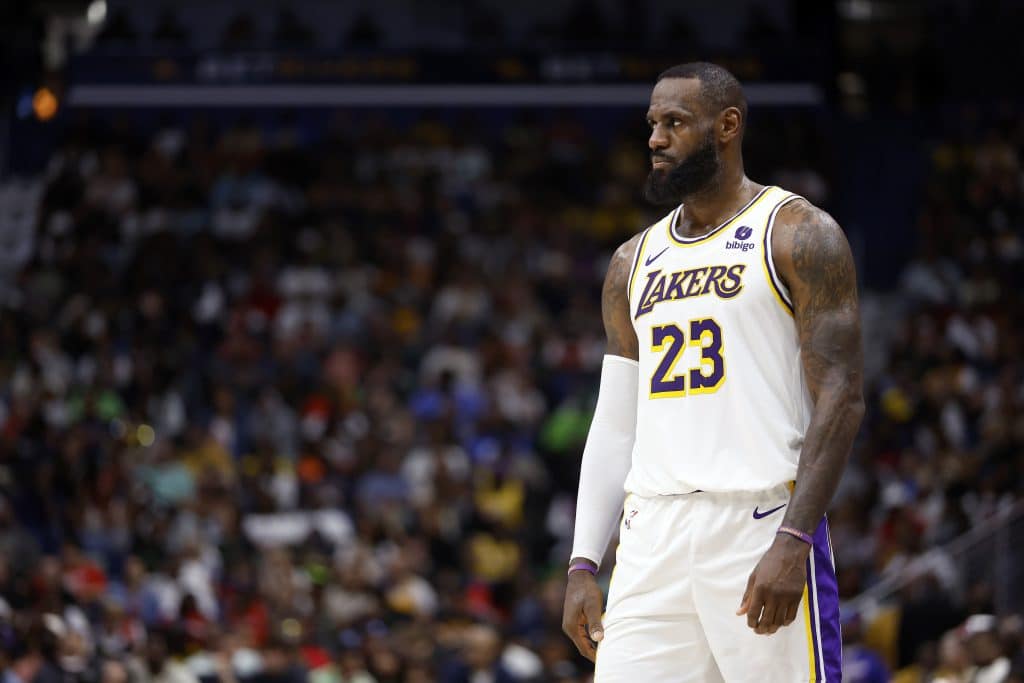
It’s the question that has defined basketball discourse for over a decade, but as we watch him blow out 41 candles today, the conversation has shifted. It’s no longer just a debate about who had the higher peak or the most iconic sneakers; it’s a debate about what we actually value in “Greatness.”
If you ask a purist, they’ll point to the 6-0 Finals record of Michael Jordan. But if you look at what LeBron has done over 23 seasons, you start to realise we aren’t just looking at a player; we’re looking at a statistical impossibility. Think about it: he entered the league in 2003 with the “Chosen One” label tattooed on his back. Most teenagers would have buckled under that pressure, but LeBron didn’t just meet the hype; he eclipsed it.
His case for the “Greatest of All Time” is anchored in a resume that spans three different decades of dominance. You have the back-to-back titles in Miami, the legendary 2016 homecoming where he dragged Cleveland back from a 3-1 deficit, and the 2020 bubble title with the Lakers. He is the only player to win Finals MVP with three different franchises.
But what really shuts down the room in the GOAT debate is the “4-1-1″ club. LeBron stands alone as the only human being to ever record 40,000 points, 10,000 rebounds, and 10,000 assists. Most legends are defined by one elite skill, but LeBron is a 6’9” Point Forward who led the league in scoring in 2008 and then led it in assists in 2020. By the time he hit 41, he’d surpassed 50,000 total career points (playoffs included).
So, when we ask if he’s the GOAT, what we’re really asking is: Do you value a decade of perfection, or a quarter-century of total mastery? For his supporters, the answer is clear. Greatness isn’t just about the rings; it’s about being the most complete, versatile, and durable engine to ever step onto a court. At 41, he isn’t just chasing ghosts anymore; he’s building a mountain that no one else may ever climb.