College Football Playoffs Is Here: First Round Winners, Key Moments, and Quarterfinal

The first weekend of the 12-team College Football Playoff didn’t feel like an experiment; it felt like the sport getting sharpened.
On-campus games brought a different kind of pressure: louder stadiums, tighter nerves, and a sense that one bad five-minute stretch could erase an entire season. And that’s exactly what happened. Alabama walked into Norman and flipped the game with one brutal defensive swing. Miami dragged Texas A&M into the mud at Kyle Field and stole a 10–3 upset that felt like it was decided by pure willpower. Meanwhile, Oregon and Ole Miss didn’t just advance, they sent a message, dropping 50 and 41 and letting the bracket know they’re not here to “hang around.”
Now the playoff moves to the New Year’s Six quarterfinals, where the stage is bigger, the opponents are better, and the comfort of home disappears. The chaos doesn’t go away; it just gets louder.
Table of Contents
Playoffs Week 1 Recap:
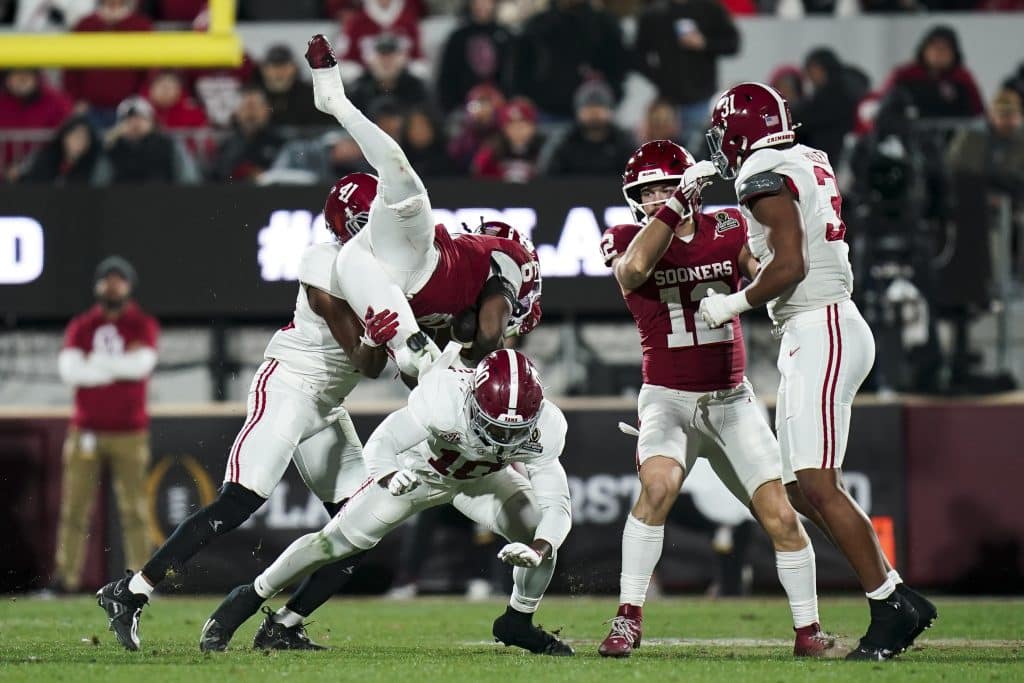
Alabama 34–24 Oklahoma
Oklahoma came out flying and had Alabama on the ropes early, jumping to a 17–0 lead behind first-down success and a crowd that believed it was about to see a breakthrough. Alabama looked out of rhythm at the start, but the game flipped on one season-defining moment: Zabien Brown’s pick-six, which instantly swung momentum and changed the pressure of every snap that followed.
From there, Alabama did what it always does in December: it settled the game down and made it about execution. The Tide ripped off 27 unanswered points, and Ty Simpson passed for 232 passing yards, 2 TDs played steady, mistake-free football to keep drives alive without forcing anything. Oklahoma kept fighting, but once it was forced into chase mode, Alabama’s defensive pressure tightened, and the Sooners couldn’t recapture their early rhythm.
Miami Hurricanes 10–3 Texas A&M Aggies
This was playoff football stripped down to its rawest form, no rhythm, no flow, just pressure, noise, and mistakes waiting to happen. Texas A&M leaned into its physical edge and home-field energy early, and defensively they largely delivered, consistently winning early downs and limiting Miami’s explosive plays. The Aggies moved the ball in spurts, particularly between the 20s, but repeatedly failed to finish drives, turning promising possessions into punts and letting the tension inside Kyle Field slowly tighten.
Miami survived by fully embracing the ugliness. The Hurricanes stayed patient, played field position, and trusted their defense to keep the game alive long enough for one opening. That opening finally arrived late in the second half, when Mark Fletcher Jr. took control of the moment. Fletcher powered Miami’s only touchdown drive, churning out tough yards between the tackles and giving the Hurricanes the physical presence they had lacked earlier. In a game where points felt priceless, his downhill running flipped field position and broke the deadlock. Finishing this game with 172 rushing yards was the difference in this matchup.
The defense finished the job. On Texas A&M’s final push, freshman Bryce Fitzgerald stepped in front of a pass for the game-sealing interception, silencing the crowd and sealing the upset. Statistically, the margins were razor-thin. Texas A&M held the ball longer and matched Miami in total yardage, but the difference was situational execution. The Aggies had opportunities without payoff; Miami had one drive, one back, and one turnover that mattered. It wasn’t dominant, and it wasn’t pretty, but in a first-round road playoff game, enduring was enough.
Ole Miss Rebels 41–10 Tulane Green Wave
Ole Miss turned its playoff opener into a message game, while Tulane learned just how ruthless the stage can be. The Rebels exploded out of the gate, scoring 14 points in the opening eight minutes and immediately forcing Tulane out of its comfort zone. Once Ole Miss had a lead, the game tilted hard, tempo increased, spacing widened, and every Tulane mistake was punished.
Trinidad Chambliss controlled the game, accounting for over 300 all-purpose yards and three touchdowns, mixing efficiency with aggression and never allowing Tulane to slow things down. Ole Miss finished with nearly 500 total yards of offense, consistently winning in space and on early downs. Tulane fought, but they were constantly playing uphill. The Green Wave struggled to sustain drives early, and by the time they found any rhythm, the deficit had already changed the playbook. Ole Miss’s defense deserves credit as well; they forced errors, limited chunk plays, and kept Tulane from ever believing momentum could swing. It was comprehensive, and it instantly reshaped how Ole Miss is viewed heading into the quarterfinals.
Oregon Ducks 51–34 James Madison Dukes
This was the fastest game of the weekend, mentally and physically. Oregon came out flying, scoring on its first five drives and building a 34–6 halftime lead that forced James Madison into full chase mode. Dante Moore was brilliant, throwing for 313 yards and 4 touchdowns while adding a rushing score, repeatedly turning defensive lapses into instant damage.
To James Madison’s credit, they never folded. The Dukes finished with over 500 total yards, continuing to attack even when the score ballooned. But Oregon’s explosiveness kept resetting the pressure. Every JMU response was met with another Oregon strike, and that constant scoreboard stress eventually forced riskier decisions. Defensively, Oregon bent more than they’d like, but their offense made it irrelevant, the Ducks didn’t need perfection, just space. By the fourth quarter, the equation was simple: JMU needed long, flawless drives, while Oregon needed one snap to flip the field. Oregon’s ceiling was the difference.
Quarterfinal Preview: The Bye Teams Arrive
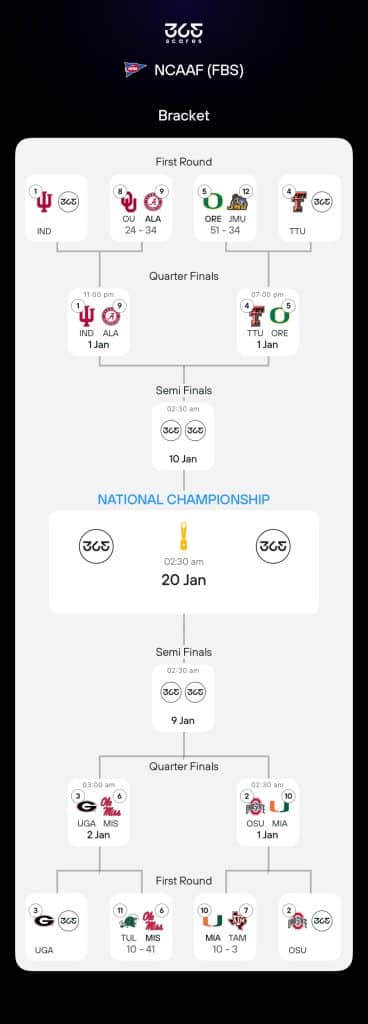
Cotton Bowl (Dec 31): No. 10 Miami vs. No. 2 Ohio State
This matchup comes down to whether Miami can slow Ohio State’s multi-layered offense long enough to drag it into a fourth-quarter decision. Ohio State has playmakers everywhere, led by Heisman Finalist Quarterback Julian Sayin, but the tone-setter is wide receiver Jeremiah Smith, who has been a constant problem all season and forces defenses to change their coverage plan. Running back Bo Jackson has also been in strong form, having 100+ rushing yards in 3 of his last 4 games, and if he is ripping off chunk gains early, Miami is suddenly defending the whole field.
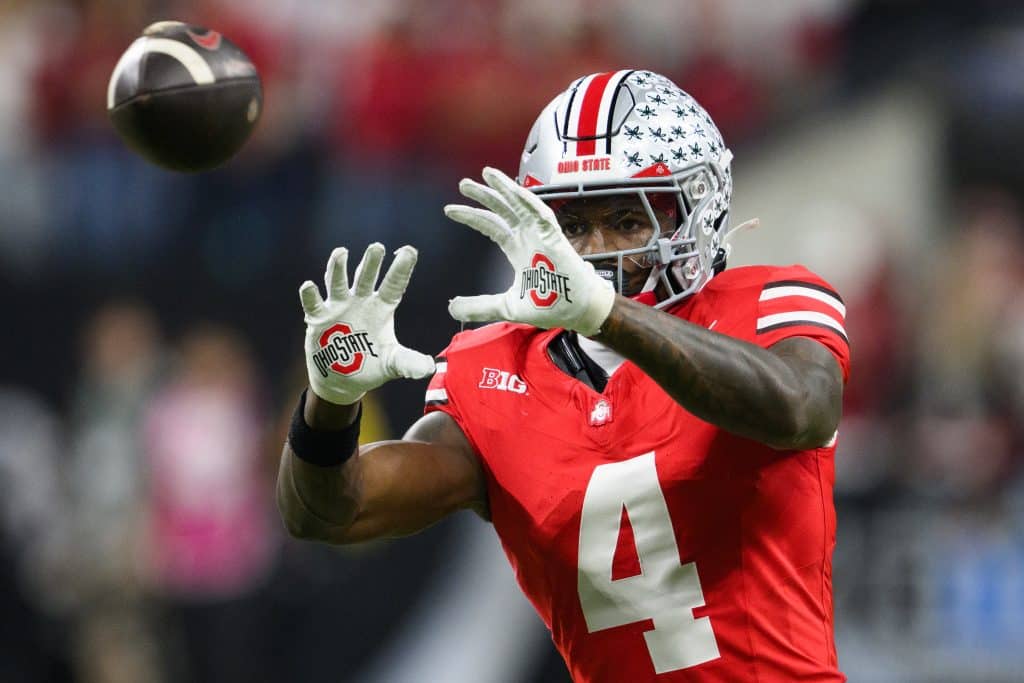
Rueben Bain Jr. is the Hurricanes’ most disruptive defender and is coming off a dominant performance, recording three sacks in his last game, and Miami will need that same level of pressure again. Offensively, Miami needs Carson Beck to be sharp early, as falling behind removes their ability to control the tempo and lean on their defense. If the Hurricanes can keep this close into the second half, pressure shifts quickly to Ohio State.
Orange Bowl (Jan 1): No. 5 Oregon vs. No. 4 Texas Tech
This is the quarterfinal that screams “points,” because both teams are built around quarterbacks who can stretch you vertically, and both can turn a two-play sequence into 14 points. Oregon’s Dante Moore is the headline after five total touchdowns in the first round, and he’s got real weaponry: Malik Benson is Oregon’s leading receiver and coming off a 5 catch 119 yard and 2 TD game, and the Ducks just welcomed back freshman wideout Dakorien Moore, adding another speed layer.
Texas Tech’s “bye team” status is earned, not gifted. Quarterback Behren Morton is the engine, Caleb Douglas is the top target. The Red Raiders have well rounded offense with Cameron Dickey over 1,000 rushing yards and have shown they can beat you in many different ways offensively. Defensively, keep an eye on linebacker Jacob Rodriguez, this year’s Chuck Bednarik Award winner as the nation’s top defensive player. He finished with 117 tackles and 7 forced fumbles, and Texas Tech will need his speed, tackling reliability, and ability to create turnovers in space to handle Oregon’s perimeter pace.
The key isn’t who has more talent, it’s whose defense can survive the most snaps without giving up explosives. Oregon’s first half vs JMU looked like a clinic; the second half looked like an invitation. Texas Tech will try to be the team that turns that invitation into a shootout it controls.
Rose Bowl (Jan 1): No. 9 Alabama vs. No. 1 Indiana
Indiana has worn the No. 1 seed all season, and now it gets the most annoying quarterfinal opponent possible: the team that already proved it can get punched in the mouth and still win. Alabama’s path is straightforward. Ty Simpson has to stay composed, and the Tide need their star wideouts Ryan Williams and Germie Bernard to play up to their potential and make the big-time catches that swing playoff games.
Indiana’s edge is that it doesn’t rely on chaos. It has the best player in the game: Fernando Mendoza, the Heisman-winning quarterback, who has 33 TD passes and an elite QBR profile. If Indiana plays clean, it forces Alabama to be patient, and that’s where underdog comebacks get harder, because you don’t get extra possessions from sloppy mistakes.
This one feels like a test of Alabama’s new identity. The Tide just showed it can flip a game with defense and special teams, but Indiana is designed to avoid gifting you those moments.
Sugar Bowl (Jan 1): No. 6 Ole Miss vs. No. 3 Georgia
This is the quarterfinal with the most “Sunday players” on the field, and it comes with a real datapoint: Georgia already beat Ole Miss 43–35 in the regular season. Georgia’s defensive profile is championship-level, allowing only 15.9 points allowed per game, offensively, it runs through junior quarterback Gunner Stockton, with Zachariah Branch as the primary weapon, whose production and playmaking ability have been central to Georgia’s attack all season.
Ole Miss’s case is simple: it’s the hottest offense left in the bracket. Trinidad Chambliss has been in electric form, and Kewan Lacy gives the Rebels real balance on the ground, so they can hurt you in more than one way. The first round showed how quickly they can jump on teams and turn the game into a track meet. With Lane Kiffin now gone, the Rebels are still settling into life under a new voice and figuring out how they want to win in high-pressure moments. That makes this week even tougher against a well-rounded Georgia team, but it can also sharpen the edge. Ole Miss will play fast and aggressively, knowing that in a game like this, distractions either split you or pull you tighter together.
The hinge moment will be pace. If Ole Miss can force Georgia into a track meet, the upset is real. If Georgia drags it into a measured, physical, red-zone game, it starts to look like a sequel, and Georgia already knows how the ending goes.
Fernando Mendoza: The Heisman Winner Driving Indiana’s No. 1 Seed
Indiana’s season has been the definition of a Cinderella rise, and Fernando Mendoza is the reason it never felt like a fluke. He guided the Hoosiers to the No. 1 seed with clean, controlled football all year, and the production matched the poise. By season’s end, he had done something no Indiana quarterback had ever done, winning the Heisman Trophy as the first recipient in program history. Mendoza finished with over 3,500 passing yards and 33 touchdown passes, a stat line that usually belongs to the sport’s traditional powers, not a team that began the year outside the playoff conversation.
What makes Mendoza so dangerous is not just the numbers, it is how consistently he keeps Indiana on schedule. He wins early downs, makes the correct decisions against disguise, and avoids the kind of reckless mistakes that hand playoff games away. That steadiness is exactly how Indiana stacked wins, handled pressure weeks, and earned the right to carry the top seed into January.
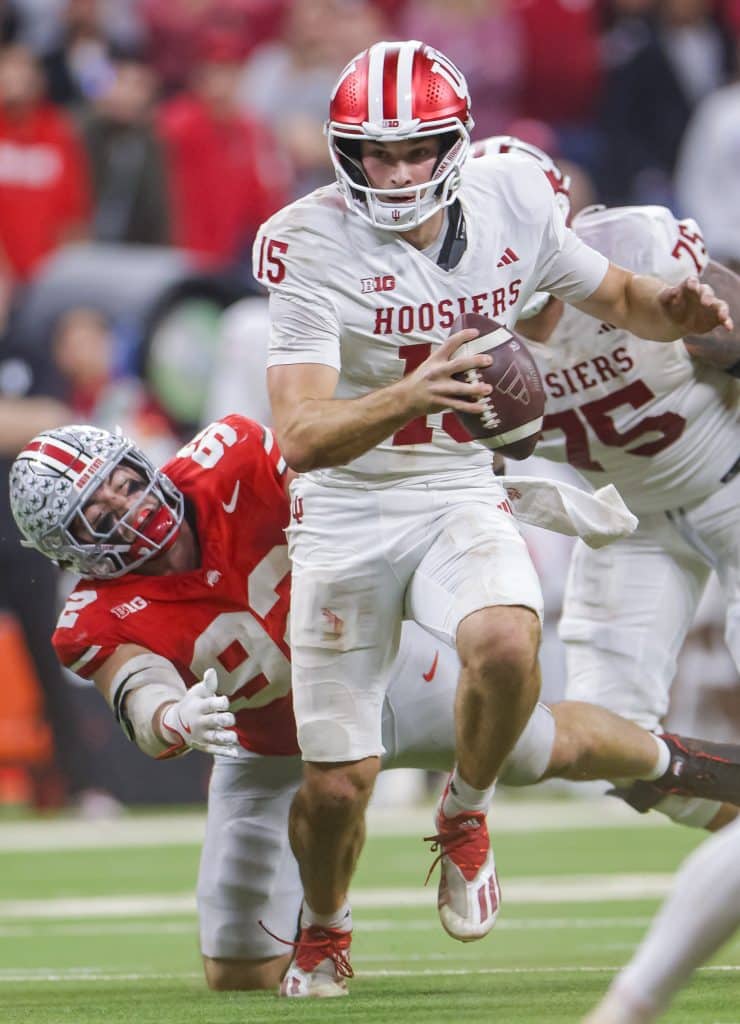
Now it gets cinematic. The Heisman winner and the No. 1 seed walk into the Rose Bowl carrying the weight of an entire season that still feels unreal, and across from them is Alabama, a program that lives for this stage and does not care about fairy tales. Indiana has spent months proving it belongs, but this is the game where belief has to become execution for four quarters. If Mendoza is as composed as he has been all season, Indiana can control tempo and make this feel like their kind of night. If Alabama speeds up his clock and turns it into chaos, the pressure swings fast. Either way, the spotlight is massive, the margin is tiny, and this one has that rare feeling that the whole playoff might pivot on what happens in Pasadena.
Bottom line
The first round proved the 12-team playoff is not a gimmick. It is pressure, punishment, and momentum swings that can end a season in five minutes. Now the byes are gone, the stage is neutral, and the matchups get sharper. Miami’s toughness meets Ohio State’s firepower, Oregon and Texas Tech threaten a points-fest, Alabama and Indiana brings the Heisman spotlight to the Rose Bowl, and Georgia vs Ole Miss feels like the heavyweight fight. The bracket is smaller now, but the games are bigger, and one great quarter is no longer enough.