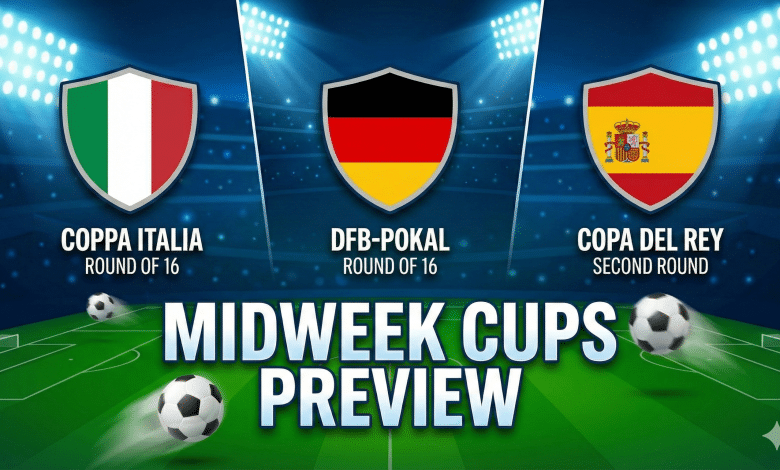
European football’s most unpredictable stories rarely start in the league – they begin in the cups. While league tables reward consistency and long-term planning, the domestic cups in Italy, Spain and Germany are built for the moment: one-off nights, rotated line-ups, tiny away grounds and the constant threat of a giant getting knocked over by a team most fans have never heard of.
This year, the Coppa Italia and DFB-Pokal have all reached that tipping point in the calendar where things get serious, whilst the Copa Del Rey is just getting underway. The early rounds have already delivered scares, statement wins, and a couple of genuine shocks, and the next set of fixtures throws together heavyweights under pressure, defending champions with targets on their backs, and underdogs who suddenly realise they’re only two or three results away from something historic.
Here we take a snapshot of all three competitions at the same moment in time – revisiting the biggest twists from the last round, then spotlighting the standout ties in the one to come, where league form, reputation and logic all get thrown into the same knockout blender.
Table of Contents
Coppa Italia
The Coppa Italia is back at the stage where it really matters. The holders, Bologna, are in the draw, the top eight seeds have joined, and a round of 32 full of scares and statements has set up a round of 16 that feels genuinely heavyweight. Bologna’s presence as defending champions – after last season’s 1–0 win over AC Milan that ended a 51-year wait for a major trophy – is the reminder that this competition can still rip up the usual Serie A hierarchy.
What’s Happened So Far
The second round (round of 32) delivered exactly what a good Coppa Italia night should: one big shock, and several giants doing just enough.
The headline upset came at the Bentegodi, where Venezia held Hellas Verona to 0–0 over 120 minutes and then won 5–4 on penalties, Nunzio Lella smashing home the decisive kick. It was the classic away cup win, playing resiliently for 120 minutes, then keeping your nerve from the spot.
Como provided the clearest statement win. At the Stadio Giuseppe Sinigaglia, they tore Sassuolo apart 3–0, with Jesús Rodríguez scoring inside two minutes, Anastasios Douvikas adding a second, and Rodríguez striking again before half-time to finish the tie before the break. It was a performance that announced Como as more than just a passenger in this competition.
Elsewhere, the traditional clubs quietly took care of business. Torino squeezed past Pisa 1–0, Genoa beat Empoli 3–1, and Parma edged a wild 2–2 against Spezia before going through on penalties. AC Milan, seeded directly into the round of 16, joined the party by outclassing Lecce 3–0 at San Siro, with Christian Pulisic among the scorers – another hint that they see this cup as a serious priority.
All of that fed into a last-16 lineup that looks like a mini-Serie A all-star bracket, with all the biggest clubs in Italy still involved in what will be a chaotic tournament.

Key Matchups Upcoming
Juventus vs Udinese
Juventus open the round of 16 at home, knowing the Coppa is their clearest route to silverware and a bit of stability under Luciano Spalletti. Udinese will almost certainly come to the Allianz Stadium to sit in, slow the game down and play for set pieces and counters, trying to turn it into the kind of tight, scrappy tie where one mistake can flip everything. For Juve, it’s about turning territory and pressure into goals early, rather than letting 70% possession turn into 90 minutes of nerves.
Player to watch: Kenan Yildiz – fresh off a match-winning brace against Cagliari, the 20-year-old is Juve’s in-form attacker and the one most likely to break a stubborn Udinese block.
Inter vs Venezia
On paper this looks like the most lopsided tie of the round: Inter, with one of Serie A’s deepest squads, at San Siro against a Venezia side who had to survive 120 minutes and penalties away to Hellas Verona just to get here. Inter will dominate the ball and can rotate without really weakening their XI, but the cup dynamic is simple: if they waste chances and Venezia stay compact, the tension in the stadium will rise and one set piece or break could suddenly put the favourites on the edge of embarrassment. Venezia have already shown they can defend for long spells and hold their nerve from the spot, so they’ll be happy if this drifts towards extra time again.
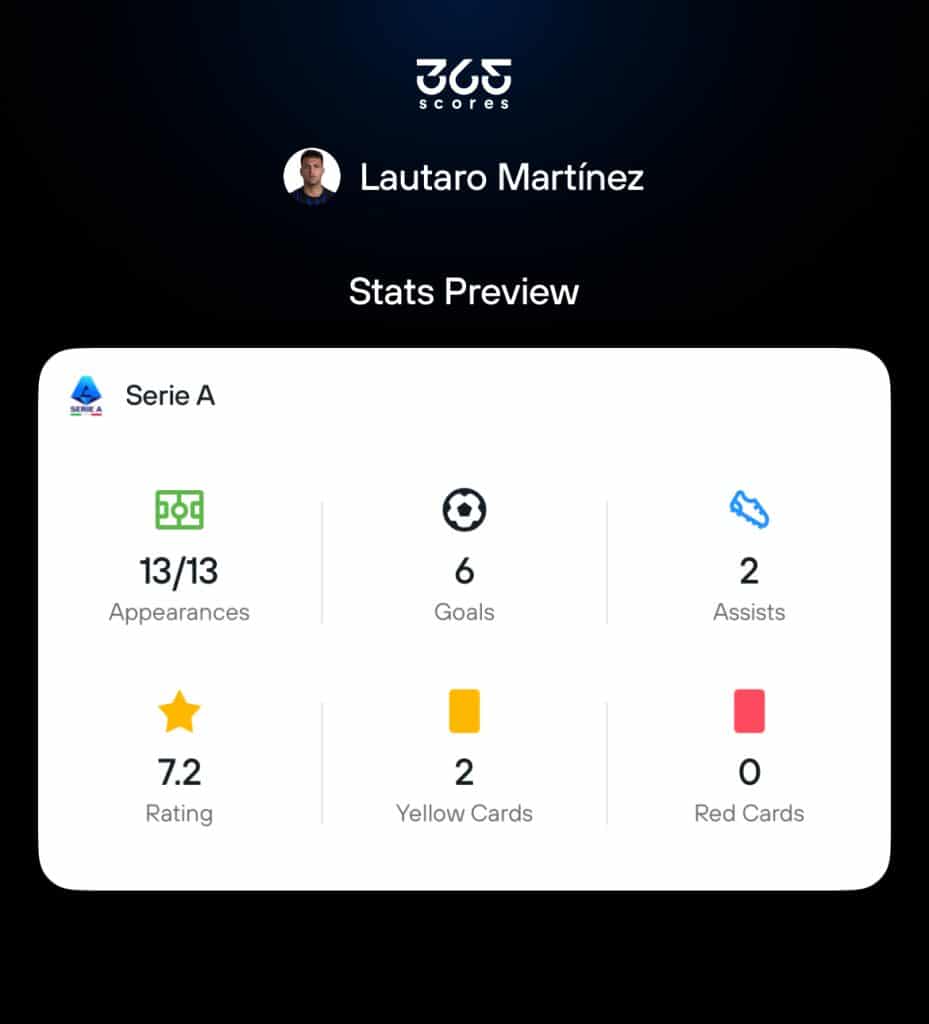
Player to watch: Lautaro Martínez – Inter’s overall top scorer this season with 8 goals in all competitions, his movement and finishing are the biggest difference-makers in turning expected dominance into an early, stress-free lead.
Bologna vs Parma
This is where Bologna’s title defence really begins. Last season’s final win over Milan in Rome ended a 51-year wait for major silverware and turned them from a nice story into a team everyone wants to knock out. Parma arrive in the opposite role: underdogs with nothing to lose, but battle-hardened after a wild 2–2 against Spezia that they only settled 4–3 on penalties. Bologna will try to use the ball, lean on their patterns in possession and ride the atmosphere at the Dall’Ara; Parma will try to drag the game into a slow, physical contest and trust that if they’re still level late on, all the pressure sits on the holders.
Player to watch: Riccardo Orsolini – Bologna’s creative and goalscoring winger, and one of the key figures in last season’s run, he’s the player most likely to produce the moment of quality that settles a tight derby-tinged tie.
Lazio vs Milan
Lazio vs AC Milan at the Olimpico is the glamour tie of the round: two big clubs, both seeing the Coppa as a realistic route to a trophy. Lazio’s task is to turn it into the kind of game they thrive on at home – intense pressing in spells, then compact, organised defending with quick breaks when Milan overcommit. Milan arrived with fresh psychological fuel after a derby win over Inter and a tight league victory over Lazio themselves, built on big moments from their forwards and huge saves from Mike Maignan. In a one-off knockout, this feels like the tie where a single counter, a single save or a single VAR call could tilt the whole bracket.
Player to watch: Christian Pulisic – already a derby match-winner this season and Milan’s most decisive attacker in big moments, his timing of runs and knack for clutch goals make him the obvious danger man under the Olimpico lights.
DFB-Pokal
The DFB-Pokal round of 16 is where the fairytale stuff usually starts to get serious. With 16 teams left, the path to the final in Berlin next May is beginning to come into view, and the draw has served up a mix of heavyweight clashes and classic underdog shots at glory. With heavyweights and genuine dark horses all crammed into the last 16, this is exactly the stage where the Pokal starts to feel like anything can happen.
Whats Happened So Far
The second round at the end of October was peak Pokal Football.
Borussia Dortmund needed penalties to get past Eintracht Frankfurt, coming from behind through a Julian Brandt equaliser before Gregor Kobel carried them through a 4–2 shootout win. Bayer Leverkusen were also pushed to the edge, only seeing off Paderborn 4–2 after extra time in a tie that briefly threatened a big upset.
Bayern Munich, meanwhile, turned a tricky draw at Köln into a statement: they fell behind to Ragnar Ache, then roared back to win 4–1 with a Luis Díaz strike, a Harry Kane brace and a Michael Olise finish – their 14th straight win of the season in all competitions and a new record for Europe’s top five leagues. Union Berlin booked their spot with a nervy 2–1 extra-time win over Arminia Bielefeld, settled by a late Danilho Doekhi header.
Defending champions Stuttgart were businesslike in a 2–0 victory at Mainz, with Luca Jaquez and Atakan Karazor on the scoresheet. Bochum produced one of the round’s stories by knocking out Augsburg 1–0 away, thanks to Gerrit Holtmann’s deflected strike, a result that had the newly relegated club dreaming of a big home tie. Borussia Mönchengladbach finally found some joy in a tough season with a 3–1 win over Karlsruher. St. Pauli topped that for drama, beating Hoffenheim on penalties after a 2–2 draw capped by Mathias Lage’s 120th-minute equaliser and a shootout save from Ben Voll. All of it sets up for a jam-packed, highly anticipated Round of 16.
Key Matchups Upcoming
Borussia Dortmund vs Bayer Leverkusen
The tie of the round is a first-ever Pokal meeting between Dortmund and Leverkusen – and it comes just days after Dortmund’s 2–1 Bundesliga win at the BayArena, where headers from Aaron Anselmino and Karim Adeyemi resisted a furious late Leverkusen push. In the Cup, both have looked vulnerable: Dortmund needed penalties to survive Frankfurt, while Leverkusen only pulled clear of Paderborn in extra time.
This feels like a game where tempo will swing: Dortmund’s more direct transitions against Leverkusen’s possession-heavy structure. The question is whether Leverkusen can control the central spaces better than they did in the league meeting, and whether Dortmund’s back line can cope with Leverkusens star studded attack led by Patrik Schick, who leads the team with 5 goals this season.
Player to watch: Julian Brandt – equalised in Frankfurt in the previous round and is still Dortmund’s main connector between midfield and attack; how much time and space he finds between Leverkusen’s lines may decide the tie.
Union Berlin vs Bayern Munich
A packed Alte Försterei, Union massive underdog, and Bayern looking to keep a potential treble on course – this is classic modern Pokal. Union dragged themselves past Bielefeld in extra time, while their league form has been up and down. At home, they still tend to turn games into arm-wrestles.
Bayern arrive in full juggernaut mode. They’ve already survived a scare at third-tier Wehen Wiesbaden in the first round – Harry Kane scoring twice, including a stoppage-time winner – and then dismantled Köln 4–1 with another Kane brace. He now leads the Pokal scoring charts with four goals. This could be a tighter matchup than most expect with Bayern in questionable form over the last 3 weeks, where they have split points with Union Berlin, been dismantled in the Champions League by Arsenal and most recently looked shaky early versus St. Pauli.
Player to watch: Lennart Karl– Bayern’s 17-year-old attacking midfielder has become the club’s youngest-ever Champions League scorer and the youngest to score in each of his first two Champions League starts. With four goals in 18 senior appearances across all competitions already, his left foot and knack for big-moment contributions make him exactly the kind of wild card who could tilt a tight Pokal tie Bayern’s way.
Borussia Mönchengladbach vs St. Pauli
Gladbach’s season badly needed a spark; the 3–1 Cup win over Karlsruher provided one. Machino opened the scoring, Elvedi doubled it from a set piece, and Tabaković wrapped things up late on – all while 16-year-old Wael Mohya came off the bench to become the youngest player in club history. Since then, Gladbach have hammered St. Pauli 4–0 away in the league, so there’s a fresh psychological edge to this matchup too.
St. Pauli, for their part, are leaning into the Pokal’s drama. Their 2–2 draw with Hoffenheim in the second round swung repeatedly – they scored inside a minute, fell behind, then forced penalties before Ben Voll’s save in the shootout sent them through. On neutral paper, Gladbach’s individual quality and home advantage make them favourites, but St. Pauli have already shown they can live with top-flight opposition over 120 frantic minutes.
Player to watch: Haris Tabaković – Gladbach’s on-loan target man is in one of the hottest form spells in the league, sitting near the top of the Bundesliga scoring charts and already scoring in both the last Pokal round. If he gets good service, this tie could tilt quickly.
Copa del Rey
The Copa del Rey is back: with the competition kicking off this week, we are headed for a straight road to a packed final at La Cartuja in Seville. It’s Spain’s most unpredictable competition – the place where La Liga giants are dragged out of their comfort zones, and semi-pro teams get 90 minutes to rewrite their history.

Format and what’s at stake
From the main draw onwards it’s single-leg knockouts, usually played at the home of the lower-division club when they face a professional side. That means short away trips to small, hostile stadiums where the pitch, the crowd and the occasion level the gap in quality.
The Supercopa teams (Barça, Real Madrid, Atlético Madrid and Athletic Club) join at the round of 32 and are seeded to avoid each other early. However, they still have to navigate those awkward away days. The winner earns:
- A place in the Europa League group stage
- A spot in the Supercopa de España
- And, for most clubs, their best realistic chance at a trophy all season
Contenders
Barcelona
Barça are the team to beat: defending champions, all-time record holders (32 Copas) and winners of the 2024–25 edition thanks to that 3–2 extra-time clásico in Seville. Their cup attack last season was led by Ferran Torres, who finished as top scorer in the competition with six goals, while Robert Lewandowski chipped in three more from centre-forward.
In La Liga 2024–25, Lewandowski hit 27 league goals, second only to Mbappé, underlining how much firepower they can rotate into early-round ties when others are resting stars. Add an emerging creator like Lamine Yamal, who had 14 goal contributions in his first dozen games under Hansi Flick, and you’ve got a side with enough depth and goals to survive tricky away nights and still peak for the semis and final.
Real Madrid
Madrid comes in as runners-up and serial contenders, and the numbers tell you why. In 2024–25, Kylian Mbappé topped the La Liga scoring charts with 31 league goals, while teenage forward Endrick scored five times in the Copa, joint-second in the competition – including the winner in their semi-final first leg away to Real Sociedad.
They didn’t lift the cup, but they put five goals past both Real Sociedad and Barça over two-legged semi-final and final ties, and with that level of output, they’re never far from another run to La Cartuja. If Madrid treats the early rounds seriously rather than as a pure rotation exercise, their attacking talent alone makes them favourites in any knockout.
Atlético Madrid
Atlético were a penalty kick or two from changing the story of last season’s Copa. They reached the semi-finals of the 2024–25 edition, losing 5–4 on aggregate to Barcelona in a tie that underlined how dangerous they are in this format.
Up front, Julián Álvarez finished with five Copa goals, while big striker Alexander Sørloth added four, both among the top scorers in the competition. With Simeone’s defence still in great form, Atlético are perfectly suited to the cup: playing well-structured football, controlling games and then looking dangerous when going forward.
Athletic Club
Athletic are the Copa specialists. They ended a 40-year trophy drought by winning the 2023–24 final against Mallorca on penalties at La Cartuja, taking their tally to the mid-20s in Copa titles – second only to Barcelona – and re-establishing themselves as the competition’s powerhouse.
Their 2023–24 triumph was built on a young, explosive core: Nico Williams was player of the match in the final, constantly ripping Mallorca open from the left. Even in 2024–25, when they were knocked out 3–2 by Osasuna in a wild round-of-16 tie at San Mamés, they showed how dangerous they are in single-leg, high-emotion games. Any draw that gives Athletic multiple home ties instantly makes them a live threat to go deep again.
Real Betis
Real Betis feel like the lurking Copa threat just outside the “big three.” They’ve lifted this trophy recently – the 2022 win over Valencia on penalties at La Cartuja – and under Manuel Pellegrini, they’ve become a consistent knockout side, reaching the 2024–25 Conference League final and finishing 6th in La Liga that same season. Now they’ve pushed on again and are currently sitting 5th in La Liga, scoring 37 goals in their first 20 matches of 2025–26, which shows how much attacking punch they carry. Isco was their top scorer last season with 12 goals in all competitions, and he’s now part of a deeper frontline alongside the likes of Antony, Abde Ezzalzouli, and Cucho Hernández, giving Betis enough firepower to rotate in early Copa rounds while still putting out a front line capable of knocking out anyone they draw.
Bottom Line
In three different countries, the same story is starting to take shape: the cups are where seasons bend. In Italy, the Coppa Italia’s round of 16 has turned into a mini–Serie A showcase, with Juventus, Inter, Milan and Napoli all staring at awkward, losable ties while Bologna tries to prove last year’s fairytale made them contenders, not a one-off. In Germany, the DFB-Pokal is already down to the sharp end – Dortmund, Bayern and Stuttgart all one bad night away from watching someone else walk out in Berlin. And in Spain, the Copa del Rey has only just kicked off, but the bracket is already loaded with landmines for Barcelona, Real Madrid and a Betis side quietly putting together the squad of a proper cup threat.
What links all three competitions is that they ask questions the league never does. Can a title challenger handle a heavy pitch and a tiny dressing room on a Wednesday night? Can a defending champion live with being hunted instead of hunting? Can a mid-table side, or a recently promoted one, string together three perfect performances and suddenly find itself 90 minutes from a final? Over the next few weeks, Juventus in Turin, Bayern at the Alte Försterei, Betis on the road in Spain and a handful of ambitious outsiders will all find out the same thing: in the cups, reputation is only your starting point. What happens from here is going to be defined by big moments, and there will be no tomorrow.
Because in the cups, it only takes one night, one bounce, and one hero for the whole of Europe to wake up talking about a different team.