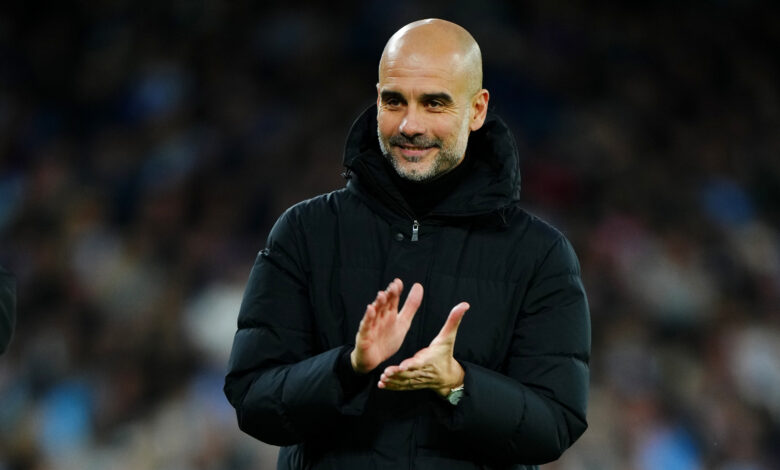
As Manchester City face Liverpool FC tonight, Pep Guardiola commands his 1,000th match as manager, a monumental milestone. From his early days at FC Barcelona to his spell at Bayern Munich, to his historic achievements at Manchester City, Guardiola has not only collected trophies but reshaped the fabrics of the modern football we all know and love. Tonight, we’ll explore the cultural impact he’s left, and the defining moments of his legacy that established him as a managerial giant.
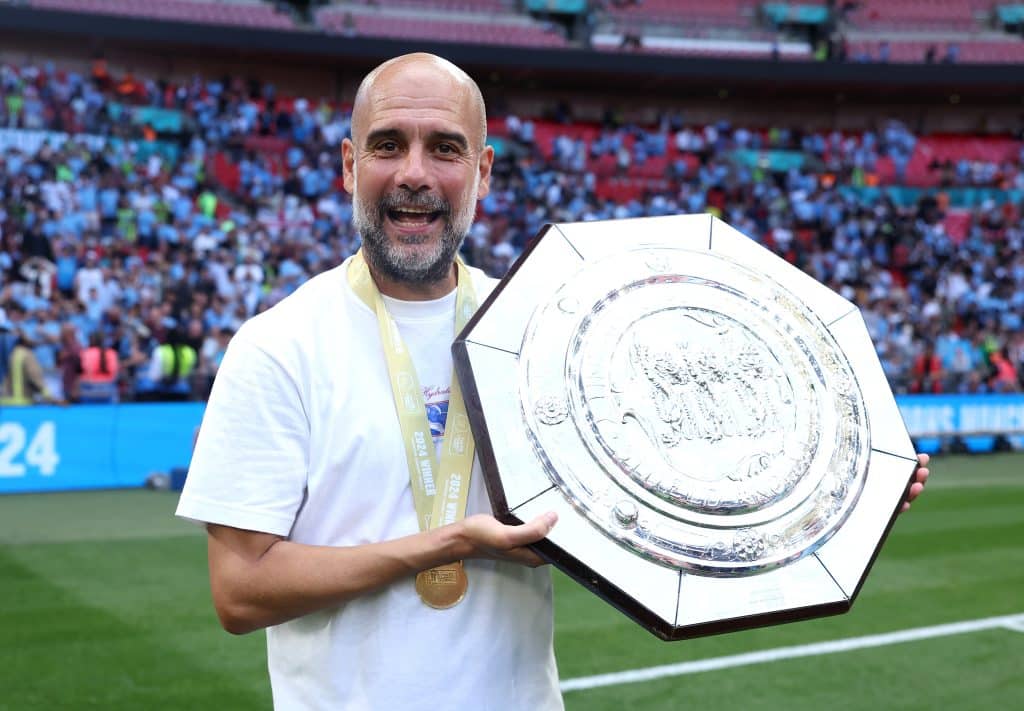
Table of Contents
Barca B
Pep’s first managerial stint, beginning in June of 2007, where he learnt the experience and Spanish style of football from a managerial perspective, winning the fourth tier of Spanish football, earning a promotion to Segunda Division B. President of Barcelona Joan Laporta announced almost a year later that Guardiola would be appointed the manager of the senior Barcelona squad going into the 2008-2009 season.
Barcelona
Guardiola’s appointment marked a turning point, as he made bold decisions to exclude Ronaldinho and Deco from his plans due to their injury history. He strengthened the squad with key acquisitions, such as Dani Alves and Gerard Piqué, and promoted Sergio Busquets from the youth team. Notable later signings included Javier Mascherano, David Villa, Cesc Fabregas, and Zlatan Ibrahimovic, who contributed to the team’s success to varying extents.
Under Guardiola, Barcelona experienced unprecedented dominance, winning a continental treble in 2008-09 and achieving the historic sextuple in 2009. His leadership brought three La Liga titles, two Spanish Cups, three Super Cups, two Champions League titles, two UEFA Super Cups, and two Club World Cup titles over four seasons, setting new records for the club and for managers globally.
Some impressive achievements for Guardiola include becoming the youngest Champions League manager at 37, being the first manager to win El Clásico four times in a row, and winning La Liga with 99 points, which was the most at the time. His reception of the World’s Best Club Coach title in both 2008 and 2010, along with an impressive set of statistics and his 14 total titles in 4 seasons, made him the most successful manager in Barcelona history.
Bayern
In January 2013, Bayern Munich announced that Guardiola would take over as manager after the 2012-13 season, replacing Jupp Heynckes. Some key acquisitions under his management included Thiago Alcantara, his most notable signing, who brought him from his former club, Barcelona. Even though he was on the squad, Guardiola transformed Robert Lewandowski into arguably the greatest player for the club ever. Other integral signings included Arturo Vidal, Xabi Alonso, Joshua Kimmich, and Mario Gotze.
His stint at Barcelona significantly overshadowed his silverware success at the Bavarians, but he still won many titles, including 3 consecutive Bundesliga titles, 2 DFB Pokal titles, the FIFA Club World Cup, and the UEFA Super Cup. He was unfortunately knocked out in the semifinals of the Champions League in all 3 seasons, before being replaced by Carlo Ancelotti for the 2016-17 season.
His achievement list includes a 7-0 win against Shakhtar Donetsk in the Champions League, tying their largest win in the competition, his record of 82 wins, 11 draws, and 9 losses, beginning the 15-16 season with 10 straight wins, and winning the Bundesliga with 7 matches to spare. Unfortunately, his tenure also includes his first stretch ever of losing 4 games in a row and him breaking Bayern’s 53-match undefeated streak against Augsburg, and having titles such as the German Super Cup and Champions League not won by Guardiola in his tenure at the German Giants.
Manchester City
After being signed to a 3 year contract in February 2016, Guardiola signed key players such as Ilkay Gundogan and Leroy Sane, who became mainstays in the team for years to come and controversially Claudio Bravo, replacing City legend Joe Hart, who never played for The Sky Blues again. His 16-17 season was his first without a trophy in his managerial career, but his first season in England was sure to be an adjustment. His season included his 100th match as a manager in a European Competition, with 61 wins and 23 draws marking him with the best record in his first century of games.
Ahead of his 17-18 season, many changes to the squad were made, as the defense required improvement due to aging wingbacks such as Zabaleta and Gael Clichy, combined with inconsistent center-backs and goalkeeping. Signings included wingbacks Benjamin Mendy and Kyle Walker, along with Ederson, to hopefully overshadow Claudio Bravo’s struggles. Along with signing Bernardo Silva and John Stones, this would bolster an already promising team. City won the EFL Cup, marking Guardiola’s first title with the club, along with winning the Premier League as centurions, the first team to claim three digits in England’s top division, encouraging him to sign a new contract with City until 2021.
Ahead of the 2018-19 season, Guardiola’s only key signing was Riyad Mahrez from Leicester City, and defeating Chelsea in the FA Community Shield. In 2019, Manchester City won the EFL Cup (Carabao Cup), FA Cup, and the Premier League with 98 points, just edging out Liverpool with 97 points to become the first English team to win a domestic treble, while Tottenham knocked out City on away goals in the Champions League semifinal.
Rodri and Joao Cancelo were signed ahead of the 19-20 season, increasing City’s team value to exceed €1 billion, the first team to ever reach this mark. He defeated Aston Villa in the EFL Cup final, marking his third straight title in the competition, but had a largely disappointing season (by his standards) after being knocked out by Lyon in the Champions League, coming second in the Premier League to Liverpool, and Pep became the first Premier League manager to receive a yellow card.
The Four-Peat
The next 4 years of Pep Guardiola’s career were historic, with teams marked by legacy signings from the past and young players coming through. Some notable signings in this period included the British record-breaking transfer of Jack Grealish from Aston Villa for £100 million, along with players including Nathan Ake, Ruben Dias, Julian Alvarez, Jeremy Doku, Josko Gvardiol, Mateo Kovacic, and Erling Haaland. His success over the last 4 seasons earned him a contract with the club until 2023.
His defense greatly improved in the 2020-21 season, beginning their campaign by conceding 1 goal in 12 matches. His 500th match as a manager was a win against Sheffield United, the halfway mark in his monumental career. After defeating Swansea in the 2021 FA Cup, he broke the record for the longest win streak in the Premier League with 15 wins in all competitions. After beating Tottenham in the EFL Cup, Guardiola won his 4th straight title. Importantly, City reached their first Champions League final, losing to Chelsea 1-0. This season marked the first of the 4 peat, winning the Premier League with 3 games to go.
Between 2021-23, Guardiola overtook Les McDowall as the manager with the most wins for Manchester City, won the FA Cup over rivals Manchester United, and led them to beat Inter Milan in the Champions League final, completing their first continental treble in 2023. He also signed a new contract in this period, managing City until June 2025.
In 2024, he became the first manager to win the UEFA Super Cup with 3 different clubs, and won the Club World Cup, becoming the first manager to win the competition 4 times, and became the first club to win 5 titles in a calendar year. Keep in mind, in all of these 4 seasons, he won the Premier League, becoming the first English club to do so. They didn’t win a domestic double this season, as local rivals Manchester United defeated the juggernauts 2-1, denying their chance at a domestic double.
Last season, City started off super strong, being undefeated in their first 9 matches, before taking a turn away against Tottenham, where they won 1 of their next 13 games across all competitions, including a stretch in the Premier League losing 4 straight games. Guardiola then signed a contract to keep him at the Etihad until 2027, despite his recent stretch of matches. They were eliminated by Real Madrid in the playoffs of the Champions League, not making the Round of 16 for the first time since 2013. This, combined with a loss to Crystal Palace in the FA Cup, marked the beginning of a decline for Guardiola.
This Season
Guardiola signed many players this season to strengthen their squad, with Tijjani Reijnders, Rayan Cherki, Rayan Ait-Nouri and goalkeeper Gianluigi Donnarumma being among the top signings. Manchester City are placed at 3rd ahead of their match against Liverpool tonight, winning 4 of their last 5 games. Haaland is their top goalscorer with 13, with many players scoring one each with Maxime Esteve from Burnley scoring 2 own goals being the club’s second top goal scorer this season. Now we will take a moment to dive into the stats, trophies and players within history that marked Pep Guardiola as a managerial giant.
Stats, Trophies and Results
Barcelona
- Managed 247, won 179, drew 47, lost 21
- Continental Treble and Sextuple
- 3 La Liga titles
- 2 Spanish Cups
- 3 Super Cups
- 2 Champions League titles
- 2 UEFA Super Cups
- 2 Club World Cup titles
- World’s Best Club Coach (2008, 2010)
Bayern Munich
- Managed 161, won 121, drew 21, lost 19
- 3 Bundesliga titles
- 2 DFB Pokal titles
- FIFA Club World Cup
- UEFA Super Cup
Manchester City
- Managed 549 games, won 387, drew 79 and lost 83
- Domestic treble, continental treble, Pentuple
- 6 Premier League titles
- 4 English League Cups
- 3 English Super Cups
- 2 FA Cups
- Champions League
- FIFA Club World Cup
- UEFA Super Cup
- World’s Best Club Coach (2023)
Key Players under Pep Guardiola
Here, we will take a look at some of the most integral players that Guardiola managed, and how they affected the trajectories of their teams.
Lionel Messi
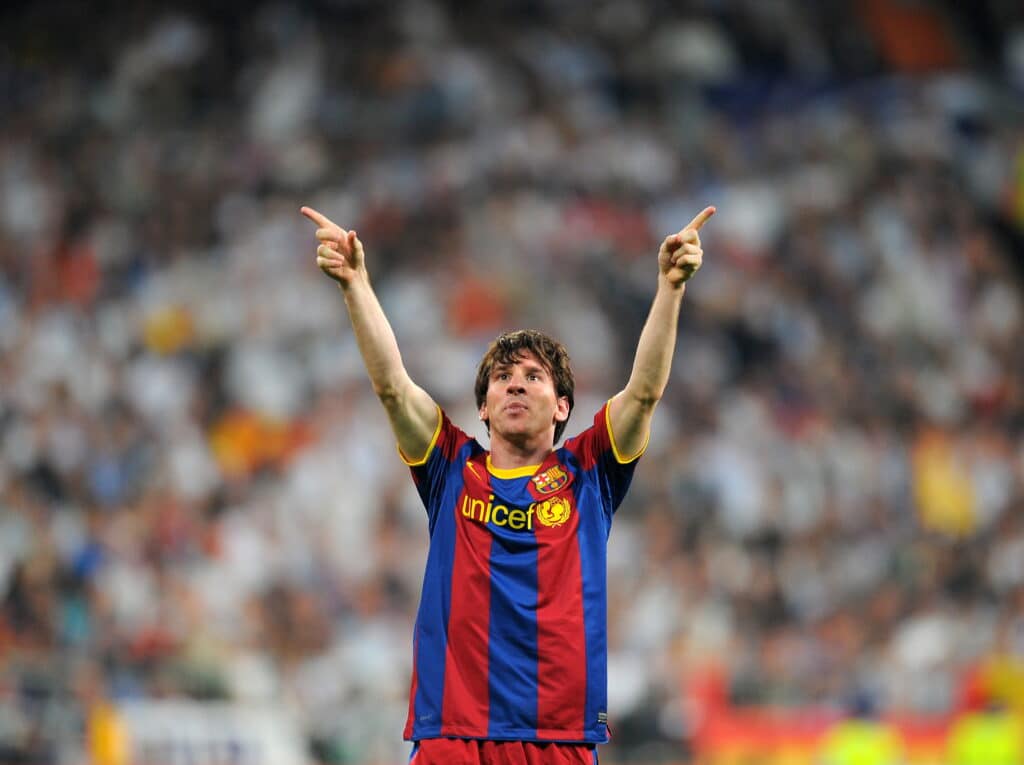
Lionel Messi evolved from a dazzling winger into one of football’s most complete and devastating central forwards. Guardiola’s decision to deploy Messi as a false nine in 2009 unlocked his full potential, providing him with the freedom to roam, dictate play, and exploit defensive gaps. Messi became the heartbeat of Guardiola’s Barcelona, leading them to the 2009 treble and dominating world football with an unprecedented mix of creativity, precision, and goal-scoring. Pep’s structure gave Messi the tactical platform to express himself fully – turning individual brilliance into collective perfection. Their partnership didn’t just define an era; it reshaped the modern understanding of positional play and attacking intelligence.
Phillip Lahm
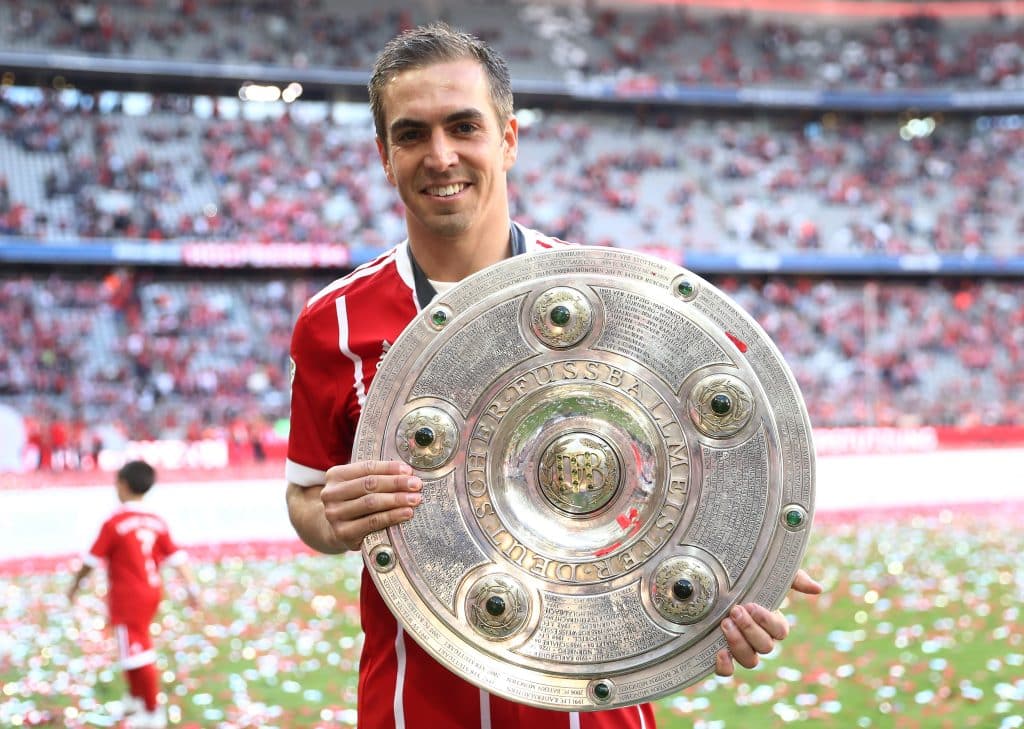
When Pep Guardiola arrived at Bayern Munich, Philipp Lahm was already regarded as one of the best full-backs of his generation. Yet under Pep, he became something more – a tactical pioneer. He famously converted Lahm into an inverted full-back and central midfielder, a move that revolutionized how defenders could influence games. Lahm’s intelligence, technical skill, and composure made him the ideal embodiment of Guardiola’s vision for controlled possession and fluid movement. His adaptability allowed Bayern to dominate games through numerical superiority in midfield, and he became Guardiola’s on-field extension – reading the game, adjusting tempo, and maintaining structure. Lahm’s transformation under Pep left a tactical legacy, affecting play, and is still studied and imitated today.
Kevin De Bruyne
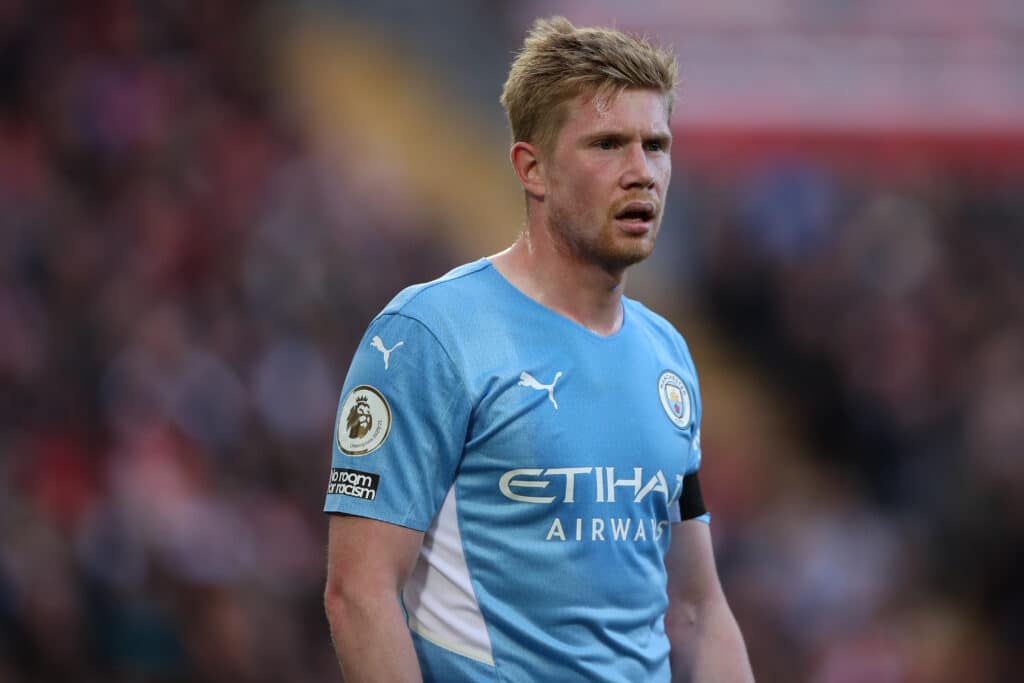
At Manchester City, Guardiola elevated Kevin De Bruyne from an elite playmaker to arguably the best midfielder in world football by refining his positioning and emphasizing his understanding of space. He turned De Bruyne into the perfect conduit between structure and chaos, with the freedom to drift between half-spaces, orchestrate counter-movements, and deliver passes with surgical precision. In Guardiola’s system, De Bruyne became both the architect and the executioner, leading City’s creative output and dictating rhythm in their record-breaking seasons. His ability to blend Guardiola’s tactical discipline with spontaneous brilliance has been central to City’s sustained dominance, making him the most emblematic player of Pep’s Premier League reign.
What Makes Guardiola an Excellent Manager?
Pep Guardiola’s managerial philosophy is the combination of a rich footballing education shaped by mentors and teammates who defined their eras. Playing under Johan Cruyff at Barcelona, he absorbed the essence of Total Football, a style defined by positional play, spatial control, and the belief that beauty and effectiveness could coexist. Cruyff’s “Dream Team” laid the tactical and ideological foundation for everything Guardiola would later build.
From Louis van Gaal, he learned structure, preparation, and the importance of discipline within creative systems. His experiences facing managers like José Mourinho and Sir Alex Ferguson honed his adaptability and competitive edge, forcing constant evolution. Teammates such as Xavi and Andrés Iniesta shaped his understanding of rhythm and control. Guardiola’s style has remained a synthesis of these influences – blending Cruyffian ideals with his own relentless innovation into a system that has transformed modern football.
Betting Odds