The 2025 FIFA U-17 World Cup is the 20th edition of FIFA’s tournament for men’s under-17 national teams, a pathway to highlight young talents worldwide. This year’s event is the largest in history, featuring 48 teams for the first time, up from 24 teams, marking a significant step in youth development. Qatar hosts this competition, using its infrastructure from the 2022 FIFA World Cup, becoming a hub for emerging talent where future stars can announce themselves on an international stage. Held from November 3 to 27 this year, here is your complete guide to the competition and what’s at stake.
Table of Contents
Key Dates & Location
| Date | Stage | Notes |
| November 3-11 | Group Stages – Matchday 1-3 | 8 Matches a day |
| November 14 and 18 | Round of 32 and 16 | Knockout stages begin |
| Late November | Quarter-final, Semi-final, Playoff for third place and Final | Final is 27 November |
Location and Timing
- Host Country: Qatar
- Stadiums: Entirely in the Aspire Zone in Al Rayyan, Qatar
- Final Stadium: Khalifa International Stadium – held 8 matches in the 2022 FIFA World Cup
- Time zone: Qatar Standard Time (AST) is GMT+3, 2 hours ahead of the UK
Format and Structure
Group Stages
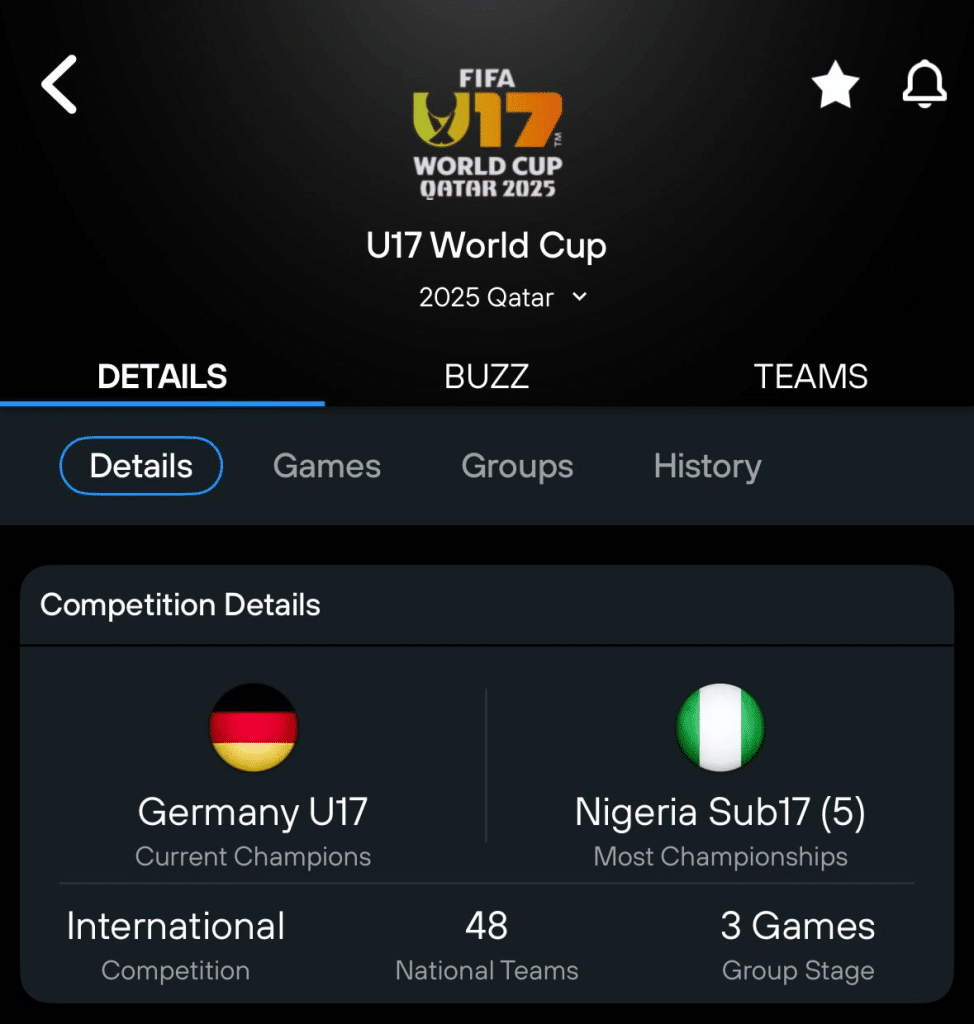
- 48 teams, the largest in history, consisting of 12 groups with 4 teams in each
- Each team plays every other team in the group once
- Teams that advance to the Round of 32
- Top 2 teams in each group (24)
- The 8 best 3rd-placed teams will advance by points or tiebreakers
Tiebreakers
The rankings for third-place teams in the groups is a tiered system, where if a given criteria doesn’t determine which 8 teams will go through, the following criteria will be used until all teams that qualify are chosen. This works as follows:
- Points obtained in the group stage
- Goal difference in the group stage
- Number of goals scored in the group stage
- Disciplinary record points (capped at one offense per player per match)
- Yellow card is -1
- Double yellow is -3
- Straight red is -4
- Yellow and a straight red is -5
Knockout Stages
- Single Elimination Bracket with 32 teams
- Round of 32, Round of 16, Quarter-finals, Semi-finals, Final, or 3rd-place playoff
New Tournament Cycle
- The tournament is hosted annually instead of biannually from 2025 to 2029
- Qatar will host all of these editions of the U-17 World Cup
Important Teams
- Debut nations: El Salvador, Fiji, Uganda, Zambia and the Republic of Ireland
- Qatar: Host nation for the next 5 years, has automatic qualification
- Germany: Won the previous U-17 World Cup, hoping to defend their title
- Opportunity for underdogs: 48-team tournament leaves a chance for weaker teams to make an impact in the standings
Notable National Absences
- Spain: Four-time runners-up
- Nigeria: Five-time Champion and three-time runners-up
- Ghana: Two-time Champion and two-time runners-up
- Australia: One-time runners-up (1999) and consistent U-17 AFC success
- Uruguay: One-time runners-up (2011) and consistent U-17 CONMEBOL success
Groups
The draw for the groups took place on 25 May 2025 in Doha, establishing 12 groups. Based on a team’s results in the previous 5 U-17 World Cups, they were allocated into 1 of 4 pots to determine which nations would be in which groups. Each group was also capped at one team per confederation. Here is the list of teams in each group:
- Group A: Qatar, Italy, South Africa and Bolivia
- Group B: Japan, Morocco, New Caledonia and Portugal
- Group C: Senegal, Croatia, Costa Rica and the UAE
- Group D: Argentina, Belgium, Tunisia and Fiji
- Group E: England, Venezuela, Haiti and Egypt
- Group F: Mexico, South Korea, Ivory Coast and Switzerland
- Group G: Germany, Colombia, North Korea and El Salvador
- Group H: Brazil, Honduras, Indonesia and Zambia
- Group I: USA, Burkina Faso, Tajikistan and Czech Republic
- Group J: Paraguay, Uzbekistan, Panama and Republic of Ireland
- Group K: France, Chile, Canada and Uganda
- Group L: Mali, New Zealand, Austria and Saudi Arabia
WHERE TO WATCH
- Official broadcast / streaming: Most matches are expected to be available on FIFA+, which regularly streams youth tournaments.
- Local broadcasters: These vary by country; fans should check local sports networks or digital platforms for specific rights.
Want to follow every match live? Visit our Where to Watch page and make sure to sync with our Live Scores page.
Important Individual & Team Awards
- Golden Ball: Trophy given to the most valuable player at the U-17 World Cup
- Golden Boot: Awarded to the player who scores the most goals at the tournament
- Golden Glove: Honoured to the most important goalkeeper at the U-17 World Cup
- FIFA Fair Play Trophy: Presented to the team with the best disciplinary record at the tournament
Stories of Stars
The U-17 World Cup has been a showcase for young talent since its inception in 1989, where the world meets the era-defining players as teenagers, as many top class players made headlines here. Here are some examples of these individuals.
Cesc Fàbregas
In 2003, Spain’s team had an integral young midfielder named Cesc Fàbregas, who announced himself to the world. His vision and control in tight spaces earned him the Golden Ball as the tournament’s best player, en route to Spain‘s path to the final for the second time in history. Despite him playing in midfield, he was the top goalscorer for the tournament, earning him the Golden Boot. His leadership and calmness at 16 years old were unprecedented, traits that defined his career at large clubs such as Arsenal, Barcelona and Chelsea.

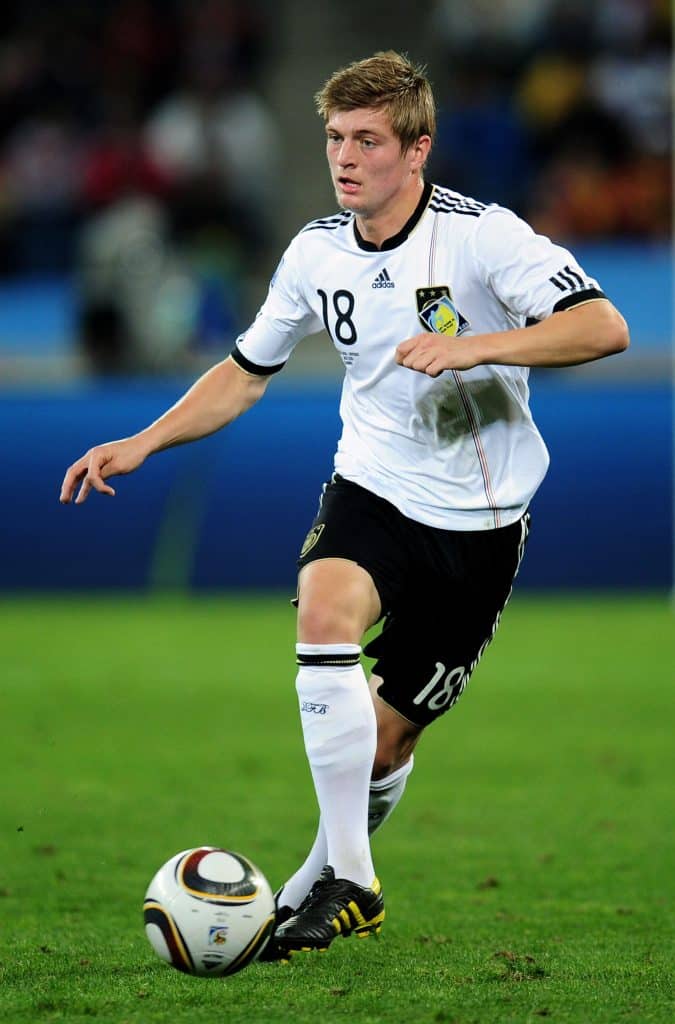
Toni Kroos
Four years later, Toni Kross dominated this competition for Germany in South Korea. His tactical mindset, shooting ability and passing accuracy made him the standout player. He earned the Golden Ball, an insight into his later success despite Germany not making the final, knocked out in the semifinals. These qualities defined his club and country achievements such as the winning the World Cup in 2014 and the Champions League multiple times with Bayern Munich and Real Madrid.
Victor Osimhen
Nigerian striker Victor Osimhen burst onto center stage, scoring a record-breaking 10 goals, the most ever at a single U-17 World Cup. He was awarded the Golden Boot and Silver Ball (second most valuable player at the tournament), leading Nigeria to their fifth title, the most of all time. His combination of speed, strength and finishing marked him as a future star, where he realised his potential when he led Napoli to their first league title in over 30 years.
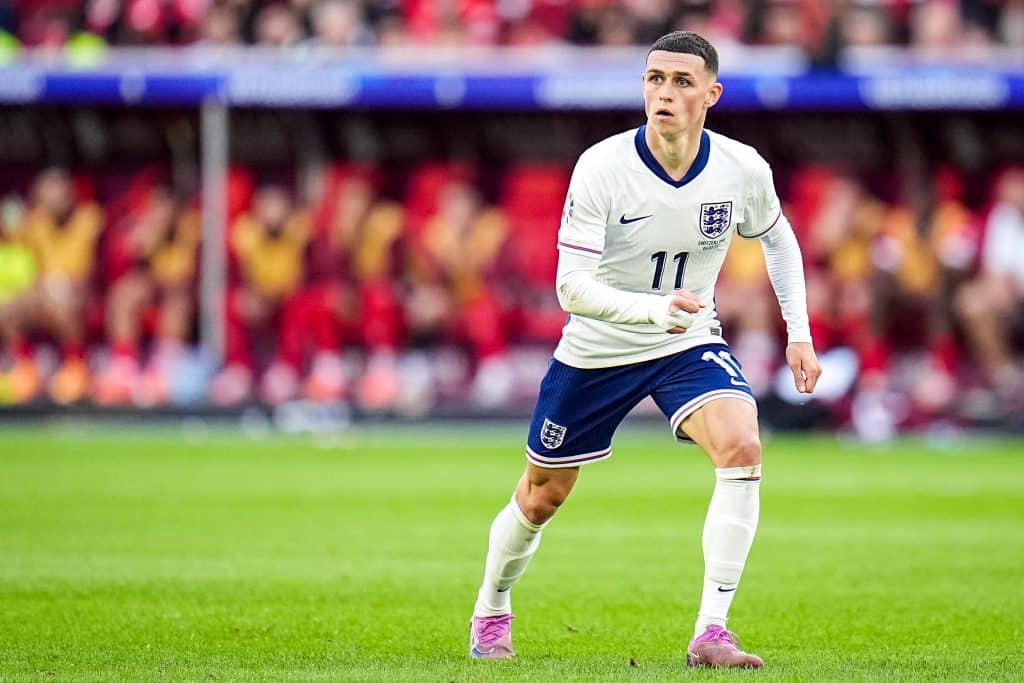
Phil Foden
England‘s sole title at the U-17 World Cup in 2017 was led by a prodigal midfielder named Phil Foden. The Manchester City player’s boggling dribbling, quick feet and attacking creativity earned him the Golden Ball as England marched to victory, coming back from a 2-0 deficit to beat Spain 5-2 in the final. His performances secured his reputation as one of England’s most gifted techincal players, a promise he has lived up to as a multi-time Premier League winner and an exciting attacker in the football world.
Other Important Performances
Many notable players made their mark at the U-17 World Cup, without receiving the hardware of an individual or team trophy. These players included Iniesta in 2001, Neymar in 2009, Eden Hazard in 2007, where they announced their skillset on an important stage.
Frequently Asked Questions
When does the 2025 FIFA U-17 World Cup start?
It kicks off on 3 November 2025 in Al Rayyan, Qatar
How many teams are playing?
This edition features 48 teams, making it the largest U-17 World Cup yet
Who is the defending champion?
Germany won the 2023 U-17 World Cup.
Where can I watch the matches live?
Likely via FIFA+ and/or local broadcasters. Check FIFA’s platforms or your country’s sports networks.
This competition promises some of the most thrilling moments in football history, with exciting young talent eager to show their ability on an international stage. With defined nations and the underdogs fighting for the title alike, keep an eye on the U-17 World Cup matches throughout November and catch the action live on 365Scores.