The Shattered Supermax: Giannis and the Death of the Small-Market Dream

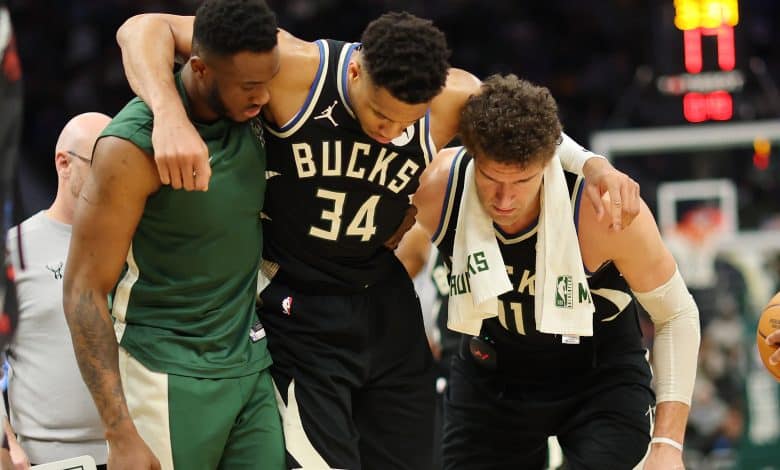
For over a decade, Giannis Antetokounmpo was the primary blueprint for the idea that the small-market process actually could work. He was the living rebuttal to the Superteam Era, a superstar who stayed, a champion who built his own path in a city often ignored by the league’s biggest stars. By delivering the 2021 NBA Championship with a legendary 50-point clincher, he proved that a homegrown ring wasn’t just possible, but that it is the ultimate achievement in modern basketball.
But as this year’s February 5th trade deadline rapidly approaches and reports suggest the “Greek Freak” is finally ready for a new chapter, the story has changed. If Giannis leaves Milwaukee, he isn’t just changing teams, he is effectively closing the door on an era where superstar loyalty was still possible.
Table of Contents
The Historical Context: From Choice to Necessity
The decline of loyalty didn’t start in Milwaukee; it was born in 2016 when Kevin Durant joined the Golden State Warriors. That move fundamentally shifted the NBA’s culture entirely. Before Durant, ring chasing was something older players did for a final shot at glory. KD proved that stars in their prime could prioritize winning over everything else, trading their hometown hero status for a guaranteed trophy.
What began as a choice for Durant, however, eventually became a survival tactic for everyone else. We saw it with James Harden, Anthony Davis, and most surprisingly, Damian Lillard.
Lillard’s departure from Portland in 2023 was the most significant blow to the concept of staying the course. For years, Lillard was the epitome of loyalty, building a brand around “not running from the grind.” When he finally requested a trade, it proved that even the most authentic connection between a player and a city has an eventual breaking point. His move to Milwaukee was supposed to be the perfect version of a trade, in which two stars joined forces to save a small-market franchise. The fact that this partnership collapsed so quickly was a signal to the modern NBA that even doing it the right way has an expiration date.
The Breaking Point: The Coaching Carousel and the “All-In” Failure
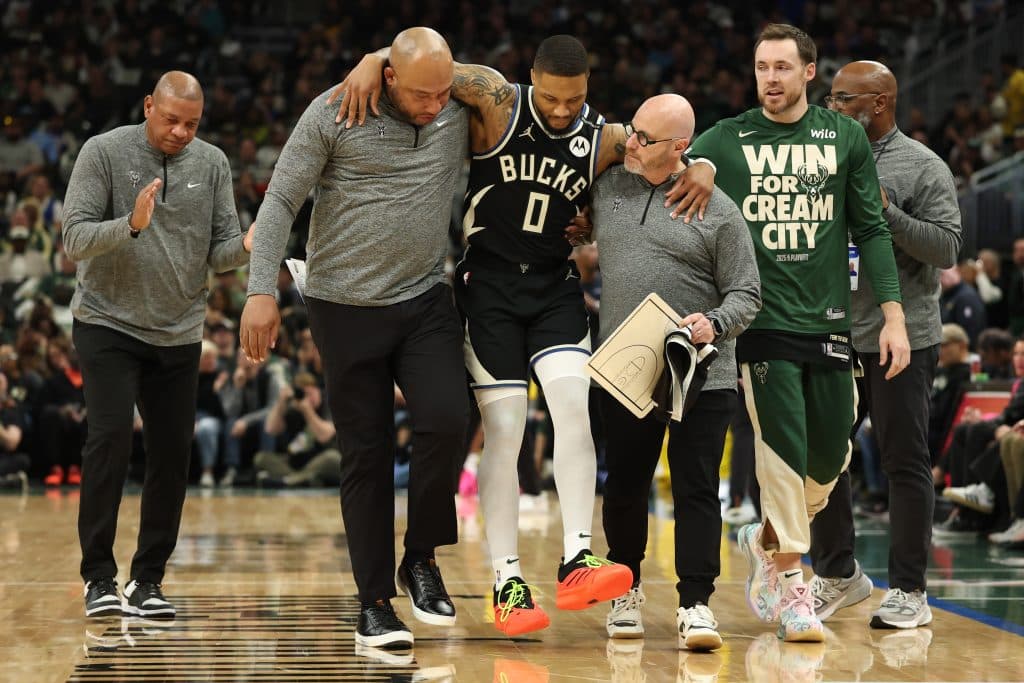
The roots of the current collapse can be traced back to a single, chaotic week in January 2024. Despite a stellar 30-13 record, the Bucks made the shocking decision to fire first-year head coach Adrian Griffin. It was a “vibes” move made because the front office feared their winning wasn’t pretty enough for a deep playoff run.
The panic-hiring of Doc Rivers to replace him was intended to bring veteran stability to the locker room. Instead, as former Buck Jae Crowder recently noted, this move “started the avalanche.” Under Rivers, the Bucks’ identity shifted from a high-octane, even if messy, winner to a stagnant, mediocre squad that eventually lost the locker room. By trading Mike Budenholzer for Griffin, and then Griffin for Rivers, the Bucks signaled to Giannis that they were guessing, not building.
This coaching instability further worsened the effectiveness of the Lillard trade. Milwaukee mortgaged their future draft picks and traded their defensive anchor, Jrue Holiday, to give Giannis the co-superstar he had long requested. On paper, it looked like a championship move, but in reality, it exposed the Small Market Ceiling. Without a consistent coaching vision, even a legendary duo couldn’t overcome a depleted roster and aging rotation.
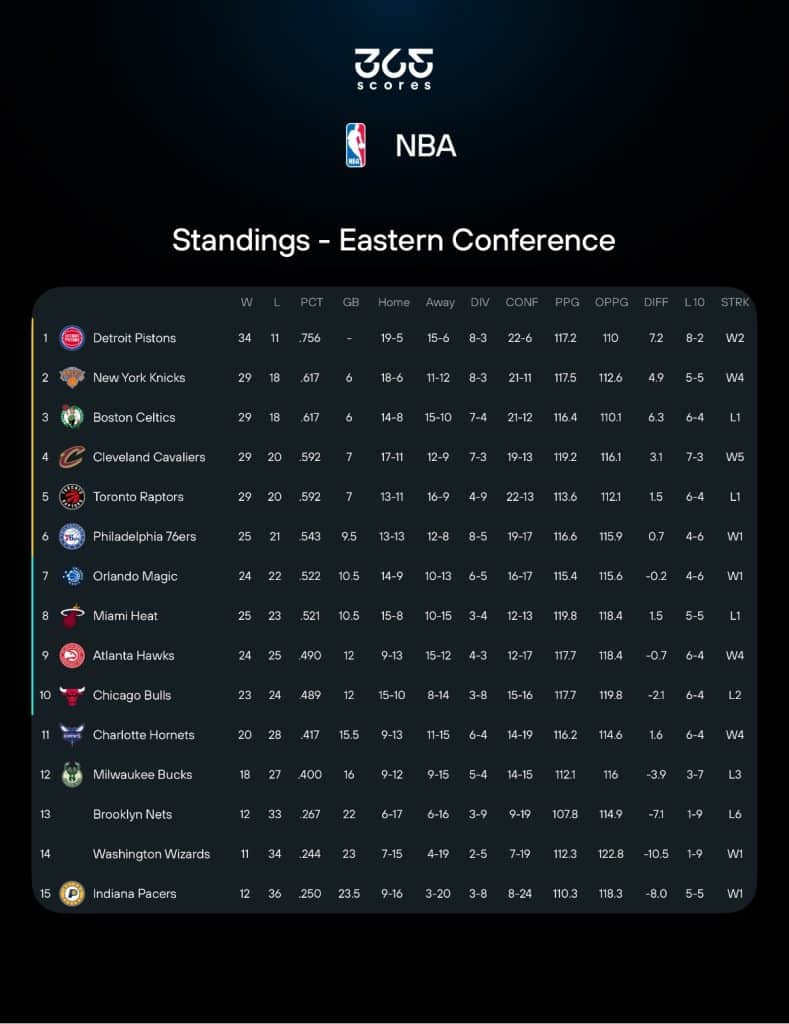
Currently, the Bucks are struggling at 18–27, sitting 12th in the Eastern Conference and four games out of the play-in tournament. The roster is aging, the chemistry is missing, and the defense has disappeared. When a big-market team makes a mistake, they can use their location to attract new talent. When a small-market team like the Bucks misses, they are stuck, especially without their main superstar attraction. In Milwaukee, there is no safety net, once the momentum stops, there is nowhere to go but down.
The Structural Wall: Why the Rules Punish Loyalty
It isn’t just about a player’s willpower. The NBA’s new financial rules (the Collective Bargaining Agreement) have made loyalty a competitive disadvantage. Specifically, the Second Apron, a harsh spending limit, essentially punishes teams that pay multiple stars.
Because the Bucks paid the supermax to Giannis and traded for Lillard’s massive salary, they are now restricted from almost every method of improving the team. They can’t sign veteran bench players easily, they can’t combine salaries for trades, and their future draft picks are being frozen. The league’s new economy forces teams to choose: keep your cities icons or keep winning. In 2026, the rules make it nearly impossible to do both.
The Endangered Species: The Last of the “One-Team” Stars
We are witnessing the extinction of a rare species. The list of superstars who spend their whole career with one franchise is shrinking to almost zero:
- Stephen Curry & Draymond Green: The gold standard, though their loyalty was supported by a massive market and a once-in-a-lifetime dynasty.
- Joel Embiid: The last man standing in Philadelphia’s “Process.”
- Nikola Jokić: The great anomaly in Denver, currently defying the trend.
For Giannis, the choice was between being the Dirk Nowitzki of Milwaukee or seeking a second ring in a higher market city like New York or Miami. By choosing to move on, he’s signaling to every star in this league that loyalty has a timer.
What’s Next: Suitors and the Price of Admission
If Milwaukee pulls the trigger before February 5th, they must prioritize the Oklahoma City model: a massive haul of unprotected picks combined with at least one blue-chip young player who can become a franchise cornerstone immediately.
However, a new question has entered the war room for every interested GM: Is it worth it?
Giannis is currently sidelined with a recurring right calf strain, an injury suffered on January 23rd that is expected to keep him out for 4-6 weeks. For a player whose game is built on historic explosiveness, leg injuries are a threat to his entire archetype. Skeptics point to Kevin Durant’s 2019 Achilles tear and, more recently, Tyrese Haliburton’s 2025 Achilles rupture, both of which were famously preceded by calf strains.
Yet, for most teams, a perennial MVP candidate in his prime is a risk worth taking. Even at 80% explosiveness, Giannis remains a top-five talent. Suitors must decide if they are trading for the legend who won the 2021 title or a high-priced player whose best days are being cut short by his own body. Current front-runners include:
- Golden State Warriors: The pressure on Mike Dunleavy Jr. to make an all-in move following Jimmy Butler’s season-ending ACL tear has reached its boiling point. With Steph Curry playing at an All-NBA level and a fanbase pleading for one final title run before the window slams shut, the Warriors are the most desperate suitor. Their offer would certainly center around Jonathan Kuminga and a plethora of future first-round picks that become extremely valuable as Curry nears retirement.
- Miami Heat: A long-rumored destination. A package would likely involve All-Star Tyler Herro and high-upside rookie Kel’el Ware.
- New York Knicks: Despite financial hurdles, they remain a threat, potentially involving Karl-Anthony Towns or Mikal Bridges in a complex reshuffle that could push the Knicks over the top as the favorites in the Eastern Conference.
Conclusion: A New Reality
If a trade happens, Milwaukee will get back a haul of picks, but the city will lose its heart and soul. Giannis’s potential departure marks the end of the Supermax as a real reason for a star to stay. It proves that money, memories, and in this case even a ring aren’t enough when the window of opportunity begins to close. In today’s NBA, loyalty is no longer a standard, it’s a luxury that small markets simply can’t afford. The Greek Freak is moving on, and with him, the dream of one star being enough for one city is gone.