El Clásico: 9 insane facts you (probably) didn’t know about Real Madrid vs Barcelona

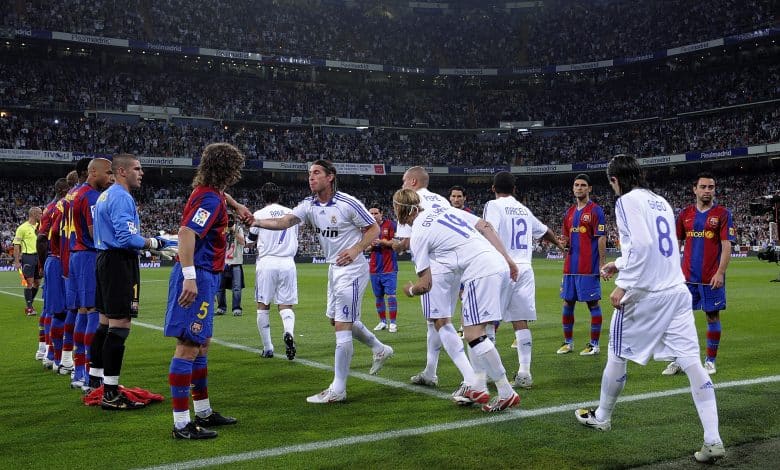
There’s just something magical about El Clásico. It’s not just a match. Every time Real Madrid and Barcelona meet, it feels like the world stops for ninety minutes, then breaks down arguing about what it just witnessed.
But buried beneath the celebrity, the slick broadcasts, and the TikToks of fans crying in shirts from both sides, lies a history that’s far stranger and richer than most realise. A century of footballing feuds has produced all sorts of chaos: multi-replay marathons, royal politics, and even an airborne pig’s head (no, really).
So, before the next El Clásico turns the world’s attention back to Spain, here are nine stories that built the legend.
Crazy El Clasico facts!
1) Before LaLiga even existed, Barcelona struck first (1902)
The origin story of El Clásico isn’t found in league tables or modern trophies but in a dusty old cup that barely exists anymore. The Copa de la Coronación – a sort of prequel to the Copa del Rey – hosted then-called Madrid FC and Barcelona on 13 May 1902. The Catalans won 3–1, long before LaLiga or Bernabéu or Messi or even the word “Clásico” itself.
It’s funny to think that this century-long saga began as a side show for royal celebrations. There were no television cameras, no ultras, just a few hundred spectators and a pitch more dirt than grass. Still, Barcelona drew first blood. And from that moment, every meeting felt like a test of honour.
Mark your calendars! The season’s first El Clasico’s official date and time are set! 📆 pic.twitter.com/KLhpAqJvjF
— 365Scores (@365Scores) September 24, 2025
2) The four-match semifinal that refused to end (1916)
Fast-forward 14 years. The El Clásico had grown teeth. In 1916, the Copa del Rey semifinal between the same two clubs turned into football’s equivalent of a never-ending argument – one that took four, yes FOUR, games to resolve.
Two legs produced two wins, one apiece. A replay produced a 6–6 draw after extra time. Another replay finally tipped Madrid’s way, 4–2. Imagine that today – same teams, same faces, meeting again and again until someone just gives up. No aggregate scores, no away-goal rule. Just chaos.
3) The scoreline nobody’s ever topped: 11–1 (1943)
June 1943. Franco’s dictatorship of Spain loomed over everything, including football (he was closely affiliated with Real Madrid). In the Copa del Generalísimo (as it was then called), Real Madrid demolished Barcelona 11–1 in a semifinal second leg that remains the biggest margin in Clásico history.
Officially, it’s recorded as sport. Unofficially, there are murky whispers – political pressures, hostile atmospheres, intimidation. Yet whatever the context, the number remains. Eleven to one. It’s the unbreakable record that sits awkwardly in both clubs’ histories, neither wanting to own it, both unable to ignore it.
Sometimes the past doesn’t tidy itself up neatly. It just sits there, glaring.
4) The day Spain first saw it on TV (1959)
Football and television met in Spain for the first time on 15 February 1959, and of course, it had to be El Clásico.
There’s something almost poetic about that. The match that most perfectly expresses Spanish football was the first beamed into homes across the country. Grainy black-and-white pictures, commentators shouting over static, kids pressed against flickering screens.
From that point, the rivalry wasn’t just local or even national – it was patrimonio. Families planned Sundays around it. Newspapers sold fortunes on post-match columns. And by the time colour television arrived, El Clásico had become global shorthand for excellence and excess alike.
5) The two weeks that broke the internet (before it existed)
April 2011. If you lived through it, you probably still feel slightly traumatised.
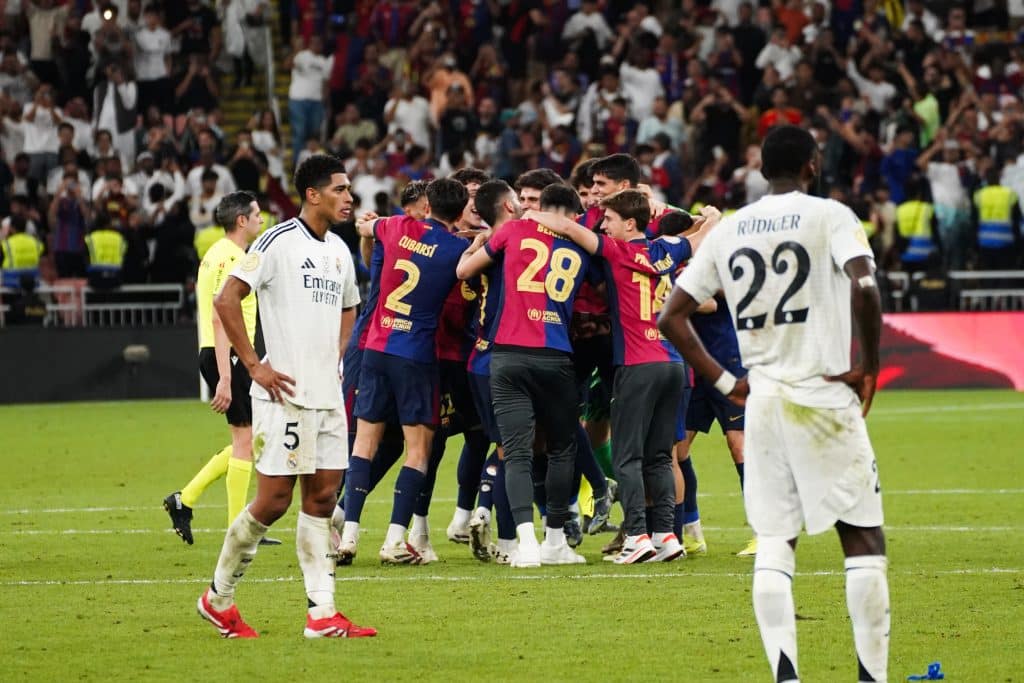
Four El Clásicos in 18 days, yes, four. A LaLiga draw. A Copa del Rey final in which Cristiano Ronaldo scored an extra-time header and José Mourinho sprinted like a man possessed. Then came two Champions League semifinal legs so toxic and tactical that even neutral fans felt emotionally exhausted.
Those weeks were a microcosm of the modern rivalry: Mourinho vs Guardiola, Cristiano vs Messi, ideology vs instinct. It was football as theatre, chess, and soap opera, all at once. You could almost hear the collective eye twitch of the Spanish football federation trying to schedule referees for that run.
And when it ended, something shifted. Respect gave way to an El Clásico rivalry at boiling point.
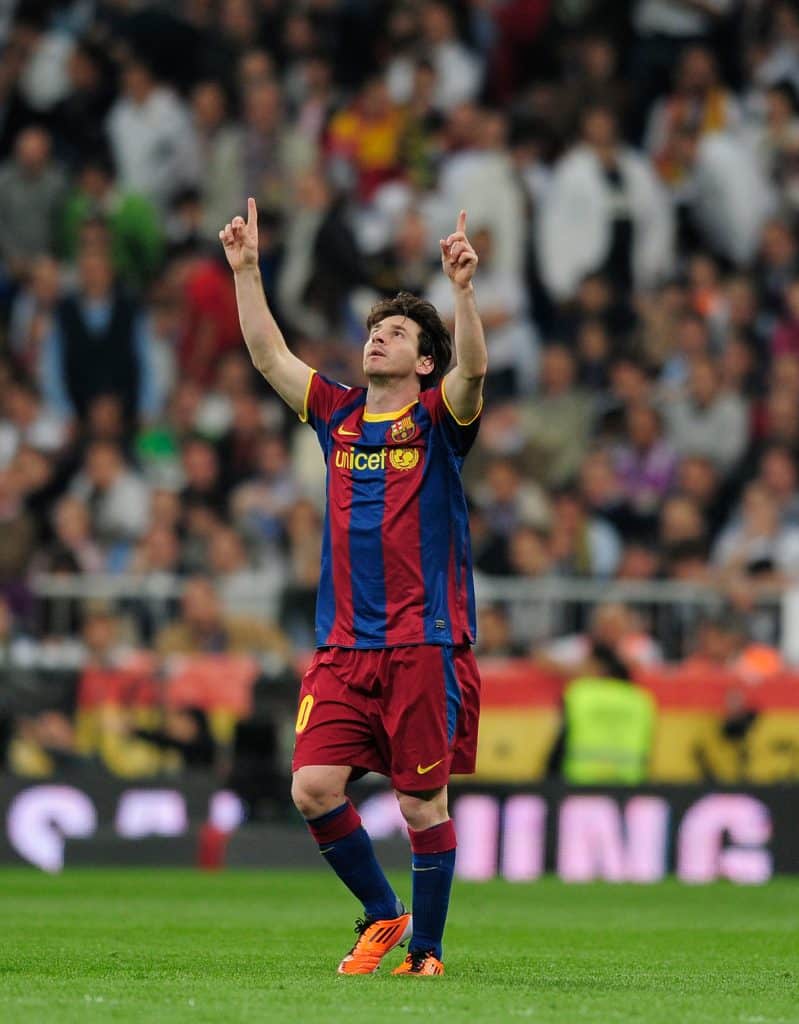
6) When El Clásico left Spain (2022)
For over a century, every official Clásico took place on Spanish soil – that is until January 2022. That month, the Spanish Super Cup semifinal was staged in Riyadh, Saudi Arabia.
Real Madrid won 3–2 after extra time. It wasn’t just a game; it was a symbol. A reminder that Spanish football’s biggest asset had become a travelling circus – a showcase for global partners, sponsors, and new markets.
Purists rolled their eyes, but maybe that’s inevitable. Football, like pop culture, doesn’t stay still. Even the fiercest traditions eventually find themselves performing on foreign stages, lights brighter than ever, meaning a little blurrier.
Still, it was a first. And whether you saw it as progress or heresy, it proved something simple: El Clásico doesn’t belong to one city anymore. It belongs to the world.
7) Watched in 190+ countries by a potential audience of 650 million
Here’s a statistic that sounds made up until you look twice: El Clásico is broadcast in over 190 countries, reaching a potential global audience of around 650 million.
That’s not “people who might stumble upon it”. That’s deliberate tuning-in – bars in Bangkok, rooftops in Buenos Aires, students streaming on phones under lecture desks (me). Few club games on Earth command that kind of reach, perhaps only a Champions League final or World Cup.
The rivalry has become an unofficial world holiday. The shirts, the sponsors, the hashtags are all noises orbiting around the same gravitational pull: two clubs who, no matter the state of their squads or bank balances, still carry the mystique of greatness.
8) The pig’s head that became legend (2002)
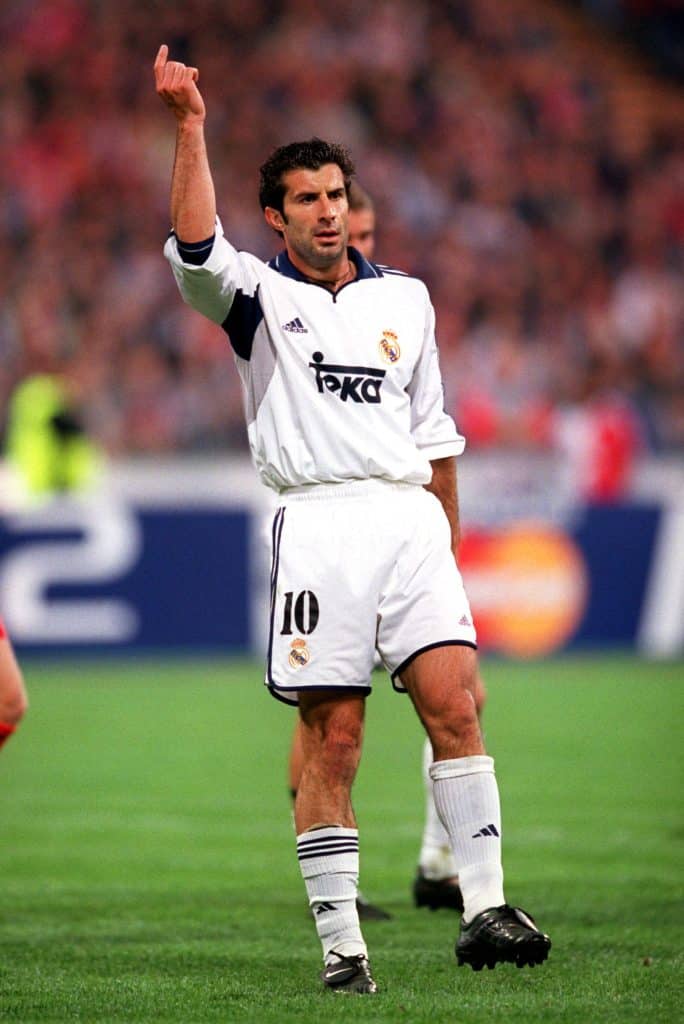
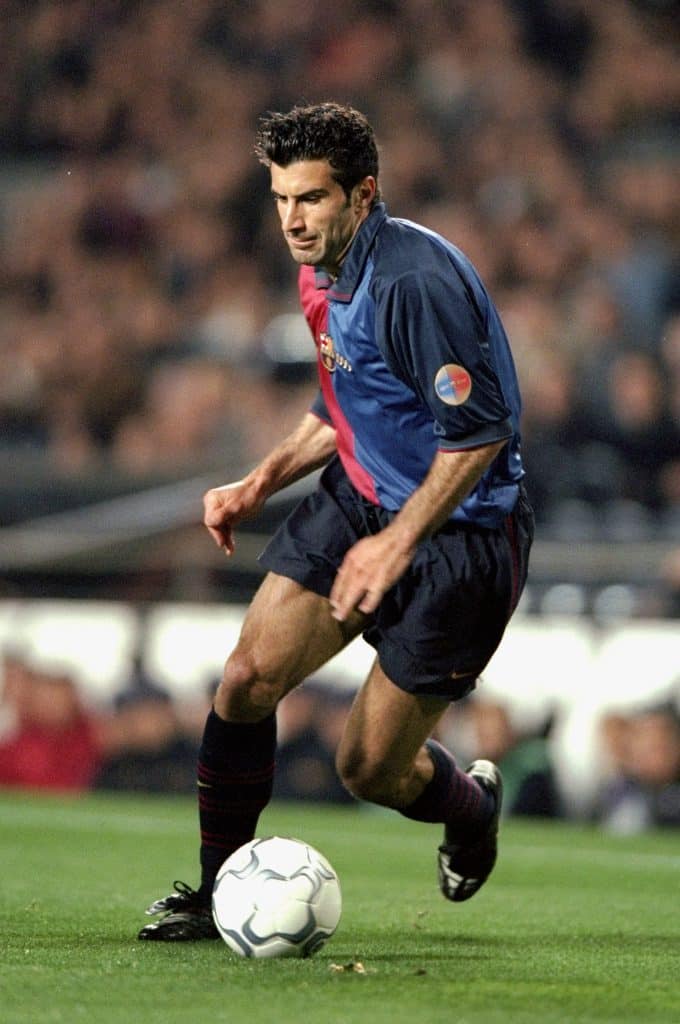
You’ve probably seen the photo. Luís Figo, once Barcelona’s golden boy, standing over a corner flag at the Camp Nou as debris rains around him. One object stands out: a severed pig’s head, lobbed from the stands.
It was November 2002. Figo had joined Real Madrid two years earlier, and his every touch in Catalonia was met with venom. The match was halted. Stadium closure seemed likely. Eventually, after years of deliberation, Spain’s football federation issued a fine of €4,000 – less than the cost of a Camp Nou advertising board.
The moment transcended sport. It became shorthand for betrayal, for football’s raw emotional edge. And the fine, absurdly small by today’s standards, only amplified the myth.
El Clásico, it turned out, could turn love into fury faster than any romance novel.
9) Messi and Busquets: the twin kings of the record books
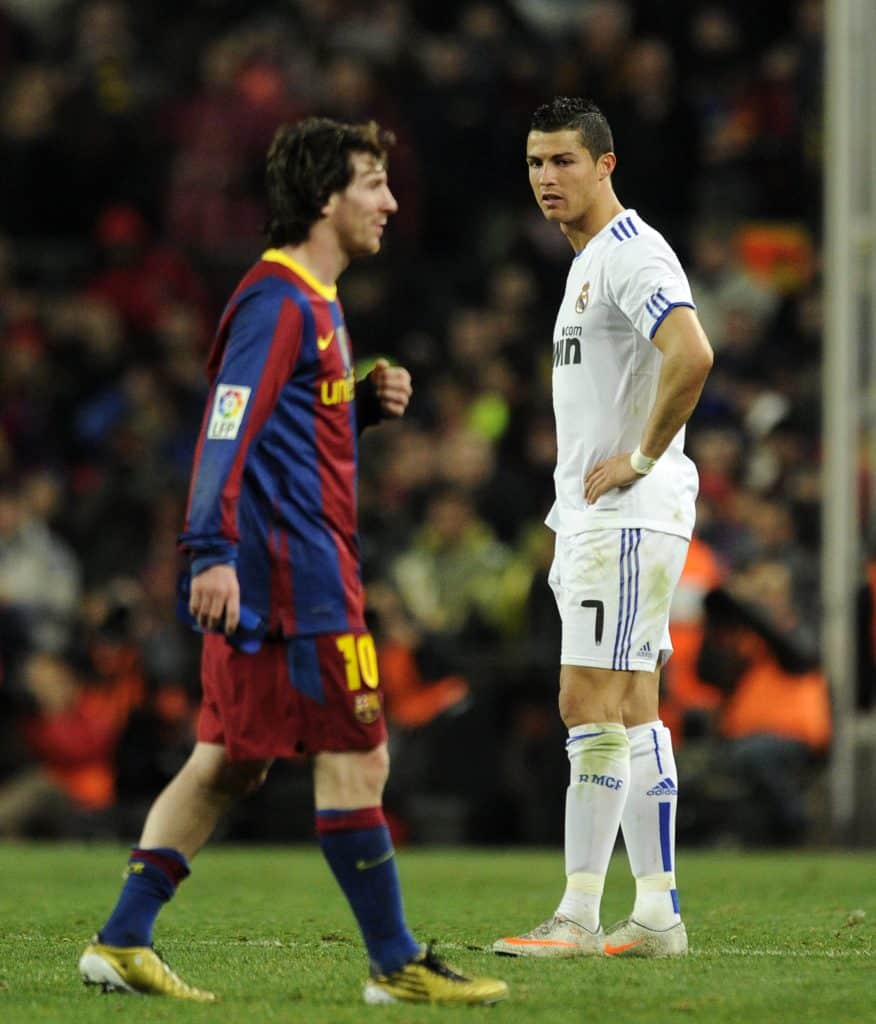
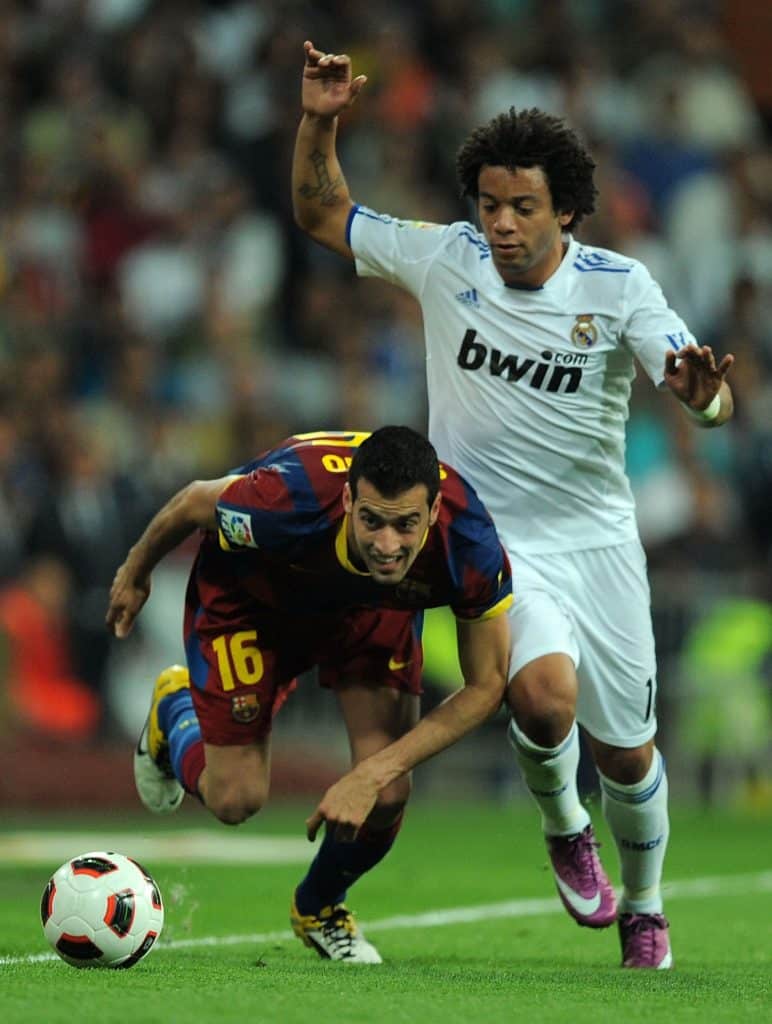
For all the shifting landscapes, two names still sit quietly at the summit of Clásico history. Lionel Messi, with 26 goals. Sergio Busquets, with 46 appearances.
It’s fitting, really. One defined the rivalry through brilliance, the other through endurance. Messi lit matches ablaze, twisting time and space until defenders forgot how legs worked. Busquets did the opposite, he slowed everything down, orchestrating the rhythm like a jazz bassist nobody notices until he stops playing.
Their records may stand for a while. Or maybe, given the game’s tendency for absurdity, someone unexpected will chase them down. Either way, their numbers frame a story that has no final chapter.
Why this rivalry refuses to fade
You can measure El Clásico in numbers but you’ll always miss something in translation. The match is about identity as much as football. Madrid’s royal whiteness. Barcelona’s Catalan defiance. The decades of political, cultural, and linguistic undertones that hum beneath every pass.
It’s not just two teams playing a sport. It’s two cities, two histories, two versions of what Spain could mean, colliding every few months on grass.
And yet, somehow, despite the political storms, the generational shifts, the endless globalisation, the match still feels unpredictable. That’s its secret. No matter how many times they meet, you can’t script it. You can’t reduce it to a pattern or statistic.
Maybe that’s why we keep watching – to see whether, this time, something entirely new can happen in a rivalry that already contains everything.
FAQ
Who scored the most goals in El Clásico?
Lionel Messi, with 26 goals in official senior Clásicos.
Who has the most El Clásico appearances?
Sergio Busquets, with 46 appearances across all official competitions.
When was the first LaLiga Clásico?
17 February 1929, at Les Corts – Barcelona’s old ground. Real Madrid won 2–1.
What’s the biggest ever Clásico win?
Real Madrid’s 11–1 victory in the 1943 Copa del Generalísimo semifinal second leg.
By Nicky Helfgott / @NickyHelfgott1 on Twitter
Keep up with all the latest La Liga news and live scores on the 365Scores website and app!