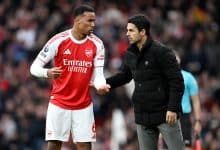
Is Bruno Fernandes a Manchester United legend?


Is Bruno Fernandes a Manchester United legend? It is the kind of question that only really gets asked when the answer is already leaning one way. Nobody debates legends in their first hot streak, and nobody bothers once a player has faded quietly out of view. The question arrives in the middle, when the noise is loud, the feelings are mixed, and the evidence is already stacked.
Fernandes exists right in that space. He is adored and criticised, celebrated and scrutinised, sometimes all within the same 90 minutes. He gestures too much for some, shoots too often for others, plays passes that look reckless until they work. He is rarely neutral. And at Manchester United, neutrality has never been the point.
To ask whether Fernandes is a United legend is really to ask what “legend” means in the modern version of this club. This is not the serial-winning machine of the late 1990s or the relentless authority of the early 2000s. This is a United that has lurched between rebuilds, managers, philosophies, and emotional resets. It is a United that has needed players not just to perform, but to stabilise, provoke, and sometimes drag the team forward against its own inertia.
Fernandes arrived in January 2020 into a side drifting through games, short on personality and clarity. Within weeks, United felt different. Faster. Louder. Riskier. More demanding. That feeling never really went away. The trophies have been fewer than history demands, but the imprint has been unmistakable.
So yes, the answer is yes. Bruno Fernandes is a Manchester United legend. The interesting part is why.
Bruno Fernandes has been United’s best player this decade
Bruno Fernandes arrives with a bang in January 2020
Fernandes did not arrive as a finishing touch. He arrived as a corrective. United were stagnant, low on chance creation, and struggling to turn possession into threat. Fernandes changed that immediately, not by simplifying the game but by making it sharper and more uncomfortable.
From his first months, he played like someone unconcerned with fitting in. He took penalties under pressure, demanded the ball in crowded areas, and attempted passes that other players avoided because of the risk attached. The reward was immediate productivity. The cost was visibility when things went wrong.
That trade-off is important. Legends often announce themselves by altering how a team behaves. Fernandes did that almost instantly. United became more vertical, more urgent, and more dependent on one player’s decision-making. That dependency is not flattering in theory, but in practice it defined an era.
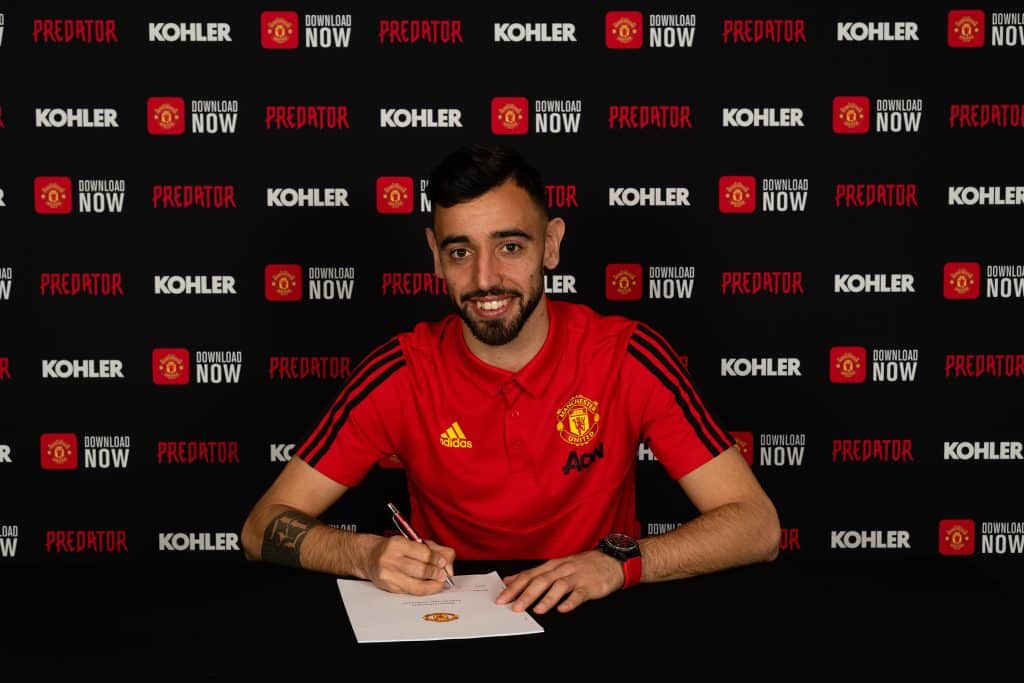
RIDICULOUS output
Fernandes’ numbers are not merely good for a midfielder. They are exceptional in the context of the team he has played in. Over 300 appearances for United, he has passed 100 goals, with assist totals that place him among the most productive creators in Europe since his arrival.
What matters is not a single season spike but the consistency. He has been United’s primary chance creator year after year, across different managers and tactical systems. When the team has struggled to score, Fernandes has still been producing. When confidence has dipped elsewhere, he has continued to take responsibility.
Legends are often measured by how little explanation their output needs. Fernandes’ does not need any. It is obvious, sustained, and central.
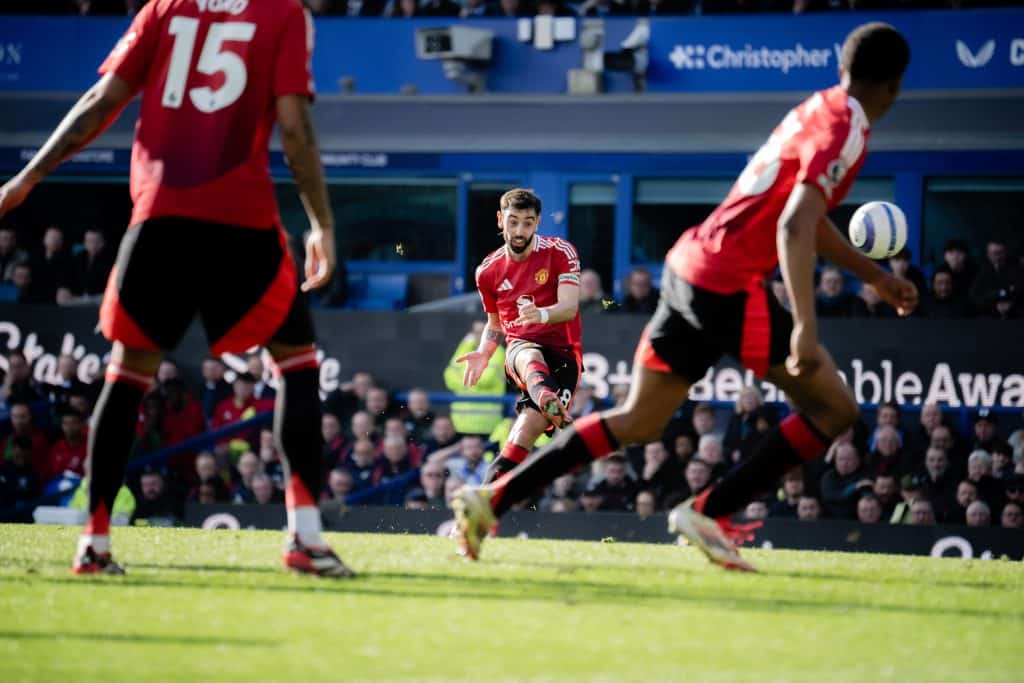
Carrying the boats
Some great players thrive when surrounded by other great players. Fernandes has spent much of his United career doing the opposite. He has often been the reference point, the player opponents plan around, the one teammates look for when the structure breaks down.
That matters because it reframes criticism. Yes, he loses the ball. Yes, he takes risks that fail. But that is the tax of being the focal point in a team that has frequently lacked coherence. When everything funnels through one player, inefficiency becomes visible. So does courage.
United’s best spells in the last five years have almost always coincided with Fernandes playing at full volume. When he is quiet, the team tends to be quieter still.
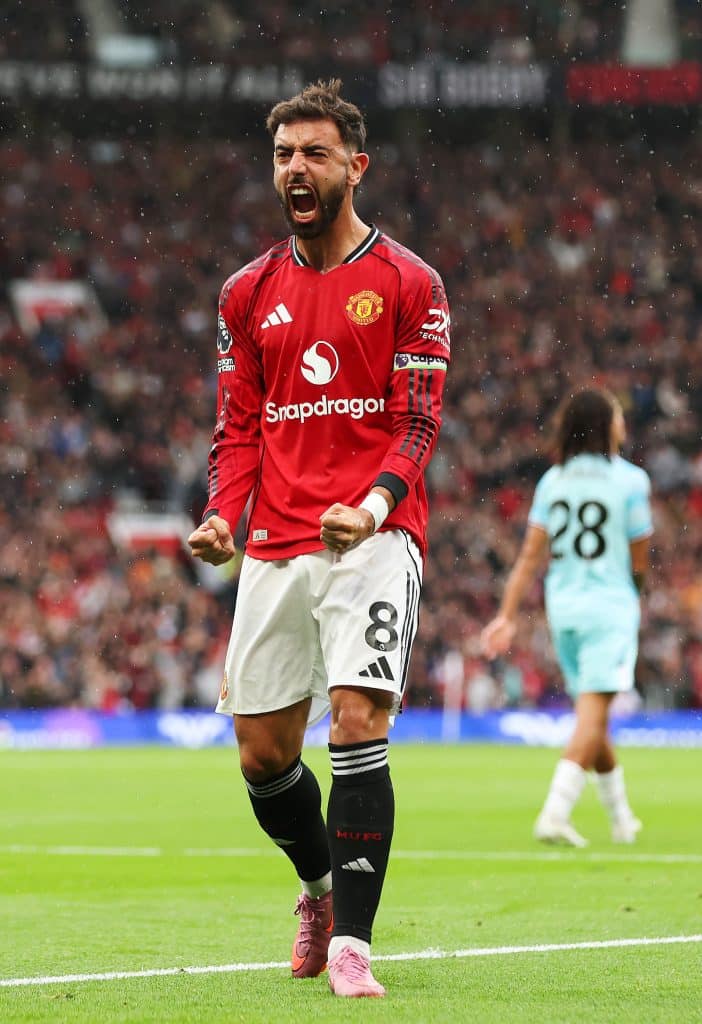
I am the captain now
Bruno Fernandes as captain feels inevitable in retrospect. He communicates constantly, demands standards, and reacts emotionally to the flow of games. That style does not appeal to everyone, but it aligns with a long United tradition of captains who were never passive.
The armband at Old Trafford is not about serenity. It is about presence. Fernandes’ presence is unmistakable. He sets the tempo emotionally as much as tactically. When he presses, the team presses. When he argues, the temperature rises. That can spill over, but it also prevents apathy.
Great captains often divide opinion in the moment and unify it later. Fernandes is still in the middle of that process.
Wishing a very happy 31st birthday to a true leader on and off the pitch, Bruno Fernandes.
— 365Scores (@365Scores) September 8, 2025
His quality and dedication are never in doubt as he celebrates today, we look to the future. Can he turn that individual brilliance into team trophies for both club and country this… pic.twitter.com/kPTqSvWfTF
Trophies
One of the quieter myths around Bruno Fernandes is that he fades in big moments. The record does not support it. He has delivered in derbies, cup ties, European knockouts, and finals. He has been decisive at Wembley, influential in deep European runs, and central to United’s domestic cup successes.
The FA Cup win in 2024, beating Manchester City, stands as a defining moment of this period. Fernandes was not a passenger in that triumph. His impudent assist to Kobbie Mainoo is at the forefront of United fan’s minds. He was part of the spine that held the occasion together.
Legends are not just highlight reels. They are reliable under pressure. Fernandes has been exactly that.
Awards
Awards do not make legends on their own, but repeated recognition matters. Fernandes winning the club’s Player of the Year award four times is a strong indicator of how his contributions are perceived internally and by supporters.
This is not a fanbase easily impressed in the modern era. For the same player to be repeatedly singled out across seasons of varying success speaks to sustained importance. It is an informal vote of confidence cast again and again.
Bruno Fernandes on what Ruben Amorim had to say after his fantastic performance last night! pic.twitter.com/EoPNknVqWG
— 365Scores (@365Scores) May 2, 2025
Commitment in a transient era
In a football landscape defined by short cycles and quick exits, Fernandes’ long-term commitment to United matters. He has extended his contract, stayed through instability, and remained the face of the project when leaving would have been easier. He could have left to Saudi Arabia, making more money in one week than he makes per month at United. But he didn’t. He stayed loyal.
That decision shapes legacy. Legends are tied to places, not just peaks. Fernandes has chosen Manchester United repeatedly, even when the environment was challenging.
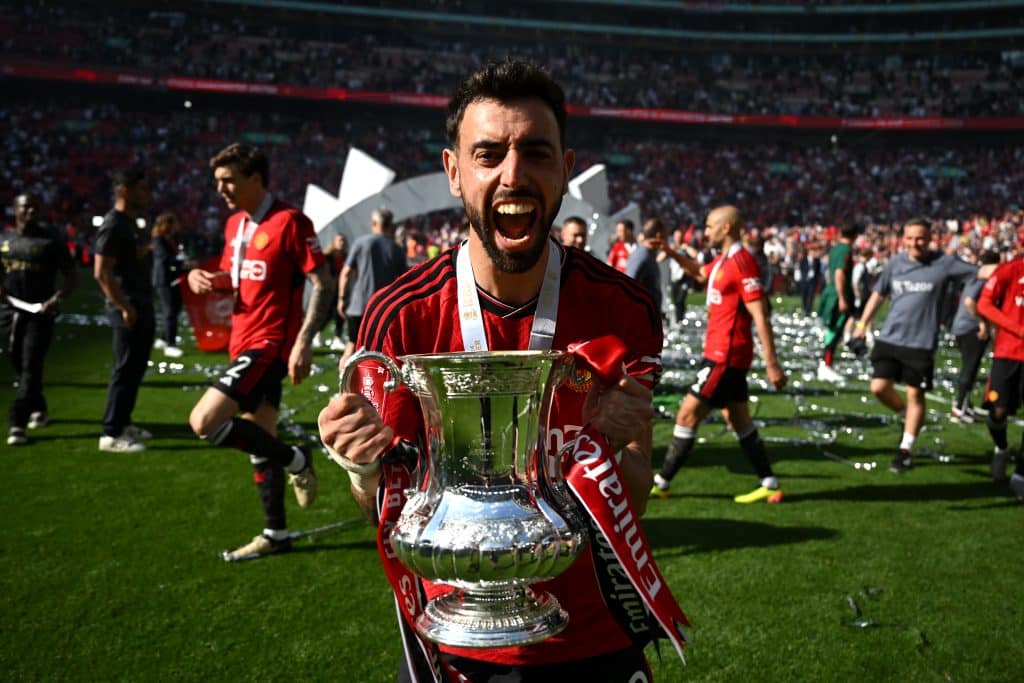
So, is Bruno Fernandes a Manchester United legend?
Yes. Not because he has won everything. Not because he is flawless. But because he has defined a period, carried responsibility when it was heavy, and left a clear imprint on the club’s modern identity.
When future conversations turn to this era of Manchester United, Fernandes will not be a footnote. He will be a reference point. That is what legends are.
FAQs
Is Bruno Fernandes already a Manchester United legend?
Yes. His sustained impact, leadership, and defining role in the post-2020 era place him firmly in that category.
Does he need to win the Premier League to be considered a legend?
No. Titles matter, but legends are also shaped by influence, responsibility, and identity within a club.
How important has Fernandes been compared to his teammates?
He has consistently been United’s primary creative and attacking reference point across multiple seasons.
Is his emotional style a weakness?
It can be polarising, but it also reflects responsibility and engagement. Many United legends were similarly intense.
Could his legacy still grow?
Absolutely. Further trophies or a longer stay would only strengthen an already secure legacy.
How will he be remembered in United history?
As the player who carried the creative burden of a turbulent era and refused to let standards slip quietly.
By Nicky Helfgott – NickyHelfgott1 on X (Twitter)
Keep up with all the latest football news and Premier League news on 365Scores!