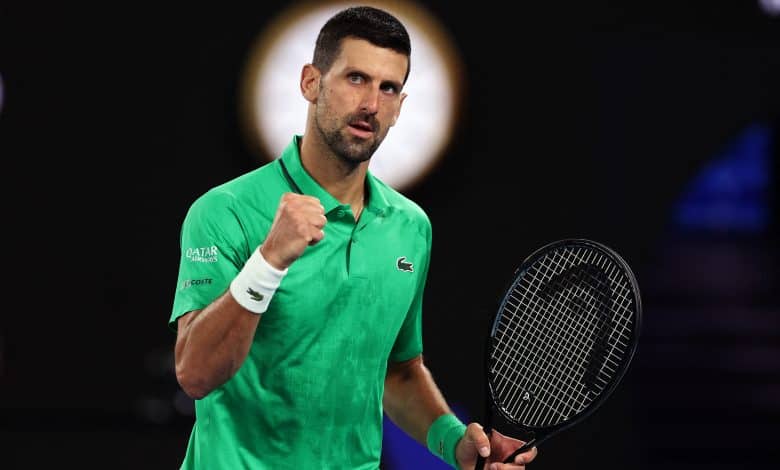
For ten days, the men’s draw at the Australian Open felt almost suspiciously calm.
Top seeds advanced. Scorelines were neat and tidy. Afternoon sessions drifted by with polite applause and three-set handshakes. The kind of tennis that looks efficient on paper and disappears from memory by dinner.
Then the semi-finals landed like a thunderclap.
Two five-set epics. Two matches that stretched past the point of comfort and into something closer to survival. A tournament that had been jogging suddenly started sprinting. And out of the chaos came the matchup everyone secretly wanted.
On Sunday night at Australian Open, it’s youth versus history, legs versus lore, the sport’s brightest present against its most stubborn legend: Carlos Alcaraz against Novak Djokovic.
The final looks huge on paper. After those semis, it feels seismic.
A thrilling Australian Open Final awaits
A Slow Burn Suddenly Catches Australian Open Fire
Early rounds in Melbourne can sometimes feel like admin.
Get through the heat. Avoid the random five-setter. Protect the body. Move on.
That’s basically what happened here. The top names were professional, ruthless, and occasionally a little boring. There were few true scares. No Cinderella runs hijacking the draw. No nightly chaos.
Alcaraz breezed through most of his matches with the kind of controlled violence that has become his trademark. Heavy forehands, quick points, a few highlight-reel drop shots for the crowd. Efficient. Clinical.
Djokovic did his usual thing too. Quietly dismantling opponents. Extending rallies until they broke mentally before they broke physically. A master craftsman sanding down each match until it was smooth and inevitable.
It all felt like prelude.
Then Friday night arrived and the temperature changed.
Lost for words 🇦🇺 pic.twitter.com/vQRGZwLDOd
— Novak Djokovic (@DjokerNole) January 30, 2026
Alcaraz vs Zverev Was Pure Endurance Theatre
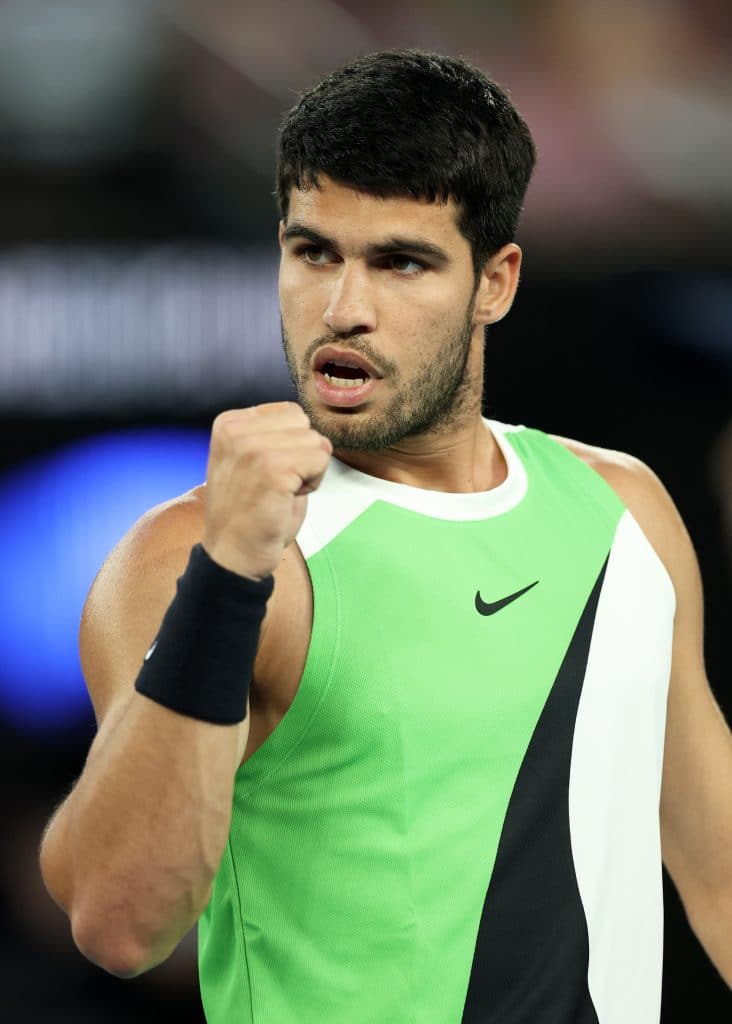
Alcaraz’s semi against Alexander Zverev started like you’d expect from the world’s most electric 22-year-old.
Fast feet. First-strike tennis. The ball exploding off the forehand. Two sets up and cruising.
It had the shape of a straight-sets job.
Then the body rebelled.
Midway through the third set, Alcaraz began cramping. Subtle at first. A tug in the leg, a half-second hesitation before pushing off. Then it became obvious. Stretching between points. Hands on hips. A few sprints that looked just slightly laboured.
Zverev smelled it instantly. He stretched rallies. Made Alcaraz change direction. Forced him to hit one extra ball, then another.
Two tight sets slipped away in tiebreaks.
Suddenly it was two-all, the crowd buzzing, and the match had morphed from showcase into survival test.
What followed was less about shot-making and more about willpower. Five hours and change of grinding, lung-burning tennis. Zverev even served for the match at one point. The door was wide open.
Alcaraz slammed it shut.
He started improvising. Short angles. Surprise net rushes. A drop shot here, a screaming forehand there. Not just talent, but stubbornness. The kind of refusal that turns very good players into champions.
By the time he staggered over the line in the fifth, it was one of the longest and most physically punishing semi-finals Melbourne has seen.
He didn’t look fresh. He looked forged.
Djokovic’s Australian Open Night Was All Nerves and Steel
If Alcaraz’s match was about the body, Djokovic’s was about the mind.
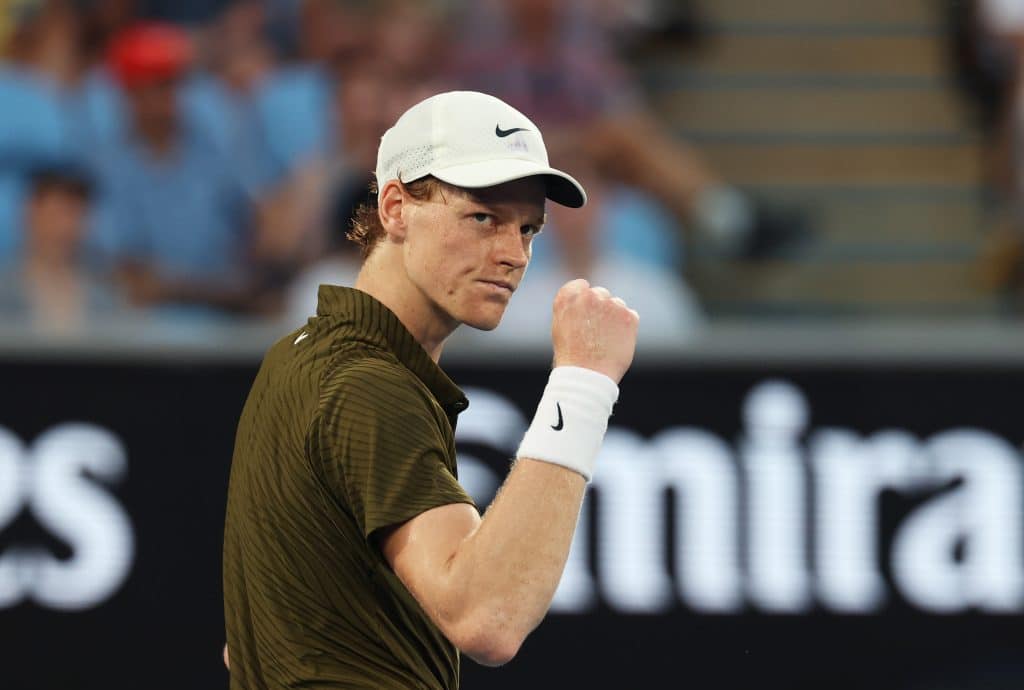
Facing Jannik Sinner, the defending champion and one of the cleanest ball-strikers on tour, Djokovic had to deal with pace from the first game.
Sinner hit through the court. Took the ball early. Tried to rush him.
For stretches, it worked. Djokovic was scrambling, sliding, defending from corners he usually controls. The younger man dictated plenty of rallies.
But Djokovic has built an entire career on making opponents feel like they have to win the same point three times.
Every time Sinner surged, Djokovic answered. A ridiculous backhand pass. A return that clipped the baseline. A 20-ball rally that somehow ended with Sinner missing first.
The match kept seesawing. Set for set. Break for break.
You could feel the tension in the arena. Nobody blinking. Nobody really breathing.
In the fourth, Djokovic locked in. The serve found corners. The depth returned. He dragged it to a decider, then slowly squeezed.
Not flashy. Not dramatic in the Hollywood sense.
Just ruthless.
When Sinner finally missed on match point at 01.32 local time, Djokovic barely celebrated. Another day at the office, if your office happens to be a Grand Slam semi-final at 38 years old.
Vintage stuff.
38 years young. 10 Australian Open titles. And he’s not done yet. Djokovic takes down the defending champ Sinner in a 5-set classic to reach his 11th final Down Under.
— 365Scores (@365Scores) January 30, 2026
🐐 vs 🇪🇸 Alcaraz for the title. Who writes the final chapter? pic.twitter.com/lZnxWi5z49
Two Roads, Same Destination
It’s funny how different these two journeys were.
Alcaraz arrived like a storm, all athleticism and improvisation, solving problems on the fly.
Djokovic arrived like a chess player, three moves ahead, dismantling complications until only the simplest path remained.
And now they collide.
For Alcaraz, this is about legacy speed-run territory. He already owns majors on multiple surfaces. A title here edges him closer to completing the career Grand Slam at a ridiculous age. Every big final feels like another brick in a monument that’s being built faster than anyone predicted.
For Djokovic, it’s about extending a reign that refuses to end. Another major. Another Australian Open. Another reminder that time has to work overtime to catch him.
There’s something poetic about that contrast. The future trying to accelerate. The past refusing to fade.
Australian Open Tactical Chessboard
Strip away the storylines and this becomes a delicious tactical battle.
Alcaraz wants chaos.
Big forehands. Quick changes of direction. Drag Djokovic forward with drop shots, then pass him. Inject pace and variety until the match feels breathless.
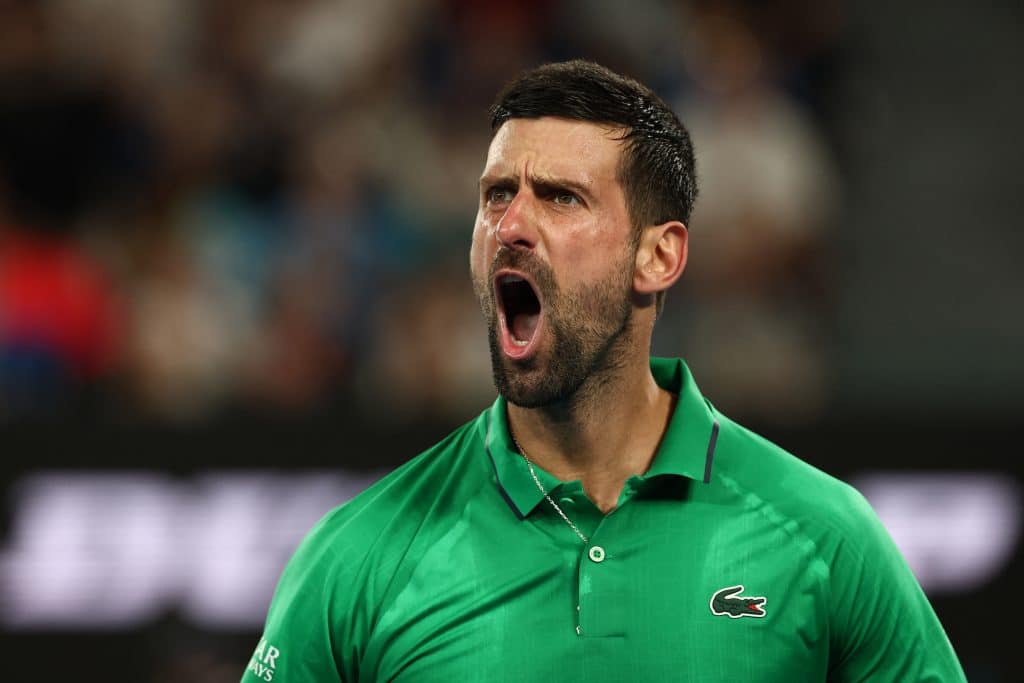
Djokovic wants order.
Long rallies. Deep returns. Backhands that pin Alcaraz in one corner until the error comes. Slow the pulse. Turn it into a puzzle.
Serve will matter more than usual. Cheap points are gold after two draining semi-finals.
Return will matter even more. Djokovic is still the best returner in the sport. If he starts neutralising Alcaraz’s first serve, things get uncomfortable quickly.
And then there’s fitness.
Alcaraz spent over five hours fighting cramps. Djokovic spent nearly four hours grinding. Recovery might be the quiet MVP of this final.
Ice baths. Massage tables. Electrolytes. The unglamorous stuff that decides who still has spring in their legs in set four.
The Feeling Inside the Stadium
Rod Laver Arena at night has a particular hum.
It’s not just loud. It’s dense. Every rally feels heavier. Every break point carries a bit more drama.
This final has that big-event electricity already. You can sense it days out. Fans debating tactics in queues for coffee. Kids in bright shirts imitating forehands on the practice courts.
It feels less like the end of a tournament and more like the main event finally arriving.
After a sleepy first week, Melbourne is wide awake.
WHAT DID WE WITNESS?! 🤯
— #AusOpen (@AustralianOpen) January 30, 2026
We were treated to two truly epic men’s singles semifinals 😲 pic.twitter.com/Pln8xXnET6
What Decides It
A few small things will probably swing everything:
First-serve percentage under pressure.
Break-point conversion.
Who handles the long rallies when lungs start to burn.
Who blinks first at 4-4 in the fourth.
These matches are rarely won with one spectacular shot. They’re won with ten tiny, correct decisions in a row.
Djokovic has built a career on those moments.
Alcaraz is learning to dominate them too.
Which makes this one feel beautifully, nervously balanced.
FAQs
When is the Australian Open men’s final?
Sunday night in Melbourne, which is Sunday morning in the UK.
Who is favoured in the Australian Open men’s final?
It’s close. Alcaraz brings momentum and youth. Djokovic brings experience and an absurd record at this event.
How long could the Australian Open men’s final go?
Given both semi-finals went deep, another four or five sets would surprise nobody.
What’s at stake historically?
Alcaraz pushes closer to a career Grand Slam at a very young age. Djokovic chases another major and further extends his records in Melbourne.
What style clash should fans watch for in the Australian Open men’s final?
Alcaraz’s explosive, all-court creativity versus Djokovic’s defensive mastery and surgical returning.
If the semi-finals were any indication, sleep might not be an option. This one has all the ingredients for a classic.
By Nicky Helfgott / @NickyHelfgott1 on Twitter (X)
Follow all the latest tennis news here on 365Scores!